
Iran · updated 1h ago · 3 min read
U.S. Air Force Officer Bravo Recalls Free-Falling After F-15E Shot Down Over Iran
Two U.S. Air Force officers were shot down over Iran and rescued. Bravo endured about 50 hours behind enemy lines with a damaged parachute.
How Bravo evaded danger after landing.
9 of 11 outlets skipped it: bravo was behind enemy lines for 50 hours.
NBC News was read line by line by the Watchdog: 7.5. See the score →
21outlets compared
Same story, two versions
tap a side to read it in full
BBC
“Bravo said that despite his injuries, he hiked and climbed to the top of a tall ridgeline, in fear of Iranian forces the whole way.”Read the original ↗
CBS News
“He moved as quickly as he could, despite the injuries, away from the place that he landed.”Read the original ↗
BBC emphasises fear-driven climbing; CBS stresses rapid movement away from landing site.
F-15E shot down
An American F-15E with mission call sign "DUDE 44" was shot down over a mountainous area south of the city of Isfahan in Iran on the night of April 2, separating two U.S. Air Force officers with call signs "Alpha" and "Bravo."
“the mission call sign was DUDE 44”
CBS News reported that the pilot "Bravo" described the moment he saw no parachute as "the most terrifying thing I've ever seen," after a shoulder-fired missile damaged his parachute and he free-fell at an estimated 70-100 mph.C

The rescue unfolded as U.S. forces carried out a high-risk operation inside Iran for the first time in 46 years, with Admiral Brad Cooper saying the mission involved a strike on industrial facilities related to Iran's drone and missile program.
CBS News said Defense Secretary Lloyd Austin was woken with the news and began considering next steps, while Iranian media published images of crash debris and online videos showed armed Iranian groups attempting to track the crew.C
BBC later described the April incident as a dangerous rescue operation in which the two U.S. troops ejected, were separated, and had to evade Iranian forces while awaiting rescue from U.S. special forces.B
Austin, Cooper, and the pilots
In his first public account, "Bravo" told CBS News that "At one point when I looked up and saw no parachute, that was the most terrifying thing I've ever seen," and he said he prayed, "Lord, your will be done. CBut if I'm getting through this, I need help."
Defense Secretary Pete Hegseth said, "Whether they're alive or not, we're going to go get them," after being woken in the middle of the night with news of the downed aircraft.
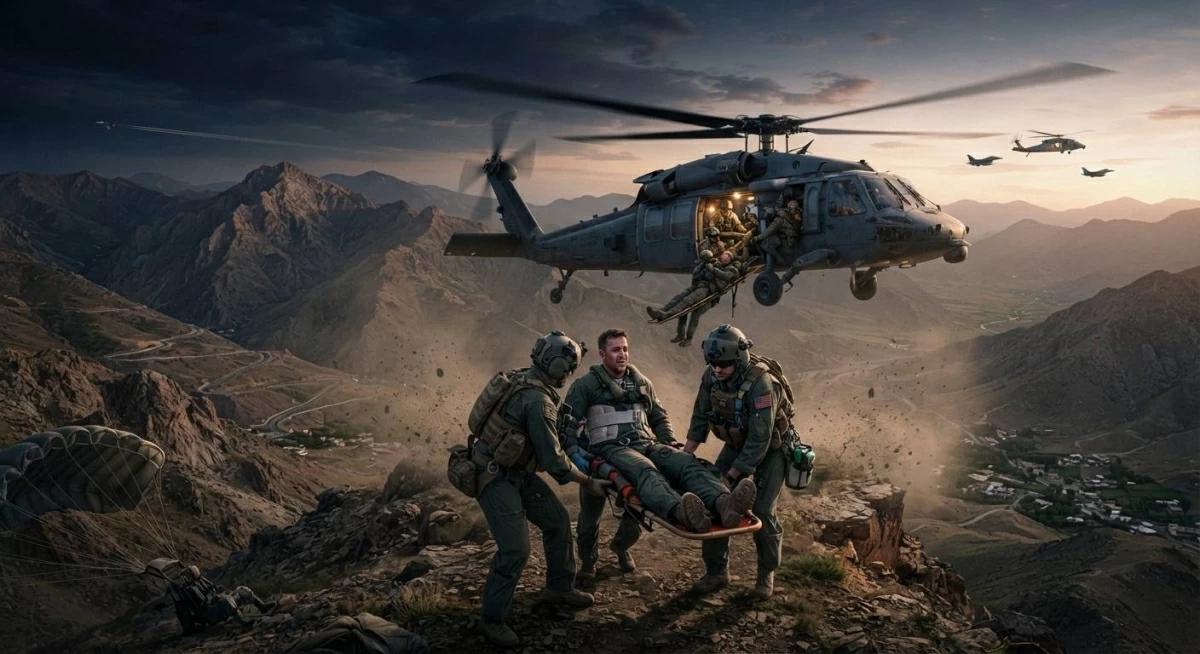
Admiral Brad Cooper said, "We had air superiority, but clearly we weren't flying over Kansas," describing the strike mission near Isfahan and the downing by a shoulder-fired missile.
BBC reported that Alpha declined to be interviewed by CBS, while it quoted Bravo saying he survived by hiking and climbing to the top of a tall ridgeline in fear of Iranian forces.B
CNN Arabic reported a dispute over the media narrative, quoting Pentagon spokesperson John Kirby saying, "The whole story is a pure lie," in response to CNN’s report about planning for the CBS segment.
Declassified footage and aftermath
CBS News said the rescue for Alpha came during a daytime, high-risk operation, but the team could not locate Bravo and had to withdraw as night fell on the first day inside Iran.C
“he was transported out of Iran about 50 hours after his fighter was shot down”
Al Jazeera Net described how the CIA played a central role in tracking Bravo, launching a multi-pronged deception campaign and using highly secret technologies to pinpoint his location, while declassified video showed American bombers and drones striking IRGC forces near his hiding place.
Arabi21 said Bravo was found on the third day after a rescue team reached him with small aircraft and helicopters, and that he was transported out of Iran about 50 hours after his fighter was shot down.
BBC reported that planes and helicopters needed to evacuate became stuck in desert sand and needed to be destroyed, and it said two of the destroyed U.S. aircraft were worth about $100m each.B
CBS News also tied the operation to the wider war, saying the mission unfolded five weeks into the war with Iran and that the U.S. military had flown around 13,000 missions up to that point, with Cooper describing the strike as not related to the Isfahan nuclear facility.