Iran · updated 1h ago · 3 min read
Iranian Strikes Damaged Hundreds of Buildings at U.S. Bases Across Eight Countries, Pentagon Watchdog Says
Iranian strikes damaged hundreds of buildings at U.S. bases across eight countries. Pentagon inspector general report confirms shortages of ammunition and advanced weapons.
28 outlets, one story, no spin found.
8 of 9 outlets skipped it: india Today adds State Department costs and evacuation figures.
Al Jazeera was read line by line by the Watchdog: 3.3. See the score →
28outlets compared
Watchdog details base damage
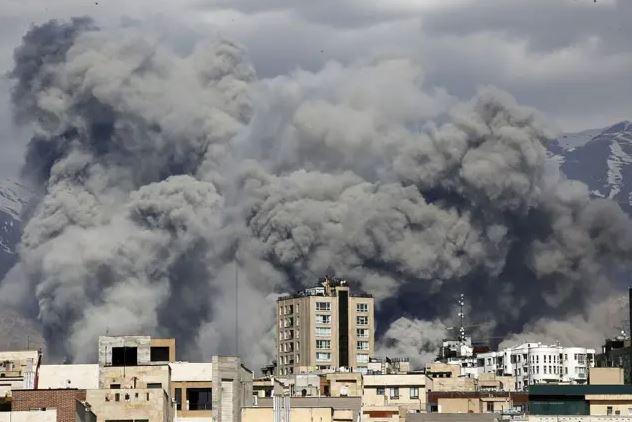
A Pentagon inspector general report released on Monday evening says Iranian strikes damaged and destroyed hundreds of buildings and structures at US military bases across eight countries, including Kuwait, Bahrain, Qatar, the United Arab Emirates, Saudi Arabia, Iraq, Oman, and Jordan.
“offers a fresh look at the impact of the Iran war”
The report also said Iranian attacks on US diplomatic facilities in four countries caused roughly $184 million in damage, while US and partner forces shot down more than 6,000 Iranian drones and 1,500 ballistic missiles that targeted their locations.

Business Insider reported that the report to Congress covers developments between April 1 and June 30 and does not say how much it could cost to repair the damaged facilities.
The Washington Post similarly said the watchdog report detailed the extent of munitions shortfalls and the first comprehensive public accounting of the cost and military impact of the war with Iran.
Haaretz framed the same watchdog finding as acknowledging shortfalls in munitions and supply-chain bottlenecks alongside damage to dozens of US aircraft and drones.
Munitions shortfalls and logistics
The Pentagon watchdog report described how the war exposed “strategic inventory shortfalls” and “bottlenecks” in munitions resupply, with Radio Free Europe/RL quoting the report that “the munitions expenditure on OEF has resulted in strategic inventory shortfalls and revealed industrial base bottlenecks for munitions resupply.”
USA Today said the report covers the start of the war on Feb. 28 through June 30 and put the cost at least $33.4 billion as of June 29, while also noting that more than 50,000 US service members were deployed in U.S. Central Command’s area of responsibility.

USA Today also reported that acting Navy Secretary Hung Cao confirmed that Iran “blew the hell out of Bahrain” in reference to the key U.S. base.
PressTV added that the report warned some changes to the US military presence in West Asia could become permanent, and it said the inspector general assessed that “most medical evacuations have been carried out by ground … to local treatment facilities.”
The Intercept, citing two US officials familiar with operations, warned that the military was straining under the pressures of the Iran war and cautioned that this stress could lead to a “breakdown” in the military’s ability to effectively continue a war.
Costs, casualties, and what’s next
The watchdog report described a broader toll on US forces, with USA Today saying that since the start of the conflict, 18 have died and more than 800 were wounded, while also stating that buildings and facilities at US bases in Kuwait, Bahrain, Qatar, UAE, Saudi Arabia, Iraq, Oman and Jordan were damaged or destroyed by Iranian strikes.
“Since the start of the conflict, 18 have died and more than 800 were wounded”
Business Insider reported that the Department of Defense spent an estimated $33.4 billion on Operation Epic Fury during the period covered by the report and said the figure includes $3.7 billion in equipment losses.
Al Jazeera said the report acknowledged the US was running short on its munition stockpile and facing “bottlenecks” in supply chains, and it added that the Defense Department reported at least 11 US military personnel were “killed in action” while seven died in “non-hostile events.”
Khaama Press put the deaths at 14 American service members killed and 417 wounded during the operation, and it said the report estimates the campaign’s total cost at $33.4 billion including $7.4 billion in operational expenses and $22.3 billion in munitions consumed.
PressTV concluded that the assessment warned the changes to the US military presence could become permanent and said the report examined damage to US diplomatic facilities, including approximately $184 million in damage caused by Iranian retaliatory attacks.