Iran · updated 1h ago · 3 min read
Pentagon Inspector General Finds U.S. Iran War Exposed Munitions Shortfalls and Industrial Bottlenecks
Pentagon inspector general finds strategic munitions shortfalls due to the Iran war. Replenishment bottlenecks in the defense industrial base impeded stockpile resupply.
23 outlets, one story, no spin found.
10 of 11 outlets skipped it: risk to pay service members without supplemental funding.
The Jerusalem Post was read line by line by the Watchdog: 6.6. See the score →
23outlets compared
Pentagon watchdog flags gaps
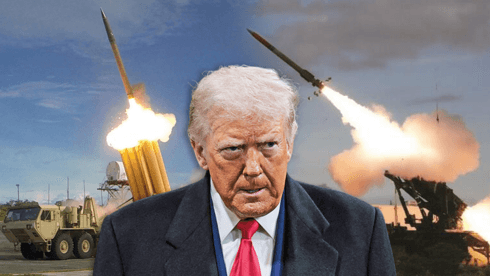
A Pentagon inspector general report released Monday found that the U.S. war against Iran exposed “strategic inventory shortfalls” and bottlenecks in the defense industrial base’s ability to resupply munitions, after munitions expended during the four-month Operation Epic Fury campaign.
“strategic inventory shortfalls”
The report covers April 1 to June 30 and cites the Office of the Under Secretary of War for Acquisition and Sustainment saying that munitions expenditure “has resulted in strategic inventory shortfalls and revealed industrial base bottlenecks for munitions resupply.”

The watchdog said the Pentagon is working to “streamline procurement processes and production lead times” and to stockpile “critical materials, components and selected munitions” to respond rapidly to a contingency.
It also warned that the defense industrial base requires “significant lead time” to expand production capacities, with persistent bottlenecks in solid rocket motors, high-grade explosives and propellants, and recruiting skilled manufacturing labor.
The report’s cost estimate put the Iran war at $33.4 billion as of June 29, including $22.3 billion for expended munitions and $3.7 billion in equipment losses based on replacement cost, according to the report.
Trump disputes, Hegseth warns
The findings directly contradicted President Donald Trump’s repeated dismissal of depleted munitions stockpiles, including his Truth Social claim that the U.S. has “virtually unlimited” ammunition and that it is producing more “Exquisite and Elite Weapons than at any time in our History.”
NBC News reported that Defense Secretary Pete Hegseth has denied reports of low munitions, while the inspector general’s first report to Congress said the conflict has resulted in a shortfall of U.S. munitions and “bottlenecks” in supply chains.

In the same NBC account, the watchdog said the Pentagon is “working to streamline procurement processes and production lead times, and to stockpile critical materials, components, and selected munitions” to mitigate the constraints.
France 24 reported that the inspector general confirmed the ammunition shortfall and said the report covers Feb. 28 through June 30, with Operation Epic Fury described as the U.S. name for its joint campaign with Israel to “destroy Iran’s ability to project military power.”
France 24 also said the shortfall is likely to cause concern among governments like Ukraine and Taiwan that rely on weapons purchases from the United States, while Trump’s assertions continued to stand against the watchdog’s conclusions.
What the shortage threatens
The report’s consequences extend beyond munitions production, because it also cataloged equipment losses and damage tied to the Iran war, including four F-15s destroyed, one F-35 damaged, seven KC-135 tanker aircraft damaged, and up to 30 MQ-9 Reaper drones destroyed.
“four F-15s destroyed, one F-35 damaged”
NBC News said the inspector general’s report confirmed that Iran targeted the U.S. Navy’s main logistics hub in the region in Bahrain with drones and ballistic missiles, and it said the report does not account for repairing damaged facilities.
The watchdog also put additional pressure on the Pentagon’s planning by estimating that between Feb. 28 and June 30, Operation Epic Fury had displaced more than 20,000 U.S. military and diplomatic personnel, and it said U.S. forces flew as many as 5,000 flights from European bases in support of the war.
Anadolu Ajansı reported that Hegseth told Congress on July 21 that without supplemental funding, the Pentagon “could face critical shortfalls” that would threaten its ability to pay service members, replenish some equipment and munitions, and sustain its global operations.
The same Anadolu Ajansı account said the White House submitted an $87.6 billion emergency supplemental funding request to Congress on June 24, including $67.1 billion for the Pentagon and $21 billion earmarked specifically for munitions, as the report’s bottlenecks and inventory gaps became part of the policy debate.