Iranupdated 23m ago2 min read
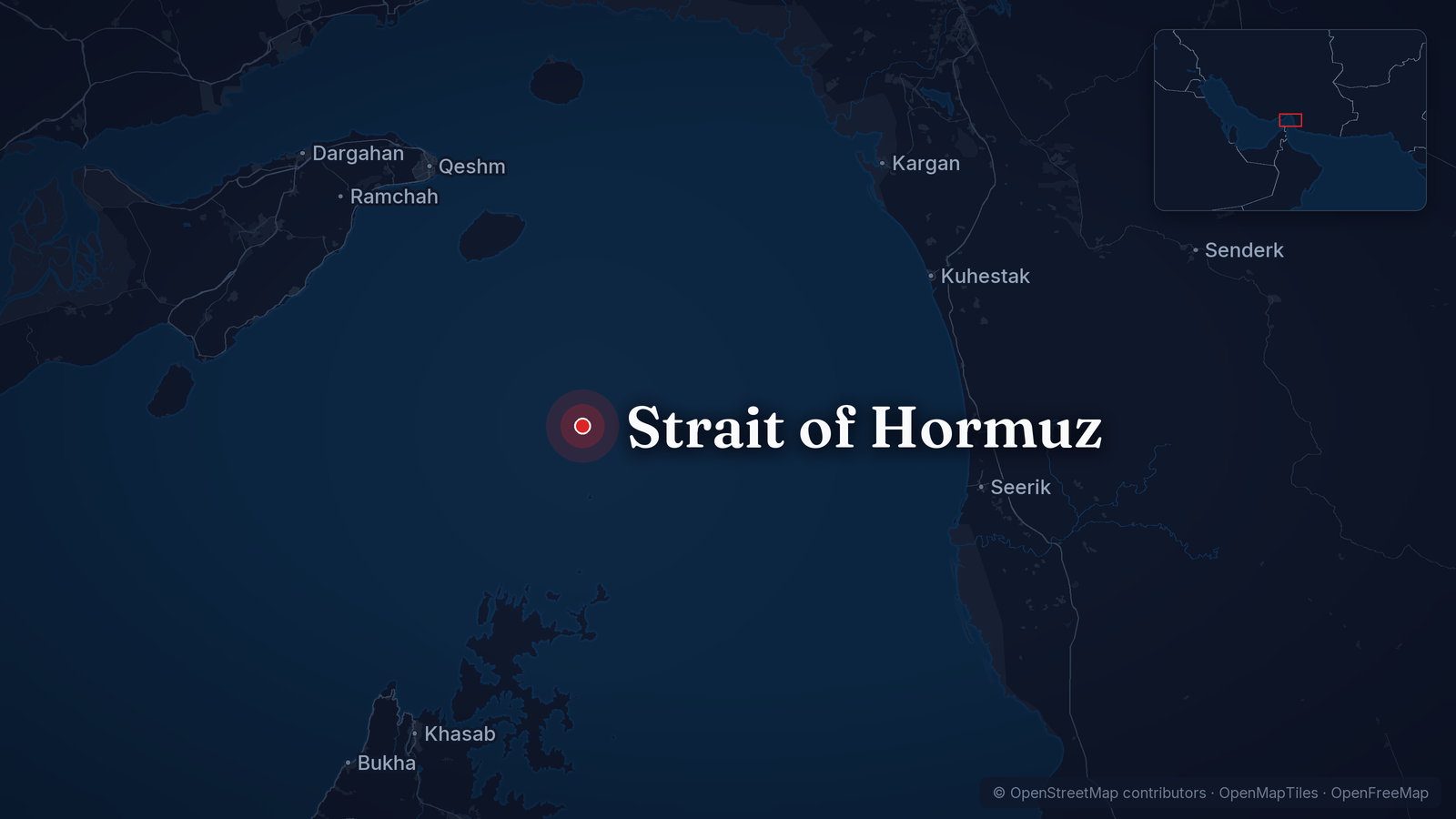
MapIRGC Navy Reports Two Oil Tankers Exploded After Hitting Naval Mines in Strait of Hormuz
“this is not a blockade. It is a customs house.”
“vessels transiting this waterway without coordination with the Armed Forces have faced heightened risks”
Map: © OpenStreetMap contributors, ODbL · Cropped for layout
This article is an automated aggregation of coverage from news outlets. Our editorials offer in-depth analysis curated by the NewsCord team.
Two oil tankers exploded and caught fire after hitting naval mines in Strait of Hormuz. IRGC Navy said mines struck the vessels in southern and eastern Strait of Hormuz.
Save coverage image
Tehran Times was read line by line by the Watchdog: 6.0. See the score →
Hormuz tightened, mines blamed
Iran’s Army Air Force commanders said Brigadier General Akraminia emphasized the need to enhance readiness and said the Commander-in-Chief of the Army Force General Hatami ordered more robust control and surveillance over the Strait of Hormuz. Iran’s Army spokesman warned that vessels transiting the waterway without coordination with the Armed Forces of the Islamic Republic of Iran have faced heightened risks and “exploded while hitting the naval mines.”
The IRGC Navy reported that two oil tankers struck naval mines in the southern and eastern waters of the Strait of Hormuz, causing explosions and fires in their engine rooms. The IRGC Navy’s Strait of Hormuz Traffic Control Center warned crews that turn off navigation and positioning systems and urged them to heed maritime warnings and observe authorized navigation routes.
Two days, seven conditions
Iran’s foreign ministry spokesman Esmaeil Baqaei said Tehran would use “all available means” to break the American naval blockade of its ports, invoking the self-defence clause of Article 51 of the UN Charter. Iranian officials repeated an offer that the Strait of Hormuz could reopen within two days if Washington met demands including lifting the blockade, ending the fighting on all fronts, unfreezing Iranian assets and removing oil sanctions.
Iran’s Army Commander-in-Chief General Amir Hatami said the Strait of Hormuz should be increasingly restricted to shipping and that “Until Iran’s seven conditions are met, the Strait of Hormuz won’t be opened.” The Iranian Army commander said the remarks came amid renewed tensions between the United States and Iran that escalated on July 8, when the US Armed Forces launched several waves of strikes on Iranian territory.
Who manages the gate
Modern Diplomacy said Iran’s approach shifted from closure to administration, describing steps that included requiring approved vessels to submit documentation, obtain clearance and follow a controlled corridor between Qeshm and Larak islands. Modern Diplomacy said Tehran formally announced a Persian Gulf Strait Authority (PGSA) on 18 May to manage transits and that the body would issue passage permits to “non-hostile” vessels.
Modern Diplomacy said Iran’s delegation told the International Maritime Organization that Iran, which never ratified the UN Convention on the Law of the Sea (UNCLOS), is not bound by the treaty-based regime that guarantees transit passage. Modern Diplomacy said the IMO’s Secretary-General, Arsenio Dominguez, has said there is no legal basis for any state to impose tolls or discriminatory conditions on passage through an international strait.