Iranupdated 1h ago2 min read
Archive photo · 5 October 2023IRGC Spokesperson Says Supreme Leader Could Order Strikes on US Bases in Europe
“if the current supreme leader gives the order, Iran is also capable of targeting US military bases in Europe.”
“Tehran has formulated plans to escalate the war in order to push Washington back to the negotiating table”
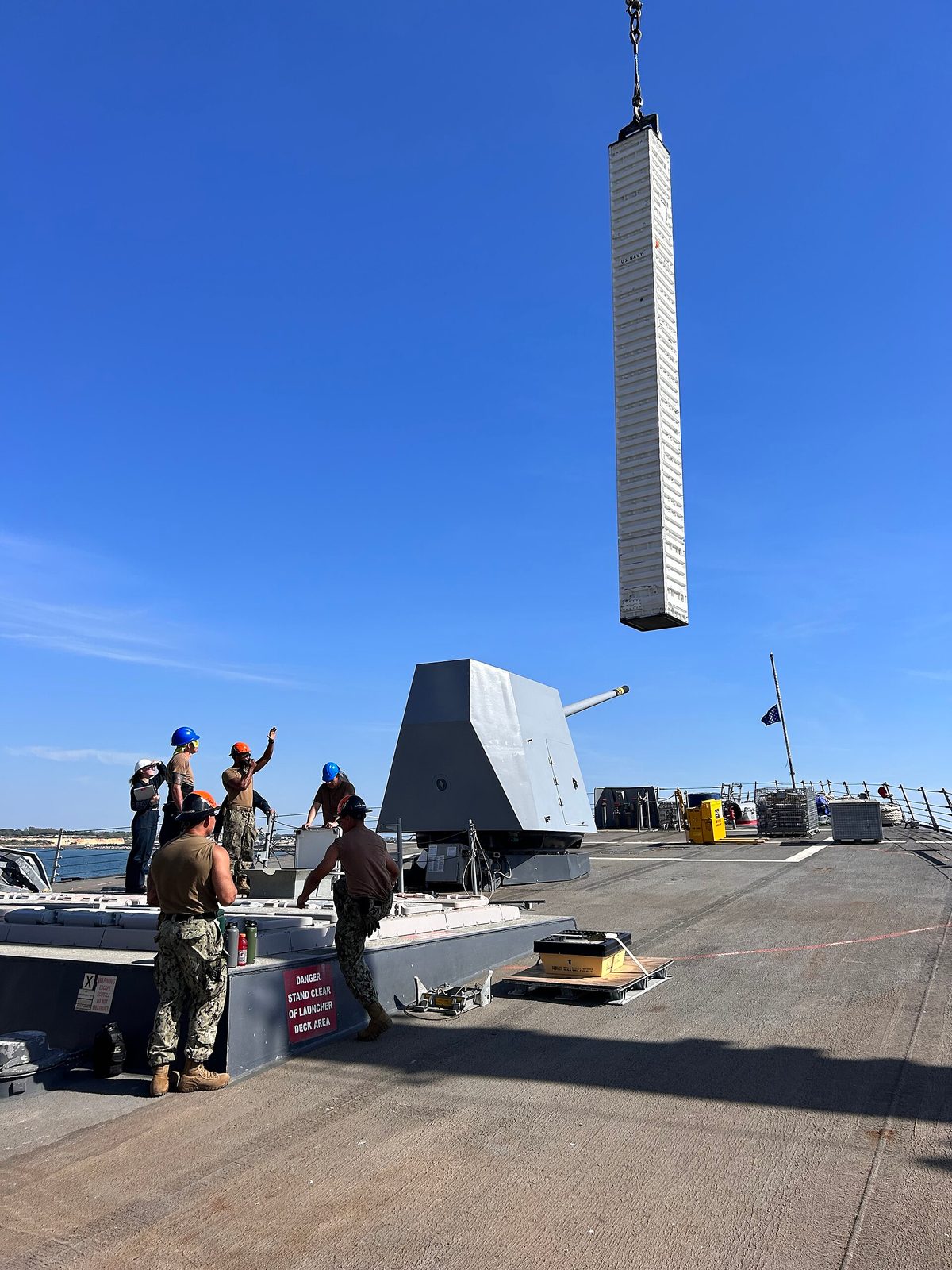
Photo: U.S. Navy NAVFACEUR by [null Courtesy] / US federal government, Public domain · Cropped for layout
This article is an automated aggregation of coverage from news outlets. Our editorials offer in-depth analysis curated by the NewsCord team.
IRGC spokesperson says if Supreme Leader orders, Iran capable of targeting US bases in Europe. Iran demonstrates missile range up to 4,500 kilometers, enabling reach to Europe.
Save coverage image
The Jerusalem Post was read line by line by the Watchdog: 0.0. See the score →
Missiles, Europe, and limits
Hossein Mohebbi, a spokesperson for Iran’s Islamic Revolutionary Guard Corps (IRGC), said Iran has demonstrated missile capabilities with a range of up to 4,500 kilometers near Diego Garcia Island, and he added, “If the order is given…”. Mohebbi said the decision to limit the range of Iran’s missiles to 2,000 kilometers was made on the instructions of the late supreme leader, and he said the current supreme leader could order Iran to target US military bases in Europe.
The TodayPress.tv account linked the statement to Western media reports that two ballistic missiles were launched at the base on Diego Garcia Island in March, with one reportedly malfunctioning and the other intercepted by a US vessel. The TodayPress.tv account also said Iran denied involvement in the attack at the time, while the IRGC spokesperson argued Iran’s missile capabilities allow it to conduct operations without geographical restrictions.
Hybrid attacks and attribution
The European Council on Foreign Relations warned of rising hybrid threats attributed to Iran against internal security in Europe and called for coordination among European governments to prevent future attacks, according to an analysis by Elie Granmaya. Alarms related to the temperatures of industrial refrigerators were triggered in France in the early hours of October 12 after someone took control of the computer system that manages refrigerators and freezers.
Tehran formulated plans that could include stepping up attacks against tankers that do not pay Iran transit fees in the Strait of Hormuz, according to a New York Times report cited by The Jerusalem Post. Democratic Congressman Jim Himes said, “This animal may try to negotiate, but I also think it is likely to react in some pretty wild ways, perhaps to advance negotiations.”
Negotiations, escalation, and risks
Mohammad Javad Zarif, the former foreign minister, said at the launching and review of the book “The History of a Neighborhood; Iran-Iraq Relations Over Time” that “In the twentieth and twenty-first centuries no war has begun unless the initiators either being destroyed or at least not achieving their objectives.” Zarif said the principle of war’s inability to meet war-makers’ demands meant war cannot achieve the goals for which it began, and he argued that initiators of wars commit all possible mistakes before choosing the right path.
Iran hardened its position in negotiations with the US since the midterm elections, viewing the widespread Republican defeat as a vote of no confidence in the way US President Donald Trump is managing the war. American and European intelligence agencies assessed that despite growing confidence in Tehran, the regime remains open to a deal if the US grants it access to billions of dollars in frozen assets, while the US and Europe are divided on how interested Iran is in reaching an agreement to end the war.