Iranupdated 20m ago2 min read
Archive photo · 2 December 2020Iran’s Army Says Three Oil Tankers Struck Mines in Eastern Strait of Hormuz
“most of these claims remain unverified because Iranian officials have not publicly identified the names or flags of the vessels involved.”
“attempting a covert passage through the prohibited route of the Strait of Hormuz with the support of U.S. fighter jets and surveillance drones flying above them,”
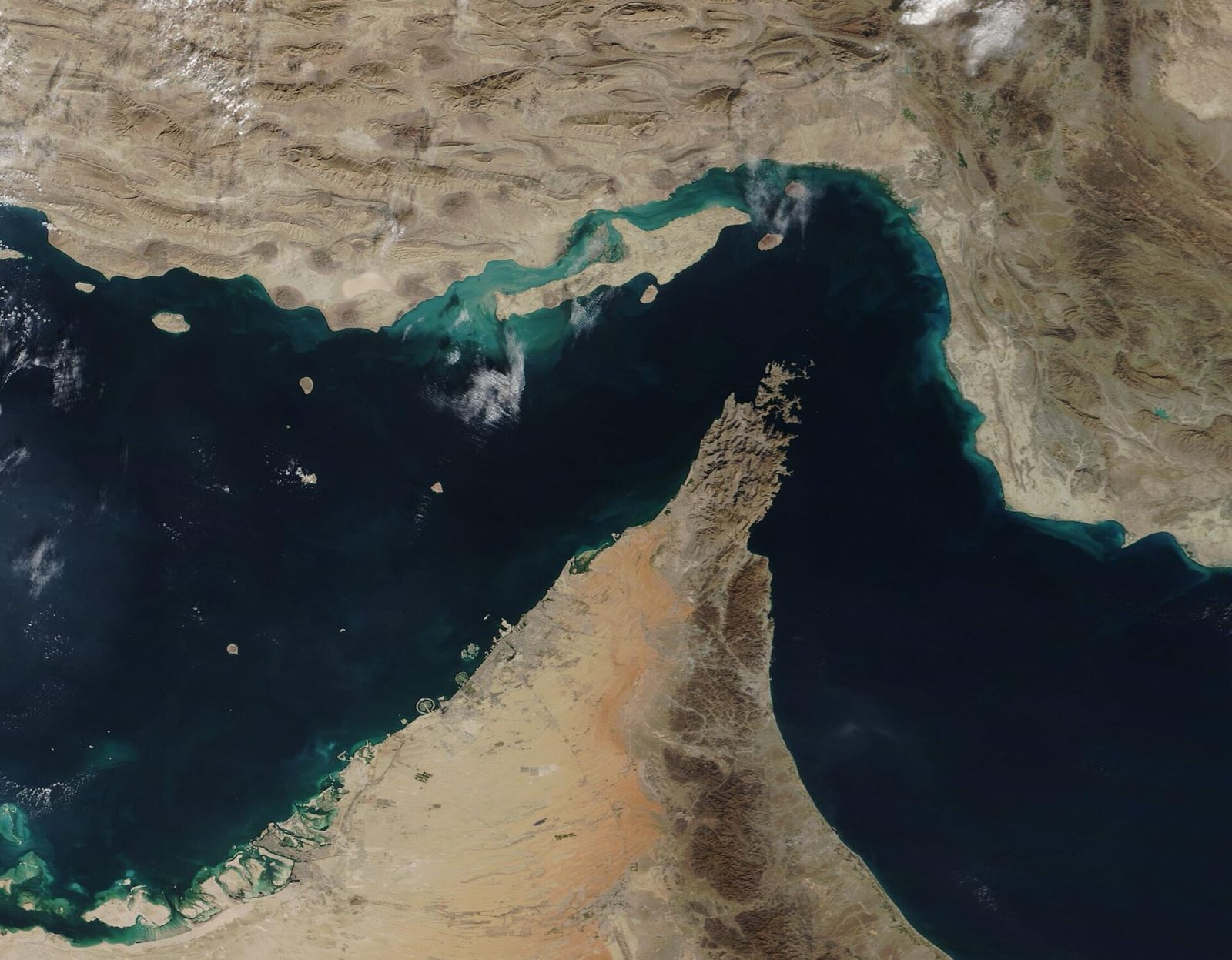
Photo: MODIS Land Rapid Response Team, NASA GSFC / US federal government, Public domain · Cropped for layout
This article is an automated aggregation of coverage from news outlets. Our editorials offer in-depth analysis curated by the NewsCord team.
Three oil tankers struck naval mines and caught fire in eastern Strait of Hormuz. Iran says vessels ignored navy warnings and sailed in an off-limits area.
Save coverage image
Anadolu Ajansı was read line by line by the Watchdog: 0.0. See the score →
Mine blasts disable tankers
Iran’s army said three oil tankers struck naval mines in the eastern Strait of Hormuz and caught fire on Wednesday, leaving the vessels unable to sail. Iran’s army added that the vessels had switched off their navigation systems before entering an area it described as off-limits to shipping, and it said the resulting fires disabled all three tankers.
ADNOC said one of its vessels came under attack while transiting the strait on Tuesday evening, injuring 11 crew members and leaving another missing, and the company said the injured were receiving treatment and a search was underway for the missing crew member. The incidents came as tensions between Iran and the US continued over navigation through the strait, a key route for global energy shipments, according to the Anadolu Ajansı report.
Conflicting claims and attribution
Iran’s IRGC Navy said two violating supertankers exploded after hitting a naval mine on the unauthorized route in the Strait of Hormuz and were burning near its southern coast with over 4 million barrels of crude oil. The IRGC Navy said the tankers were attempting a covert passage through the prohibited route with the support of U.S. fighter jets and surveillance drones flying above them, and it said the vessels were abandoned after striking the mines and exploding.
The House of Saud Daily Briefing account in the https source said Iran’s military claimed three more oil tankers caught fire after hitting naval mines east of the Strait of Hormuz on the evening of November 18, but it said Reuters could not independently confirm the evening claim because no vessel name, flag, owner or cargo was released. The https source also said the UK Maritime Trade Operations centre confirmed the ADNOC vessel incident, with one crew member missing and 11 injured, while it described the evening claim as unverifiable beyond Iran’s account.
Shipping risk and next steps
TRT World said naval mines widely believed to have been planted by Iran have emerged as one of the biggest threats to maritime traffic through the Strait of Hormuz, and it said the waterway accounted for one-fifth of global energy shipments before the start of the US-Israeli war in late February. TRT World reported that at least 25 sea-farers have been killed and several oil tankers have sunk since February, and it said the number of ships passing through the strait remains well below the pre-war level of roughly 125-140 ships a day.
TRT World quoted Alexandru Cristian Hudisteanu saying confidence is never 100 per cent once a space has been mined, and it quoted him warning that demining operations are “never perfect.” TRT World also said CENTCOM commander Admiral Brad Cooper said primary transit routes “remain free and clear of Iranian sea mines” after US forces cleared lanes previously mined by Iran’s Revolutionary Guard, and it said CENTCOM claimed it has supported more than 3,000 commercial transits and facilitated the export of more than 1.5 billion barrels of crude since the summer.