Iran30 August, 20263 min read
IRGC Thwarts Israeli, US-Linked Terror Cell in Southeastern Iran After One Member Is Killed
This article is an automated aggregation of coverage from news outlets. Our editorials offer in-depth analysis curated by the NewsCord team.
IRGC says it thwarted an Israeli-US-linked terror cell in southeastern Iran, one member killed. Claims occur within broader US-Israel confrontation with Iran reported across regional outlets.

16 outlets told this the same way.
Outlets did split on IRGC Navy Says GFS Pride Sinks After Mine Strike South of Strait of Hormuz →
Al Jazeera was read line by line by the Watchdog: 2.1. See the score →
Khamenei’s unity message
Iran’s Supreme Leader Ayatollah Mojtaba Khamenei issued a written message urging “unity among Muslims” while IRGC claimed it had thwarted an Israeli, US-linked terror cell in southeastern Iran. The Jerusalem Post’s live updates also said Khamenei’s message urged Gulf rulers to "identify their real enemy and understand the plans to confront it." In a separate report, the Arkansas Democrat-Gazette said Iran’s leader, Mojtaba Khamenei, declared that actions undermining national unity are prohibited and warned that even measures with some support could ultimately be harmful if broader social consequences are ignored.
“Khamenei's message, issued to mark the birth anniversary of Prophet Muhammad, urged the rulers of the Gulf States to ‘identify their real enemy and understand the plans to confront it.’”
The same Arkansas Democrat-Gazette report quoted Mojtaba Khamenei warning that "Any statement that creates despair or weakens national and public motivation" could damage the country. Across the coverage, the IRGC’s southeastern Iran operation was described as involving arrests after one member was killed, while the Jerusalem Post framed the event as IRGC claiming to have thwarted the cell.
Strikes, talks, and shipping
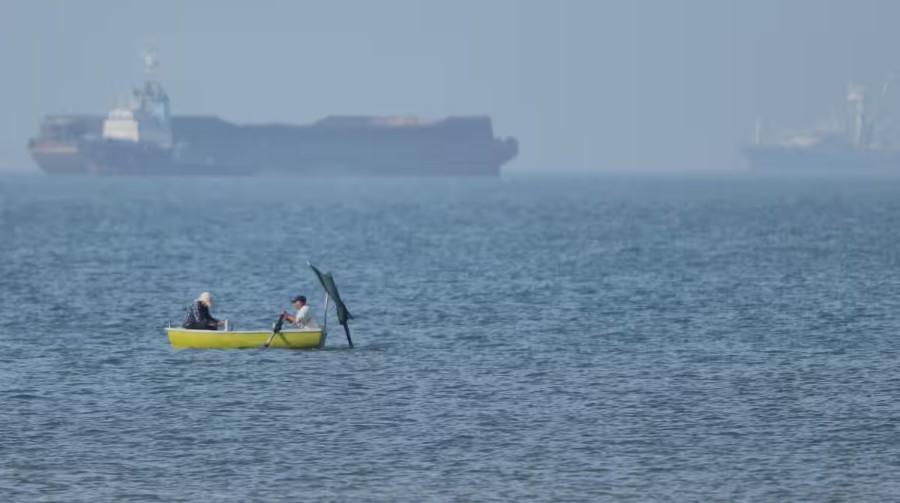
The Arkansas Democrat-Gazette reported that Israeli airstrikes killed five people in Gaza and three in the West Bank on Friday, while it also said the U.N.’s maritime agency reported 19 seafarers killed and at least 6,000 remain stranded on hundreds of ships unable to leave the region since the start of the Iran war on Feb. 28.
It added that there have been at least 70 attacks on international shipping in the Persian Gulf, and it cited that about 20% of the world’s traded oil and natural gas passed through the vital commercial waterway at the mouth of the Persian Gulf before the war.
The same report said Iranian President Masoud Pezeshkian told state television that neither Tehran nor Washington can achieve all of their demands and that negotiations are needed to bring stability and calm.
In the Jerusalem Post live updates, it described a ceasefire deal announced on April 7 and going into effect on April 8, while also referencing Operations Roaring Lion and Epic Fury launched on February 28 with the stated aim of creating conditions for regime change.
Separately, Xinhua reported that on Saturday Iranian President Masoud Beshzadian said the peace memorandum signed between Iran and the United States serves Tehran’s interests and emphasized that once implemented, the United States and Israel will not be able to sow chaos, aggression, or insecurity in the region.
Deterrence and consequences
A Forward opinion piece said that six months into the Iran War, the war began with Israeli military and intelligence prowess and that Israeli strikes decimated much of Iran’s leadership, killing Supreme Leader Ali Khamenei, senior officials and military commanders. The same piece argued that Western interceptor stockpiles were depleted and that Iran demonstrated how relatively inexpensive missiles and drones can impose enormously expensive defensive requirements on its enemies. It also said the strategic balance by June was reflected in diplomacy, describing a memorandum of understanding reached with Tehran as a retreat from ambitions and noting that it contained none of the transformational conditions that might have justified the costs of the war.
In the Jerusalem Post live updates, the Operations Roaring Lion item said Ayatollah Ali Khamenei was killed by an Israeli strike on a Tehran bunker and that Iran retaliated by firing across the Middle East at Gulf nations and US military bases in the region. The Forward piece concluded that the United States and Israel’s military math had grown increasingly unfavorable and that Iran had discovered an asymmetric advantage in forcing wealthy adversaries to spend vastly more on defense than Tehran spends on attacks, while it also said America’s allies were not consulted in any of this.