Lebanon
Israeli Airstrike Kills Hezbollah Commander Abu Hassan Alaa in Deir al-Zahrani
Weekend strikes in south
The Israeli military said an airstrike killed senior Hezbollah commander Abu Hassan Alaa in the Deir al-Zahrani area in southern Lebanon late on Saturday, describing the attack as "a response" to an earlier Hezbollah drone strike that wounded three soldiers.

At a glance
- Abu Hassan Alaa, senior Hezbollah commander of the Baqer/Badr unit, killed in Deir al-Zahrani.
- Lebanese reports said at least four people were killed.
- Hezbollah vowed retaliation; Israel warned of further strikes against Hezbollah.
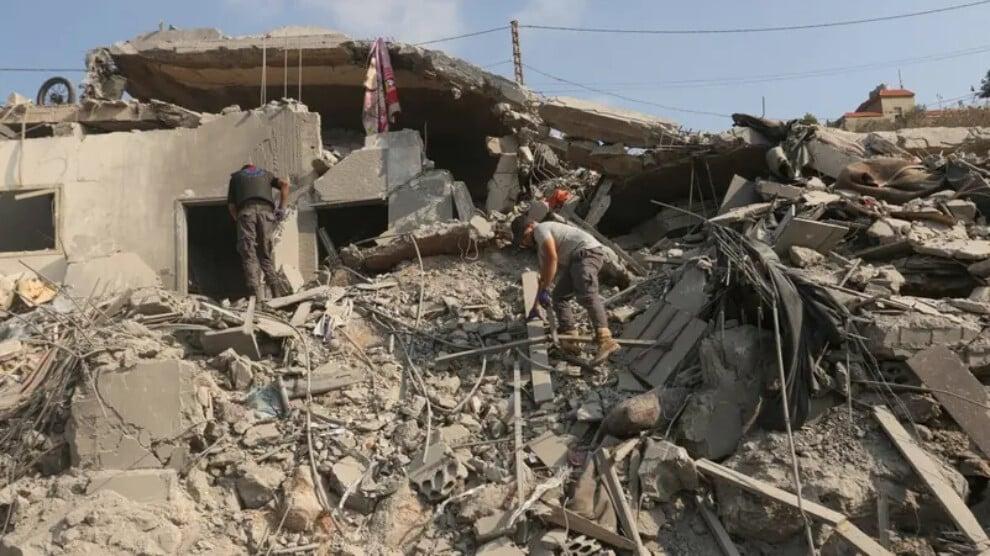
Lebanese media reported at least four people were killed in the Deir al-Zahrani strike, while Lebanon’s state-run National News Agency said Israeli warplanes struck a two-story building, killing at least four people and wounding five.
The same reporting said seven people were killed in heavy Israeli airstrikes on the southern village of Ansar, described as one of the deadliest Israeli attacks since a ceasefire was reached in 2024.
In parallel, Haaretz reported a sharp escalation in southern Lebanon over the weekend that left three IDF soldiers seriously wounded and 11 Lebanese killed, including a local Hezbollah commander, and said the Americans requested clarifications from Israel.
The clashes and strikes were reported around the Ali al-Taher Heights in Nabatieh Governorate, where Israeli artillery units targeted the mountainous area with phosphorus shells, according to Lebanon’s al-Mayadeen network.
Threats, accusations, and talks
Israeli Defense Minister Israel Katz vowed to retaliate, writing on X, "No score on any front will remain unsettled," and adding, "We will forcefully defend our soldiers and citizens."
Lebanese President Joseph Aoun condemned the strikes and accused Israel of sending a "clear message" ahead of the next round of US-sponsored negotiations, according to The Times of Israel.
In response to the Israeli account that civilians were only discovered after the strike, the Prime Minister’s Office said, "Only later did the IDF learn that Hezbollah deliberately put civilians in that military compound," while Hezbollah accused Israel of a "brutal massacre" against civilians.
Ynetnews reported that Lebanese media said 11 people were killed and 19 wounded in Israeli strikes Saturday in the Ali Taher ridge area, while it also cited the Lebanese Health Ministry saying the dead there included two children and three women.
The Times of Israel said Israel’s Ambassador to the US Yechiel Leiter warned that if Lebanon used the incident to delay or discontinue peace talks, it would hand "a tactical victory to the enemies of peace," and it quoted Netanyahu spokesman Doron Spielman saying Israel wanted talks that "should jumpstart the talks and make them much more serious".
UNIFIL, framework, and risk
The AP7AM report said UNIFIL spokesperson Kandice Ardiel stated that an international presence in southern Lebanon remains important and that UNIFIL peacekeepers continue supporting the parties in implementing UN Security Council Resolution 1701.
Ardiel said UNIFIL also continues to support efforts to strengthen the presence of the Lebanese army and extend state authority in the south, while noting that UN Secretary-General Antonio Guterres had presented three options to the UN Security Council for consideration.
Haaretz linked the escalation to US involvement, saying the Americans requested clarifications from Israel, while PressTV reported that Israeli prime minister Benjamin Netanyahu issued threats against Lebanon accusing Hezbollah of violating the ceasefire and attacking inside the “Yellow Line.”
In the same PressTV account, Netanyahu’s office confirmed that three Israeli troops had been injured in a Hezbollah strike and said Israeli forces responded by attacking what it described as a “resistance headquarters” in southern Lebanon, an attack the office said killed at least 11 people, including women and children.
The stakes described across the reporting centered on the ceasefire and the framework agreement, with Ici Beyrouth saying the weekend strikes were the deadliest since the June framework agreement under American sponsorship between Beirut and Israel, which calls for disarmament of Hezbollah, a gradual withdrawal of Israeli forces, and deployment of the Lebanese army in the region.
Explore the original reporting
Compare all 17 sources
How each outlet frames it
Every outlet we compared, the headline it ran, and a link to the original article.
Our Watchdog read these 2 articles sentence by sentence. 0 means no framing found, 10 means severe. How we score.
IDF kills senior Hezbollah commander after three soldiers wounded in Lebanon
16 August, 2026
Hezbollah drone seriously wounds 3 IDF troops; Radwan commander killed in response
15 August, 2026
West Asian
Israel announces the killing of a commander in the Radwan unit and Hezbollah threatens retaliation
15 August, 2026
Israel says it has killed a senior Hezbollah leader in a raid on southern Lebanon.
16 August, 2026
Lebanon-South: Israel vows to strike Hezbollah again, new nocturnal strikes
16 August, 2026
Heavy clashes reported as Israel targets south Lebanon with airstrikes, artillery, phosphorous shelling
16 August, 2026
The occupation announces the assassination of a senior Hezbollah commander at Deir al-Zahrani.
16 August, 2026
Israeli army: assassination of a commander in the al-Badr unit of Hezbollah
16 August, 2026
Israel kills a commander in the Ridwan Unit in Ansar… Hezbollah vows to respond
15 August, 2026
Asian
Abu Hassan Alaa: Israeli strike kills senior Hezbollah commander in Lebanon
16 August, 2026
A Hezbollah commander was killed in an Israeli airstrike.
16 August, 2026
Israeli military says strike kills senior Hezbollah commander in southern Lebanon
16 August, 2026
(Multimedia) Israel announces that 3 soldiers were wounded and a commander of the Quds Force was killed in a Hezbollah attack
16 August, 2026
Western Mainstream
Middle East: Israeli army kills a high-ranking Hezbollah commander in Lebanon
16 August, 2026
Israeli
Analysis • U.S. backs Israel on Hezbollah as Trump shows Netanyahu tough love elsewhere
16 August, 2026
Israeli strikes reported in south Lebanon as Defense Minister Katz vows to ‘settle scores’
16 August, 2026
Read stored source text: ANF
Israel announces the killing of a leader of the Radwan Force and Hezbollah threatens retaliation The Israeli army announced the killing of a Hezbollah leader during a raid on the town of Ansar in southern Lebanon, while the party vowed to respond to the Israeli escalation, which left 11 people dead and 19 others injured. The Israeli army said it targeted military formations belonging to Hezbollah in southern Lebanon in response to what it described as activity targeting its forces in the Al-Taher Heights area overlooking Nabatieh. It added that the airstrike on the town of Ansar resulted in the killing of Ali Samir al-Hajj Hassan, whom it said was a commander in Hezbollah’s Radwan Force. Ansar is located about 20 kilometers from the Israeli border, outside the so-called “Blue Line” that runs about 10 kilometers inside Lebanese territory and where Israeli forces are deployed. Official Lebanese sources reported that the Israeli raids that targeted the outskirts of Nabatieh, the area of Ali al-Taher, and the towns of Ansar and Deir al-Zahrani left 11 people dead, including three children, and 19 others wounded, in the highest daily toll since the framework agreement between Lebanon and Israel was signed in late June. Lebanese President Michel Aoun condemned the raids, saying they send a clear message about the course of negotiations and the American efforts to implement the framework agreement between the two countries. Prime Minister Najib Mikati said that those killed in the Ansar raid, including women and children, were “not military infrastructure” and did not constitute military targets, and he called on Israel to stop the escalation, which he described as “extremely dangerous” and undermining efforts to stabilize security in southern Lebanon. Hezbollah, for its part, said Israeli attacks would be met “as appropriate,” and urged the Lebanese government to suspend negotiations with Israel, which it described as “humiliating.” These developments occur amid the broadest Israeli escalation in southern Lebanon since the ceasefire agreement, about two months ago, prompting hundreds of residents to flee their homes amid fears of widening clashes and a deteriorating security situation in the south.
Read stored source text: AP7AM
Jerusalem, Aug 16 : An Israeli airstrike killed a senior commander in Hezbollah's Badr regional division in southern Lebanon, the Israeli military said Sunday. Lebanese media reported that at least four people were killed in the attack. The Israeli military said in a statement that Abu Hassan Alaa was killed late on Saturday in the strike on Deir al-Zahrani. It described the attack as "a response" to an earlier Hezbollah drone strike targeting Israeli troops in southern Lebanon that wounded three soldiers. Lebanon's state-run National News Agency said Israeli warplanes struck a two-story building, killing at least four people and wounding five. Also on Saturday, seven people were killed in heavy Israeli airstrikes on the southern village of Ansar, one of the deadliest Israeli attacks since a ceasefire was reached in 2024. Earlier on Saturday, the Israel Defense Forces (IDF) said in a statement that it killed a commander in Hezbollah's elite Radwan Force during overnight strikes in southern Lebanon. The IDF said the militant was identified as Ali Samir Al-Haj Hassan, a battalion commander in the unit. It added that he was struck in a Hezbollah headquarters in the town of Ansar, Nabatieh District, in response to a Hezbollah attack against Israeli forces operating in the "security zone." In a separate statement, the Israeli prime minister's office said three Israeli soldiers were seriously injured in the Hezbollah attack. "The IDF responded by striking the Hezbollah terror headquarters which ordered the attack," it read. The Israeli military said several other militants involved in planning and advancing attacks against its soldiers were also killed. Hassan's family was also present inside the headquarters at the time of the strike, it added. Meanwhile, United Nations Interim Force in Lebanon (UNIFIL) spokesperson Kandice Ardiel has said that an international presence in southern Lebanon remains important. Ardiel noted that UN Secretary-General Antonio Guterres has presented three options to the UN Security Council for consideration. Ardiel said UNIFIL peacekeepers remain present in southern Lebanon and continue supporting the parties in implementing UN Security Council Resolution 1701, which she said remains the cornerstone of stability in southern Lebanon. Ardiel said UNIFIL also continues to support efforts to strengthen the presence of the Lebanese army and extend state authority in the south. Note: The content of this article is sourced from a news agency and has not been edited by the ap7am team.
Read stored source text: CNN Arabic
(CNN) -- The Israeli army said Sunday that it killed a senior Hezbollah commander, a day after it carried out raids in southern Lebanon. In a statement, the Israeli army said it targeted the Deir al-Zahrani area on Saturday and killed Abu Hassan Alaa, a senior commander of Hezbollah’s Baqer/“Badr” unit, who "participated in planning and executing many terrorist attacks against Israeli soldiers, including launching drones loaded with explosives toward Israeli soldiers in southern Lebanon." A wave of Israeli airstrikes in southern Lebanon on Saturday left at least 11 people dead, including women and children, according to the Lebanese Health Ministry. The office of the Israeli prime minister had accused Hezbollah of violating the ceasefire, saying three Israeli soldiers were seriously wounded in an attack carried out by the group in southern Lebanon. The Israeli army said on Saturday that it targeted a base of the Ridwan Force, Hezbollah’s elite unit, in response to the attack, adding that the strike killed a person described as a battalion commander and several other people.
Read stored source text: DIE WELT
He was held responsible for explosive attacks on Israeli soldiers: the Israeli army reports the killing of a senior Hizbollah commander in Lebanon. The Israeli army claims to have targeted a senior commander of the Lebanese Hizbollah militia, saying the commander was hit on Saturday during an attack in Deir al-Sahrani in southern Lebanon. Official Lebanese reports from the town cited four dead and 17 injured. Hizbollah did not initially issue an official statement about the commander’s death. According to the Israeli army, the attack was a "reaction to Hizbollah operations against Israeli soldiers in the security zone." In an attack by a drone loaded with explosives at the Ali al-Taher Pass, three Israeli soldiers were seriously injured. The killed commander had previously been involved in several attacks on Israeli soldiers, including with explosive drones, the statement said. The claims could not be independently verified. In total, at least eleven people were killed and 19 injured in two Israeli airstrikes in southern Lebanon on Saturday, according to Beirut’s Health Ministry. Lebanese Prime Minister Nawaf Salam said on X that the strikes were an "extremely serious matter" that undermines stabilisation efforts. Both Israel and the pro-Iranian Hizbollah regularly accuse each other of violations of a ceasefire. The Israeli army has unilaterally declared a "security zone" in southern Lebanon to prevent Hizbollah attacks on the north of the country. Israel and Lebanon had agreed in June on a framework that envisages Hizbollah’s disarmament, a gradual withdrawal of Israeli troops from southern Lebanon, and the deployment of the Lebanese army to the region. Hizbollah, however, rejects direct talks between Israel and Lebanon and refuses to surrender its weapons.
Read stored source text: Haaretz
Gift this articleShare to FacebookPrint article Article printing is available to subscribers only Print in a simple, ad-free format Subscribe Comments: SaveZen Reading Zen reading is available to subscribers only Ad-free and in a comfortable reading format Subscribe !Amos Harel. Amos Harel 03:46 AM • August 16 2026 IDT The sharp escalation in southern Lebanon over the weekend, with three IDF soldiers seriously wounded and 11 Lebanese killed, including a local Hezbollah commander, along with his wife and children, has apparently led the Americans to request clarifications from Israel. Loading... Click the alert icon to follow topics: FollowLebanon FollowIsrael - U.S. FollowHezbollah FollowDonald Trump Comments Your Perspective Belongs Here Want to reply? Subscribe to join the conversation SUBSCRIBE Already signed up? Log in Loading... In the News In the News: Live UpdatesIranWest BankIsraeli Think TankGazaSecret Cruise MissileSettler ViolenceMinnesotaHaaretz Podcast ICYMI Trending Now Trending Now Trending Now Trending Now Trending Now ICYMI
Read stored source text: i24NEWS
- i24NEWS - The Middle East - The Israeli army: assassination of a senior commander in the Ba’tha (Badr) unit affiliated with Hezbollah, in response to the violation in southern Lebanon - The Israeli army: assassination of a senior commander in the Ba’tha unit affiliated with Hezbollah, in response to the violation in southern Lebanon - After the attacks in southern Lebanon, Israeli security minister Gantz: "No tally will be left open on any field; we will vigorously defend our soldiers and our citizens" • U.S. State Department spokesperson to i24NEWS: "The experimental operation is the only path to peace" - The Israeli army tonight (between Saturday and Sunday) attacked in the Ali al-Tahir area in southern Lebanon, in response to what it considered a Hezbollah breach, in which three Israeli soldiers were wounded by a parachute drone explosion. Prime Minister Netanyahu wrote on X after the attacks: "No tally will be left open on any field; we will vigorously defend our soldiers and our citizens". - Live broadcast: - A Lebanese political source: "Hezbollah is looking for an opportunity to undermine the direct negotiations between Israel and Lebanon." The same source added that Hezbollah has already begun to intensify its military activity, awaiting further escalation with Iranian approval, against the backdrop of tensions surrounding its agreement with the United States. On the other hand, Prime Minister Netanyahu is seeking a military achievement on the southern Lebanese front, which could bolster his position before the elections expected within months. Yet he also uses what is happening on the ground as a means to pressure the Lebanese side in the negotiations, especially in light of the lack of progress indicating that the Lebanese state has actually and seriously begun disarming Hezbollah. - The Israeli Security Agency (Shin Bet) warns: increasing attempts of phishing attacks targeting Israeli journalists - The Israeli army spokesperson: Yesterday, Abu Hasan Alaa, the prominent commander of the Ba’th Brigade of Hezbollah, was attacked in the Deir al-Zahrani area in southern Lebanon, resulting in his death in response to a operation carried out against Israeli forces operating in the security zone. The Israeli army will not allow Hezbollah to harm the citizens of the State of Israel and its forces, and will continue to work to remove any threats. - A spokesperson for the U.S. State Department told i24NEWS following the escalation in Lebanon over the weekend: "The experimental areas operation remains the only possible path to long-term peace and security for Lebanon and Israel." - Israeli security minister Gantz after the attacks in southern Lebanon: "We will not leave any tally open on any field, and we will defend our soldiers and our citizens vigorously." - The Missing Persons Committee of the Iranian Armed Forces General Staff claims that Qatar arrested and is detaining three Iranian pilots missing since March after their planes were shot down, which Qatar denies. - Lebanese channels reported nighttime Israeli attacks on Martyr Square and the village of Raman in the south of the country. - This post can’t be displayed because social networks cookies have been deactivated. You can activate them by clicking .
Read stored source text: Ici Beyrouth
Israel threatened on Sunday to strike Hezbollah in Lebanon again if there is a new threat, the day after Israeli strikes that killed 11 people in the south of the country, the deadliest since June when a framework agreement between Beirut and Israel under American auspices was reached. New nocturnal strikes also targeted several localities in the south. “We will settle all our scores, in any arena of combat whatsoever. We will defend our soldiers and our civilians with all our power,” wrote Israeli Defense Minister Israel Katz on X. The Israeli army said Saturday’s strikes were in response to explosive drone launches by Hezbollah that seriously injured three Israeli soldiers inside the “security zone,” a term Israel uses to designate a border strip about ten kilometers deep that it occupies in southern Lebanon. A second Hezbollah commander killed The Israeli army said on Sunday that a second Hezbollah commander had been killed in these strikes. Abu Hassan Alaaune, described as a senior commander of Hezbollah’s Badr unit and involved, according to Israel, in the explosive drone attacks, was killed Saturday. It had earlier announced the death of Ali Samir Al-Haj Hassan, described as a commander of the al-Radwan Force, Hezbollah’s elite unit. The Israeli army also said it had learned after the strike that Ali Samir Al-Haj Hassan’s family “was with him,” adding that they “were not the target of the strike.” Lebanese President Joseph Aoun lamented the death of “an entire family” in the village of Ansar, in the Nabatieh district. The Lebanese Health Ministry reported three children and two women among the dead. A strike against a dwelling on the outskirts of Ansar killed seven and wounded three, according to the National News Agency (ANI). The house was destroyed and rescue teams continued to search the rubble. Another Israeli strike on Deir al-Zahrani, in the Nabatieh region, killed four and wounded five, according to Civil Defense. The office of Israeli Prime Minister Benjamin Netanyahu accused Hezbollah of deliberately endangering civilians, an accusation rejected by the Shiite movement. “Netanyahu, who is subject to proceedings before the International Criminal Court for war crimes and crimes against humanity committed in Gaza, once again presides over the massacre of Lebanese civilians,” Hezbollah said in a statement. New strikes After deadly strikes on Saturday, the Israeli army continued Sunday its operations in southern Lebanon. It bombed the localities of Mansouri and Majdalzoun, in the Tyre district, after carrying out several air raids during the night and at dawn against Kfar Remman and Deir Siryan. The Ali al-Taher and al-Dabsha heights were also targeted by a series of intense air strikes. Flares and, according to local sources, phosphorous bombs were used against the heights of Ali al-Taher and their surroundings. The localities of Sejod and Mansouri were also hit by artillery fire, while several southern villages were bombed during the night. Israeli drones also flew over the southern suburbs of Beirut before noon. Framework agreement Saturday’s strikes are the deadliest since the June framework agreement under American sponsorship between Israel and Lebanon. The agreement calls for the disarmament of Hezbollah, a gradual withdrawal of Israeli forces from southern Lebanon, and deployment of the Lebanese army in the region. Israel says the operations since Saturday are retaliation for Hezbollah attacks and for a “dangerous violation of the agreement” by the movement, which allegedly attacked Israeli forces inside the area controlled by Israel. Lebanon had been drawn into the Iran–Israel–United States conflict earlier in March when Hezbollah targeted Israel in support of Tehran. Israel had responded with intense bombardments in Lebanon and the deployment of troops in the country, resulting in more than 4,300 deaths according to Lebanese authorities. Via AFP
Read stored source text: PressTV
Israeli forces have carried out airstrikes, artillery fire, and phosphorus shelling against areas in southern Lebanon, with heavy clashes and intense gunfire reported around the Ali al-Taher Heights in the region’s Nabatieh Governorate. According to Lebanon’s al-Mayadeen network, Israeli warplanes launched airstrikes on an area between Ali al-Taher and al-Dabsha in Nabatieh. At the same time, Israeli forces subjected the Ali al-Taher Heights to heavy machinegun fire. The network further reported that Israeli artillery units targeted the mountainous area with phosphorus shells. Lebanese sources also reported heavy clashes and intense gunfire around the heights, saying the Lebanese resistance movement Hezbollah’s fighters were trying to prevent the invaders from advancing towards the area. Hebrew-language media reported casualties among Israeli forces in a Hezbollah retaliation. The reports came hours after Israeli prime minister Benjamin Netanyahu issued threats against Lebanon. He accused Hezbollah of violating the ceasefire and attacking Israeli forces inside the “Yellow Line.” He also said the Israeli military would continue its incursions in Lebanon and the Gaza Strip in accordance with relevant directives without acknowledging the military’s persisting violations against the country and the blockaded coastal sliver. On Saturday, Israeli army radio had reported that three Israeli troops had been wounded after an explosive-laden drone struck an Israeli forces’ concentration in the Ali al-Taher Heights. According to the report, all three belonged to the Yahalom special engineering unit, with one sustaining very critical injuries and the other two being seriously wounded. The radio said the drone was the third of its kind launched towards the mountain range by Hezbollah in recent weeks, while previous drones had reportedly been used for intelligence and reconnaissance missions in the area. Netanyahu’s office also confirmed that three Israeli troops had been injured in a Hezbollah strike. The office said Israeli forces responded by attacking what it described as a “resistance headquarters” in southern Lebanon. The attack killed at least 11 people, including women and children, with the office alleging that the troops realized that the targeted premises housed civilians rather than military personnel, only after staging the attack. Hezbollah condemned the “brutal massacre” and pledged to respond. The movement said the incident was part of the Israeli regime’s record of attacks against Lebanon and warned that continued Israeli attacks and attempts to impose new realities on the ground would be met with an appropriate response in defense of Lebanon, its people, sovereignty, and national dignity.
Read stored source text: The Jerusalem Post
The IDF killed senior Hezbollah commander Abu Hassan Alaa during weekend strikes in the Deir ez-Zahrani area in southern Lebanon, the military announced on Sunday morning. Alaa served as a commander in Hezbollah's Bader Unit and had carried out attacks on IDF soldiers operating in the region. The military noted that its strikes came alongside those from over the weekend at Hezbollah's headquarters in the Ansar area, in which Ali Samir Al-Haj Hassan, a battalion commander in Hezbollah’s Radwan Force unit, was killed. Both attacks came in response to the incident in which three IDF soldiers were seriously wounded over the weekend. However, the IDF noted on Saturday that, at the time of the strike, Hassan’s family was with him inside the headquarters. IDF, PMO says military was unaware of civilians in Hezbollah HQ during strike “It should be emphasized that the family members were not the target of the strike,” the IDF wrote in a statement. “The strike was specifically directed at Hassan, who was a lawful target under international law." "The terrorist used his family as human shields, hiding alongside them inside the military headquarters.” The Prime Minister's Office said that it had been unaware that Hezbollah put civilians in the Hezbollah military compound. “Only later did the IDF learn that Hezbollah deliberately put civilians in that military compound. Hezbollah is willing to do anything, including using its own civilians as human shields, to falsely accuse Israel of deliberately targeting civilians, which the IDF clearly did not.” Shoshana Baker and Corinne Baum contributed to this report.
Read stored source text: The Times of Israel
Lebanese media reported Israeli airstrikes in the Ali Taher Ridge in southern Lebanon Saturday overnight, a day after three Israeli soldiers were seriously wounded by an explosive drone launched by Hezbollah. The reported strikes came hours after residents of the Upper Galilee were notified by local authorities that explosions were expected to be heard due to IDF activity in Lebanon. With fighting threatening to ramp up in Lebanon and in Gaza, Defense Minister Israel Katz said in a Sunday morning post on X: âNo score on any front will remain unsettled.â He added: âWe will forcefully defend our soldiers and citizens.â His comments come after overnight reports of strikes in southern Lebanon, following an attack on troops early Saturday in which three soldiers were wounded. Israel has not confirmed the reports. Earlier Israeli strikes killed 11 in Lebanon, according to local authorities on Saturday, including three children and two women. Israeli strikes are targeting the strategic Ali al Taher Ridge in southern Lebanon, overlooking Nabatieh. It is possible we are witnessing some sort of special operationpic.twitter.com/u0agbN3S6M â Open Source Intel (@Osint613)August 15, 2026 On Sunday, the Israel Defense Forces said it had killed a senior Hezbollah commander in an airstrike in the southern Lebanon town of Deir al-Zahrani the previous day. It said the Saturday morning strike on Ali Muhammad Fakhr al-Din came in response to a Hezbollah explosive drone attack in the predawn hours Saturday that seriously wounded three soldiers. Lebanese media reported that the Deir al-Zahrani strike on Saturday morning killed two people. Al-Din, also known as Abu Hassan Alaa, was identified by the IDF as a âsenior commanderâ in Hezbollahâs Badr regional division. The regional unit is tasked with the area north of the Litani River. The IDF said that as part of his role, Hassan Alaa took part in numerous attacks on Israeli troops in southern Lebanon. The statement from the IDF did not address the claims of overnight strikes in southern Lebanon. The army had announced previously that among those killed Saturday was Ali Samir Al-Haj Hassan, a battalion commander in Hezbollahâs elite Radwan Force, who was hit in a strike in the town of Ansar. The Israeli strikes drew harsh criticism from Lebanonâs President Joseph Aoun, who accused Israel of sending a âclear messageâ ahead of the next round of US-sponsored negotiations between the countries. The IDF said three of its troops operating in the area of the Ali Taher Ridge were seriously wounded Friday overnight after being hit by an explosive drone launched by Hezbollah around 2:30 a.m. The drone exploded near soldiers of the elite Yahalom combat engineering unit, seriously wounding an officer and two soldiers, all three of whom were taken to a hospital for treatment. In a rare English-language statement published on Shabbat, Prime Minister Benjamin Netanyahuâs office said âHezbollah violated the ceasefire in Lebanon by attacking our soldiers in the security zone, which protects Israeli communities just across the border.â âThe IDF responded by striking the Hezbollah terror headquarters which ordered the attack,â the PMO said. âOnly later did the IDF learn that Hezbollah deliberately put civilians in that military compound,â the statement added, acknowledging the civilian casualties. The military also confirmed that women and children had been killed and said they were family members of the senior Hezbollah commander it targeted. âThe headquarters was used by the Hezbollah terror organization to command its activities in the area,â the military said. Aoun condemned what he called the âongoing Israeli attacksâ on southern Lebanon and ârepeated violations of the framework agreementâ and international law protecting civilians, according to a statement from his office. He said the strikes, including the attack in Ansar, amounted to a âclear message on the negotiation process,â but did not explicitly threaten to pull out of them. The comments came ahead of the next round of US-sponsored talks, expected to take place in Rome early next month. Israeli officials cautioned Lebanon against using the violence as an excuse to pull out of talks and urged a deeper engagement. Israeli Ambassador to the US Yechiel Leiter, who heads Israelâs negotiating team in the Lebanon talks, said: âIf the Lebanese government uses this incident as a pretext to delay or discontinue peace talks, it would hand a tactical victory to the enemies of peace. Derailing the talks is precisely what Hezbollah is trying to achieve.â Netanyahu spokesman Doron Spielman told AFP that Israel wanted new and more ambitious US-brokered talks with Lebanon following Saturdayâs deadly attacks, which he asserted âshould jumpstart the talks and make them much more serious, not do the opposite.â âAnd I think it will. It will hopefully move these talks along because the enemy here is clear and the enemy is Hezbollah,â Spielman said. âWe believe in the agreement. We very much hope that the Lebanese Armed Forces are going to be able to step into the foray, and together weâre going to remove Hezbollah from the picture.â Israel and Lebanon announced a US-mediated framework agreement on June 26, six days after a precarious truce between Israel and Hezbollah went into effect. The framework set out a plan for Israeli forces to withdraw from southern Lebanon in exchange for Hezbollahâs disarmament and envisioned steps toward an eventual peace agreement between Israel and Lebanon, which technically remain in a state of war. Hezbollah was not a party to the agreement and has rejected calls for it to disarm. Hezbollah said the Israeli strikes would be met with an âappropriateâ response, urging authorities to halt âhumiliatingâ negotiations with Israel. As a multimedia journalist, my job is to take thequality, fact-based journalismproduced by The Times of Israel newsroom and make it accessible across every platform â from Instagram posts to podcasts to short-form videos. This is how many, especially young people, consume news these days. Butmisinformation is rampanton social media. Our team at ToI producesaccurate, responsibleshort-form reporting on Israel and the Jewish world. If you believe in the importance of factual social media journalism, please consider joining our reader support group,The Times of Israel Community.Your financial support is essential to sustain responsible multimedia reporting. â Gabriella Jacobs, multimedia journalist Weâre really pleased that youâve readXTimes of Israel articlesin the past month. Thatâs why we started the Times of Israel - to provide discerning readers like you with must-read coverage of Israel and the Jewish world. So now we have a request.Unlike other news outlets, we havenât put up a paywall. But as the journalism we do is costly, we invite readers for whom The Times of Israel has become important to help support our work by joiningThe Times of Israel Community. For as little as $6 a month you can help support our quality journalism while enjoying The Times of IsraelAD-FREE, as well as accessingexclusive contentavailable only to Times of Israel Community members. Thank you,David Horovitz, Founding Editor of The Times of Israel
Read stored source text: Vietnam.vn
On August 15, Kandice Ardiel, spokesperson for the United Nations Interim Force in Lebanon (UNIFIL), said that the presence of international forces in the south of the country remained crucial and added that UN Secretary-General Antonio Guterres had presented three options to the Security Council. Speaking on the Lebanese television channel Al-Jadeed, Ardiel added that UNIFIL’s peacekeeping force remains in the south of Lebanon and continues to support the parties in implementing UN Security Council Resolution 1701, which she regards as the cornerstone of stability in southern Lebanon. She noted that UNIFIL would continue to support efforts to strengthen the presence of the Lebanese army and to extend the state’s authority in the south. Ms. Ardiel made this statement after Israeli airstrikes caused casualties and damage in several areas of southern Lebanon. According to Lebanese authorities, nine people, including children, were killed in an airstrike on the city of Ansar, north of Tyre. Four other people also perished in a separate attack. Israel also confirmed carrying out airstrikes in response to an attack by Hezbollah forces against what Israel calls a security zone in southern Lebanon. According to Israeli Prime Minister Doron Spielman, three Israeli soldiers were seriously wounded during the airstrikes. Separately, the Israel Defense Forces (IDF) said that a battalion commander of the Radwan Force, an elite Hezbollah unit, identified as Ali Samir Al-Haj Hassan, was killed in an airstrike on the night of August 14–15. The Israeli army added that several other Hezbollah fighters involved in planning and coordinating attacks against Israeli soldiers were also killed. According to Spielman, Israel carried out these airstrikes to facilitate negotiations with Lebanon, under the aegis of the United States. He stated that Israel complies with the U.S.-backed agreement which provides for the gradual disarmament of Hezbollah forces by the Lebanese security forces. The next round of negotiations between Israel and Lebanon is expected to resume at the beginning of next month in Rome, Italy. Source: https://www.vietnamplus.vn/chi-huy-cua-hezbollah-thiet-mang-trong-dot-khong-kich-cua-israel-post1130498.vnp
Read stored source text: Ynetnews
Three IDF troops — an officer and two soldiers from the Yahalom combat engineering unit — were seriously wounded early Saturday when a Hezbollah explosive drone struck them near the Ali Taher ridge in southern Lebanon, the IDF said after the Sabbath. The attack occurred at around 2:30 a.m. The Prime Minister’s Office had unusually disclosed the incident earlier Saturday, before a formal IDF announcement and during the Sabbath. “This morning Hezbollah violated the ceasefire in Lebanon by attacking our soldiers in the security zone, which protects Israeli communities just across the border,” the PMO said in English. “The Hezbollah attack seriously injured three of our soldiers. The IDF responded by striking the Hezbollah terror headquarters which ordered the attack.” The three troops were evacuated to Rambam Medical Center in Haifa. By Saturday evening, two remained in serious condition while the third had improved to moderate condition. Shortly after the PMO statement, the IDF said its retaliatory strikes killed Ali Hassan, a battalion commander in Hezbollah’s elite Radwan Force, at a central Hezbollah headquarters in Ansar in southern Lebanon. The military said additional Hezbollah operatives involved in advancing attacks against IDF forces in the security zone were also killed. According to the military, Hassan’s family was inside the military headquarters with him at the time of the strike and was reportedly also hit. “They were not the target of the strike,” the IDF said. “The strike was specifically directed at Hassan, who was a lawful target under international law. The terrorist used his family as human shields and hid with them inside the military headquarters.” “The IDF will not allow the Hezbollah terrorist organization to harm the citizens of the State of Israel or its forces and will continue to act to remove threats,” it added. The Israeli statements came after Lebanese media reported that 11 people were killed and 19 wounded in Israeli strikes Saturday in the Ali Taher ridge area of southern Lebanon. According to the reports, four people were killed and 17 wounded in a strike on Deir al-Zahrani in the Nabatieh area, with a child and 11 women among those wounded. Seven more people were reported killed in Ansar. Lebanon’s Health Ministry said the dead there included two children and three women. The Prime Minister’s Office said the IDF learned only after the strike that civilians had been brought into the military compound. “Only later did the IDF learn that Hezbollah deliberately put civilians in that military compound,” the statement said. “Hezbollah is willing to do anything, including using its own civilians as human shields, to falsely accuse Israel of deliberately targeting civilians, which the IDF clearly did not.” Israeli officials later explained that the unusual statement was issued during the Sabbath because the reaction in Lebanon to the strikes had been “very harsh” and Israel felt it needed to clarify the circumstances of the attack. “There was no choice,” the officials said. A spokesman for Prime Minister Benjamin Netanyahu also told AFP after the strikes that Israel wanted “more serious” negotiations. Hezbollah accused Israel of carrying out a “brutal massacre” against civilians and claimed the escalation was politically motivated. “The Lebanese people woke up this morning to attacks and a brutal massacre carried out by Israel against innocent people,” the group said. It accused Netanyahu of seeking to escalate the war for domestic political purposes and urged Lebanese authorities to reconsider direct negotiations with Israel. Lebanese media also quoted U.S. Ambassador to Lebanon Michael Issa responding to a question about when Israeli strikes would end by saying: “Tell Hezbollah that if it hands over its weapons, everything will stop.” Saturday’s strikes produced the highest reported death toll since Israel and Lebanon signed their framework agreement at the end of June. Hezbollah subsequently accused the United States of complicity with Israel, saying Washington was prioritizing Israeli security over Lebanese sovereignty and warning that continued Israeli action would face “an appropriate response.” Lebanese President Joseph Aoun condemned the strikes and what he described as repeated violations of the framework agreement and international laws protecting civilians. The Lebanese presidency said the strikes had killed an entire family from Ansar and described them as “a clear message regarding the negotiation process and the American efforts aimed at implementing the agreement.” Lebanese Prime Minister Nawaf Salam also rejected Israel’s claim that the strikes targeted military infrastructure. “The Israeli escalation since this morning is extremely dangerous and harms efforts to establish stability,” Salam said. “Those killed in the Israeli strike were not part of military infrastructure, nor were the children and women.” He added that responsibility for dealing with any military structures inside Lebanon rests exclusively with the Lebanese state, army and legitimate institutions, arguing that their existence does not give Israel the right to violate Lebanese territory or endanger civilians. Israel’s ambassador to the United States, Yechiel Leiter, said Hezbollah had attacked IDF troops operating in the security zone in violation of the ceasefire and that the commander killed in response had used his own family as human shields inside a military headquarters. He warned that if the Lebanese government used the incident to delay or halt peace contacts, it would hand Hezbollah “a tactical victory.” U.S. Ambassador to Israel Mike Huckabee also backed the Israeli account, writing that “Iran’s proxies are pure evil” and accusing Hezbollah of deliberately placing children in the military area knowing Israel would respond. The escalation comes amid growing tensions over the strategic Ali Taher ridge. Lebanese channel Al-Jadeed reported Friday, citing official sources, that Tehran had sent a direct warning that an Israeli strike in the Ali Taher area would lead Iran to enter the cycle of escalation. According to the report, Israel has refused to withdraw from the area in a way that would allow it to be transferred to the Lebanese army, while Hezbollah is insisting that no handover take place without a full Israeli withdrawal. The report followed warnings in Lebanon that Israel could be preparing an operation to seize the strategic ridge. A senior security official told Lebanese newspaper Al-Joumhouria that officials in Beirut had received messages indicating Israel was prepared for such a move and was awaiting a green light from the United States. First published: 17:58, 08.15.26
Read stored source text: Al-Arabi Al-Jadid
Beirut Hamoud Towns and villages in southern Lebanon were subjected to shelling and witnessed explosions today. The occupation forces carried out two massacres yesterday in Ansar and Deir al-Zahrani. The Israeli occupation army announced today, Sunday, the assassination of Abu Hassan Alaa, a senior commander in the “Badr Unit” of Hezbollah in the air strike that targeted, yesterday Saturday, Deir al-Zahrani in the Nabatieh District, while Israeli attacks on villages and towns in southern Lebanon continued. Texts and answers are generated by artificial intelligence based on Al-Jazeera reports, so sources attached should be checked. (Experimental service) This site is protected by reCAPTCHA and Google’s privacy policy and terms of service apply. Texts and answers are produced by AI based on Al-Araby Al-Jadeed reports, so it’s advisable to verify the attached sources. (Experimental service) This site is protected by reCAPTCHA and Google’s privacy policy and terms of service apply. A spokesperson for the Israeli army, Avichai Adraee, stated in a communiqué quoted by the Hebrew site Walla!, that the assassination was carried out in response to the party’s operations against forces operating in the security zone. The occupation also noted that the assassination of the commander in “Badr” was aimed at playing a role in pushing back “terrorism” in what it called the “security zone,” while also launching booby-trapped drones against the army forces in southern Lebanon, where earlier three soldiers from the “Yahalom” engineering unit specializing in operations were wounded in the Tal al-Taher heights. No comment has yet been issued by Hezbollah regarding the Israeli army’s announcement of Abu Hassan Alaa’s assassination. On his part, Defense Minister Yoav Kish threatened to leave no account open on any front, and he stressed in a post on his X platform today, Sunday, that “we will defend our soldiers and our citizens.” The previous statements come as southern Lebanon has recently witnessed a serious escalation; 11 Lebanese citizens were martyred, and others were injured, while three soldiers from the Yahalom engineering unit were seriously wounded. According to Haaretz on Sunday, these developments led to an American request for “clarifications” from Israel, which the American administration has accepted, according to the same newspaper. Israel justifies the massacre of Ansar: we killed a Hezbollah leader after three soldiers were injured. On the ground, villages and towns in southern Lebanon continued to experience Israeli attacks; Israeli drones targeted the outskirts of the town of al-Manasouri, while Israeli soldiers carried out a violent explosion in the town of Taloussa in the Marjeyoun district, and later in the city of Bint Jbeil, and then in the town of al-Tayyiba, according to the National News Agency of Lebanon. It noted that Israeli artillery targeted the towns of Sarbin, Bra’ashit, al-Manasouri, and Wadi Za’baqin with artillery fire. Additionally, Haaretz pointed out that although the United States accepted the clarifications on Lebanon, which began with endorsing the U.S. envoy to Israel, David Friedman, the official Israeli narrative, and it is expected that presidential envoys of Donald Trump will ask Prime Minister Benjamin Netanyahu for several demands related to other fronts; these envoys will arrive in Israel this week, while Washington expects Tel Aviv not to obstruct its political moves in the region, especially in Gaza. The newspaper explained that Jared Kushner, Trump’s son-in-law, and the UN Special Representative for Gaza, Nickolay Mladenov, plus former British Prime Minister Tony Blair, are expected to arrive; Gaza is at the top of the visit agenda, especially after Netanyahu rejected the 15-point plan proposed by the “Peace Council,” though at the same time he restrained part of the Israeli army’s offensive activity. A drone shot down after breaching Romanian airspace coincides with a wide attack on Moscow. Ayimk Dotan... a hotspot opening the appetite for settlement toward the Arabah Plain. Indications point to near a comprehensive battle between the Yemeni government and the Houthis.
Read stored source text:
Summary The Lebanese President, Joseph Aoun, said that the strike on Ansar’s supporters resulted in the “death of an entire family,” considering the attacks a “clear message” to the negotiation path and the American efforts to implement the framework agreement between the two countries. The Israeli army announced today, Sunday, that it killed a senior commander in the al-Badr unit of Hezbollah in a strike on Deir al-Zahrani in Nabatieh, southern Lebanon. Eleven people were killed, including three children, in Israeli airstrikes on south Lebanon yesterday, Saturday, according to official sources, the highest daily toll since the signing of the framework agreement between Lebanon and Israel in late June last year. The Israeli army said yesterday that the strikes it launched on the town of Ansar in southern Lebanon targeted a military official in Hezbollah and came in response to an operation carried out by the party against its forces. In a statement on the X platform, the army said its forces attacked a Hezbollah command headquarters and killed “Ali Samir Al-Hajj Hassan, who was a commander of the al-Ridwan sector” within the party’s force. It referred to what it described as a “claim” of killing members of the Al-Hajj Hassan family, saying they were not targeted, and that Al-Hajj Hassan “made members of his family human shields and hid with them inside the military command headquarters.” The Lebanese Ministry of Health announced that the strike on the town of Ansar killed seven people, including three children and two women. The ministry reported four deaths and 17 others injured, including a child and 11 women, in another strike on Deir al-Zahrani. Lebanese President Joseph Aoun said that the strike on Ansar led to the “death of an entire family.” He considered the attacks a “clear message” to the negotiation path and the American efforts to implement the framework agreement between the two countries. By contrast, the spokesman for Israeli Prime Minister Benjamin Netanyahu, Doron Soloman, said yesterday, Saturday in a statement to Agence France-Presse that Israeli strikes against Hezbollah should “give momentum to the talks and make them more serious, not the opposite.” Later, Netanyahu’s office accused Hezbollah of using civilians as “human shields.” Hezbollah, for its part, said that Lebanese authorities should not continue the “humiliating direct negotiation track” with Israel. It added that Israeli “aggressions” and its attempts to “impose a fait accompli cannot continue and will be met accordingly.” Escalation of Attacks Earlier, the official National News Agency reported that Israel had “escalated its attacks” in southern Lebanon early yesterday, referring to a strike on a house on the outskirts of Ansar, while other strikes targeted the strategic Tal Al-Taher hill. A French press correspondent in Ansar witnessed a building completely destroyed, as medics worked to extract remains from the rubble near damaged cars. The Israeli army said it “attacked infrastructure belonging to the terrorist Hezbollah in the Nabatieh and Ansar areas,” noting that the strikes came “in the wake of activity” against its forces in the region of Ali Al-Taher heights overlooking Nabatieh. Read more This section contains related pieces, placed in (Related Nodes field) The Israeli army later added that Hezbollah had attacked “our forces inside the agreed security area,” a strip extending about 10 kilometers into Lebanese territory along the border where Israeli forces operate, calling this a dangerous violation of the agreement. In Deir al-Zahrani, a correspondent for Agence France-Presse witnessed widespread destruction and heavy traffic heading toward Sidon, with people heading north after loading cars with belongings. The National News Agency reported a strike near the town of Ansar as “the first to exceed this geographical depth since the ceasefire two months ago.” Ansar and Deir al-Zahrani lie about 20 kilometers from the border with Israel. “For the Protectors of Negotiations” Lebanese Prime Minister Najib Mikati said that “the seven victims in the Israeli strike on Ansar are not military infrastructure, and the women and children killed are not military targets.” He added that “Israel must stop this escalation.” Lebanon and Israel are scheduled to hold an eighth round of talks under American sponsorship in Rome at the beginning of next month. Hezbollah, backed by Tehran, totally rejects direct negotiations with Israel and relinquishing its weapons. Speaker of the House Nabih Berri, an ally of Hezbollah, said the Israeli aggression is “for the sponsors of negotiations and ceasefire agreements to bear responsibility to stop the war of extermination before it’s too late.” Hezbollah considered that the Israeli escalation, through “targeting civilians and widening the circle of targeted areas,” reflects Prime Minister Benjamin Netanyahu’s desire to “escalate the war to bolster his domestic political standing.” On March 2, the war in the Middle East spread to Lebanon after Hezbollah fired rockets at Israel in response to the killing of Iranian leader Ali Khamenei in the first day of the American-Israeli strikes on Iran. Violence has lessened since the signing of the memorandum of understanding between the United States and Iran in mid-June, followed by a framework agreement sponsored by Washington between Lebanon and Israel on June 26 of the same month. The framework agreement, reached after five rounds of negotiations under American sponsorship between Lebanon and Israel, provides for Hezbollah’s disarmament, a gradual Israeli withdrawal from territories it occupies in southern Lebanon, and the deployment of the Lebanese army starting from “experimental” areas. Earlier this week, Israeli Defense Minister Yisrael Katz visited southern Lebanon, vowing to keep forces in what Israel calls a “security zone” there, saying the Israeli army “is destroying underground infrastructure” and “destroying all the houses” in the area. In response to a question about Katz’s remarks, a U.S. State Department official said that a permanent military presence in southern Lebanon does not align with the commitments in the framework agreement.
Read stored source text: Sahifat Sabq al- Elektroniya
Israel kills a commander in the Ridwan Unit in Ansar... Hezbollah vows to respond Israel escalated its strikes on southern Lebanon, announcing the assassination of Hezbollah leader Ali Samir al-Hajj Hassan, a commander of a unit in the Ridwan Force, in the town of Ansar, located outside the ‘Blue Line’. The attacks left 11 dead, including 3 children, and 19 injured, triggering widespread displacement and Lebanese condemnation, while Hezbollah threatened to respond. Southern Lebanon recorded the broadest Israeli military escalation since the ceasefire agreement about two months ago, prompting hundreds to flee their villages for fear of the hostilities worsening. Footage showed lines of cars jammed on the coastal road linking the south to Beirut, as dozens of families, with children, left to escape the intensifying bombardment. The Israeli army announced that it attacked a “military building” belonging to Hezbollah “following an operation carried out against its forces in the Al-Tahtar highlands overlooking Nabatieh.” In its statement, it said it killed Hezbollah leader Ali Samir al-Hajj Hassan, a commander of the Ridwan Unit, in a raid targeting the town of Ansar. Ansar lies about 20 kilometers from the border, outside what is known as the ‘Blue Line,’ which extends about 10 kilometers into Lebanese territory and is controlled by Israeli forces. The bombardments targeted the Nabatieh fronts, the Al-Tahtar area, Ansar, and Deir al-Zahrani, resulting in 11 deaths, including 3 children, and 19 others injured, according to official Lebanese sources, marking the highest daily toll since the framework agreement between Lebanon and Israel was signed in late June. Lebanese President Michel Aoun condemned the attacks, saying they constitute a “clear message” to the negotiation path and the American-led efforts to implement the framework agreement between the two countries. Prime Minister Najib Mikati stated that the casualties of the “Israeli strike on the town of Ansar are not infrastructure targets, and the women and children who were killed were not military objectives.” He added that “Israel must stop this escalation,” calling it “extremely dangerous and undermining efforts to stabilize the south.” Meanwhile, Hezbollah warned of retaliation, affirming in a statement that the Israeli attacks will be met “in kind,” and urged the Lebanese government to immediately halt the “humiliating” negotiations with Israel, according to its wording. The current clashes between Israel and Hezbollah date back to March, when the party fired rockets at Israel in response to the killing of Iranian Supreme Leader Ali Khamenei on the first day of the US-Israeli airstrikes on Iran. Subsequently, a ceasefire was declared, and Lebanon and Israel began direct talks under American mediation. Violence has subsided since the framework agreement reached on June 26, but Israel still occupies portions of southern Lebanon that it controlled in the last war, and it continues to carry out sporadic raids and operations it says target Hezbollah facilities. The framework agreement calls for Hezbollah to be disarmed and for Israeli forces to withdraw gradually from territories they occupy in southern Lebanon, with the Lebanese army deployed starting in the “experimental” areas. Lebanon and Israel are scheduled to hold an eighth round of talks under U.S. mediation in Rome, Italy, in early next month.
Read stored source text: 巴士的報
The Israeli military said on Sunday that a latest airstrike launched by Israeli forces killed a senior commander in Hezbollah's Badr regional division in southern Lebanon. Lebanese media reported that at least four people were killed in the attack carried by Israeli forces a day earlier. In a statement, the Israeli military said that Abu Hassan Alaa was killed late on Saturday in the strike on Deir al-Zahrani. It described the attack as "a response" to an earlier Hezbollah drone strike targeting Israeli troops in southern Lebanon that wounded three soldiers. Lebanon's state-run National News Agency said Israeli warplanes struck a two-story building, killing at least four people and wounding five. Also on Saturday, seven people were killed in heavy Israeli airstrikes on the southern village of Ansar, one of the deadliest Israeli attacks since a ceasefire was reached in 2024. Israeli attacks have killed at least 4,300 people in Lebanon since the latest round of fighting began on March 2. Israeli military says strike kills senior Hezbollah commander in southern Lebanon Kim Jong Un, top leader of the Democratic People's Republic of Korea (DPRK), said he sees a brighter future for DPRK-Russia ties in a reply to Russian President Vladimir Putin, state media Korean Central News Agency (KCNA) reported on Sunday. Kim, president of the State Affairs of the DPRK, sent the reply on Saturday after receiving Putin's message on Friday, which marked the 81st anniversary of the Korean Peninsula's liberation from Japanese colonial rule at the end of World War II in 1945. In his message, Putin said the DPRK and Russia were actively cooperating across all sectors and working together to safeguard regional security and stability, according to the KCNA. Kim also expressed confidence in the reply that Russia's armed forces and people, under Putin's leadership, would succeed in defending the country's sovereignty, security interests and territorial integrity, and in building a strong Russia. He wished Putin further success in his work. The Liberation Day, observed on Aug 15, commemorates the liberation of the Korean Peninsula from Japanese colonial rule. Separately, the KCNA reported that Kim visited the Revolutionary Martyrs Cemetery on Mount Taesong in Pyongyang on Friday to pay tribute to anti-Japanese revolutionary fighters. A wreath in Kim's name was laid at the cemetery as a ceremonial wreath-laying song was played, the KCNA said. Kim said the fighters' firm convictions and unyielding spirit continued to inspire the DPRK people’s efforts to build the DPRK into a prosperous country. Kim sees brighter future for DPRK-Russia ties in reply to Putin
Read stored source text: Xinhua Wang
(Multimedia) Israel announces that 3 Israeli soldiers were wounded and a commander of the Quds Force was killed in an attack by Hezbollah Jerusalem, August 15, 2026 (Xinhua) The Office of Israeli Prime Minister Benjamin Netanyahu announced today (Saturday) that three Israeli soldiers were seriously wounded following a Hezbollah attack in southern Lebanon, while the army said it killed a brigade commander in the Hezbollah’s Quds Force unit in an airstrike on the Ansar area. Netanyahu’s office said in a statement that Hezbollah attacked early this morning Israeli forces stationed in the “security zone” in southern Lebanon, resulting in three soldiers being seriously wounded, without specifying the nature of the attack. The statement added that the Israeli army responded by bombing a headquarters it said belonged to Hezbollah, which was used to issue instructions for carrying out the attack. The statement noted that the army “only learned after the raid that civilians were at the site,” and accused Hezbollah of “using civilians to accuse Israel of deliberately targeting them.” In a separate statement, the Israeli army said it targeted last night a Hezbollah central headquarters in the Ansar area in southern Lebanon, adding that it had been used to direct the party’s activities in the region. The army announced that during the raid it killed Ali al-Samer al-Hajj Hassan, whom it described as the commander of a brigade in the Quds Force unit, along with a number of other Hezbollah elements. The army said members of the Al-Hassan family were present with him inside the building at the time of the raid and were wounded during it, noting that they “were not the intended targets of the attack.” Seven people were killed and three others were wounded in the early hours of today in an Israeli airstrike that targeted a house on the outskirts of Ansar town in southern Lebanon, according to official Lebanese media. In another Israeli airstrike, a two-story building in the town of Dair al-Zahrani in the Nabatieh district in southern Lebanon was hit, killing four people and injuring nine others, according to the Al-Jadeed satellite channel. Israel has intensified its pace of attacks on southern Lebanon since dawn today, launching a series of airstrikes, according to the Lebanese official News Agency (NNA). These developments come ten days after the seventh round of Lebanese-Israeli negotiations concluded in Rome, Italy, on August 6, aimed at strengthening security arrangements along the border and working to implement the framework agreement signed in late June. Lebanon and Israel, along with the United States, signed a framework agreement on June 26 in Washington at the end of a round of direct negotiations under American auspices. Following the signing, Netanyahu announced that his country would remain in the security zone in southern Lebanon “as long as Hezbollah does not disarm.”