Middle East06 August, 20263 min read
Israeli Attack Kills Lebanese Journalist Amal Khalil, Amnesty International Says War Crime Investigation Needed
This article is an automated aggregation of coverage from news outlets. Our editorials offer in-depth analysis curated by the NewsCord team.
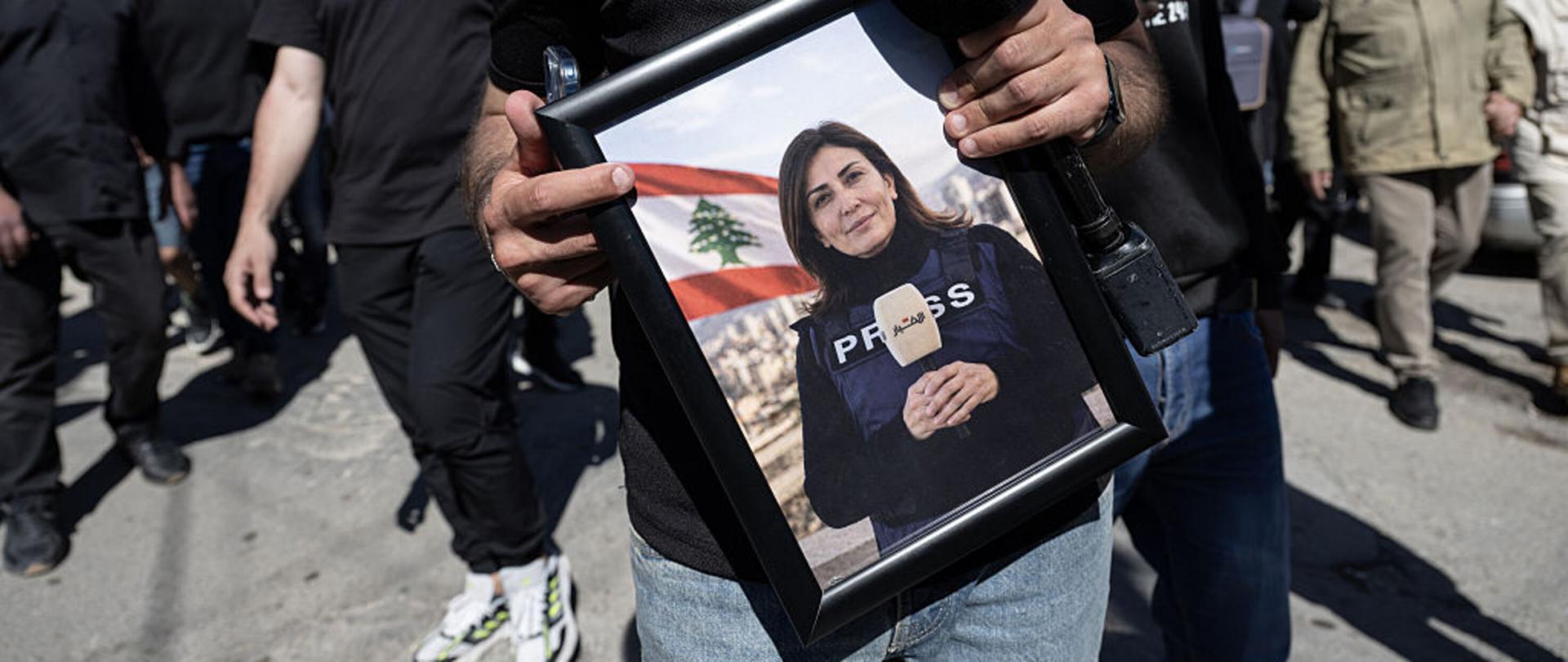
Amal Khalil, Lebanese journalist, killed in Israeli attack on south Lebanon on 22 April 2026. Amnesty International says the deadly attack must be investigated as a war crime.

Amal Khalil killed
Amnesty International said an Israeli attack killed Lebanese journalist Amal Khalil and seriously wounded camerawoman Zeinab Faraj in south Lebanon on 22 April 2026, describing it as a direct attack on civilians that must be investigated as a war crime.
Amnesty International said the two journalists, both civilians, had taken shelter after an air strike on the car in front of them killed two men, and that over the following two hours with drones hovering at close range overhead, two further air strikes hit their car and then the building where they were sheltering.

Amnesty International quoted Heba Morayef saying, "Despite this, they proceeded with what we have reasonable grounds to believe amounted to a direct attack on civilians," and said the Israeli military knew or should have known the two civilian women were sheltering.
Amnesty International also quoted Zeinab Faraj saying, "The drones got extremely close, coming through the broken roof. Less than a meter away."
Tebnine strike and talks
In separate reporting on south Lebanon, the Lebanese ministry of health said an Israeli airstrike in the town of Tebnine killed one person and injured 11, and it said the town of al-Mansouri was bombed too, forcing families to flee. The Guardian reported that the Israeli military issued a displacement order about 30 minutes before the strike, saying it was destroying Hezbollah’s infrastructure in the area in response to the group’s "violation of the ceasefire".
Reuters said Israel declared a buffer zone in southern Lebanon where its troops continue to operate to eliminate what it says is the threat of the Iran-backed group, Hezbollah, on its border, even as talks between the two countries continued in Rome. Reuters also said the Rome talks began on Tuesday and were expected to continue through Thursday, and that the flare-up coincided with the latest round of talks after the two countries agreed in June to a U.S.-brokered security arrangement intended to ease hostilities along the border.
Displacement orders and stakes
BBC reported that after two Israeli soldiers were killed by an explosion in southern Lebanon, Israel launched retaliatory strikes that killed at least one person, and it said the Lebanese health ministry reported one man was killed and 12 other people were injured in an Israeli strike in the southern town of Tibnin. BBC said the Israeli military ordered residents of Mansouri to evacuate ahead of "forceful action" there, and it described the evacuation order as the first issued in southern Lebanon since 14 June, when residents of 29 towns and villages were told to flee their homes.
“‘But Israel has no red lines – they target where they want.”
Al Jazeera reported that residents of south Lebanon said Israel had "no red lines" as it resumed strikes and issued forced displacement orders, and it quoted Yousef Shehemi saying, "But Israel has no red lines – they target where they want." Al Jazeera also reported that the latest wave of panic followed the forced evacuation order for al-Mansouri on Wednesday, and it said residents were waiting for word that it was safe to return while Israeli military demolish homes and set fire to farmland.