Technology and Scienceupdated 1h ago2 min read
Japan Meteorological Agency Mistakenly Issues 9.9 Earthquake Warning, Then Cancels It
This article is an automated aggregation of coverage from news outlets. Our editorials offer in-depth analysis curated by the NewsCord team.
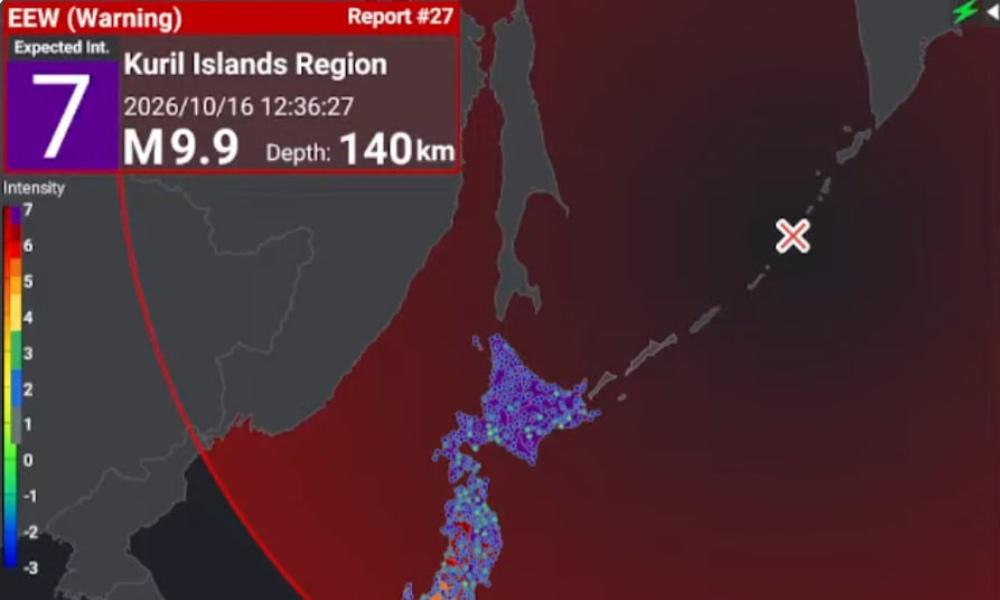
JMA issued a false 9.9-magnitude quake warning for a Kamchatka event; actual magnitude was 6.9. Warning canceled within eight minutes; no major damage or tsunami threat reported.
False 9.9 Alert
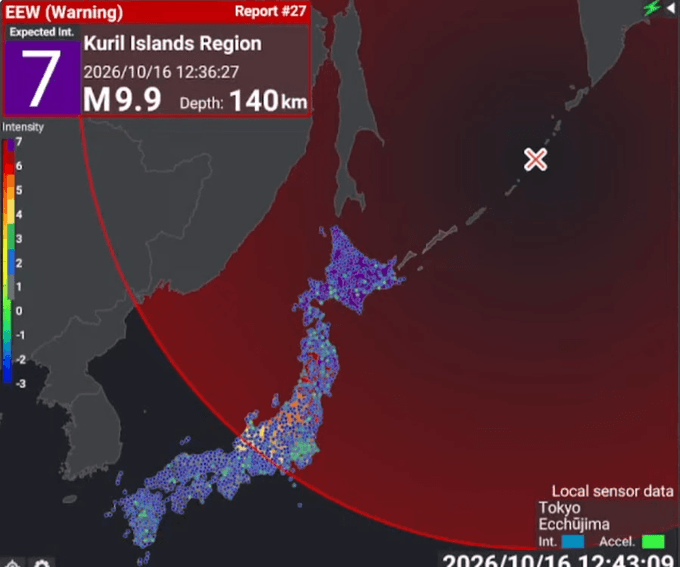
Japan’s Meteorological Agency mistakenly issued an early warning estimating a magnitude 9.9 earthquake and forecasting strong shaking across northern and central Japan, including the Tokyo region, before canceling it at 12:48 p.m.
The actual earthquake measured magnitude 6.9 near Russia’s Kamchatka Peninsula, and the U.S. Geological Survey measured its epicenter approximately 76 kilometers northeast of Ozernovskiy, Russia.
The early-warning display identified the location as the Kuril Islands region and showed an estimated magnitude of 9.9 at a depth of 140 kilometers, while the U.S. Geological Survey estimated depth at 143.2 kilometers.
NHK said the alert was issued at approximately 12:36 p.m. Friday in Japan, and the Japan Meteorological Agency said it will investigate the error.
NHK also said the earthquake did not produce shaking in Japan and no tsunami warnings were issued.
Cancellation, Trains, Intensity
Japan’s weather agency canceled the mistakenly issued warning after overestimating the temblor’s magnitude as a catastrophic 9.9, and the warning caused temporary train service disruptions in parts of the country. The Japan Meteorological Agency said it issued the warning for a wide area extending from northern to central Japan at around 12:40 p.m., and it later confirmed that a M6.9 quake occurred near Russia’s Kamchatka Peninsula at a depth of 160 kilometers at around 12:38 p.m. The Japan Meteorological Agency said the early warning was for a seismic shock with a maximum intensity of 7 on the Japanese intensity scale, but it recorded an intensity of just 1 in Hakodate.
JR Central said bullet train services on the Tokaido Shinkansen Line were temporarily suspended between Shin-Yokohama and Toyohashi stations, and services resumed after the warning was withdrawn. NHK WORLD-JAPAN said the Japan Meteorological Agency canceled the emergency earthquake warning around 12:48 PM and said there is no risk of tsunami.
What Went Wrong
Japan’s Meteorological Agency said it was investigating the cause of the erroneous projection, and it attributed the cancellation to errors in its earthquake magnitude estimation and location calculations. Ayataka Ebita, head of the JMA’s earthquake and tsunami observation division, said the system had mistakenly estimated the earthquake's epicentre and overstated its magnitude. The Japan Meteorological Agency said it applied a magnitude formula designed for earthquakes within Japan to a quake occurring far away, and it used different estimated locations to calculate the magnitude and forecast shaking.
The Japan Meteorological Agency ruled out a cyberattack, and a JMA official said they issued a warning that overstated the expected severity of shaking because they overestimated the earthquake's magnitude. The Japan Meteorological Agency said false alarms can result from sensor noise caused by accidents, lightning or equipment failures, and it said it will provide a detailed explanation once it is determined.