USAupdated 1h ago3 min read
Archive photo · 19 March 2025Justice Department Plans Largest 2026 Midterm Monitoring, Reggie Walton Rejects Limits
“an election that is largely a referendum on President Donald Trump’s policies.”
“Republicans attempted to transform the election from a referendum on Mr.”
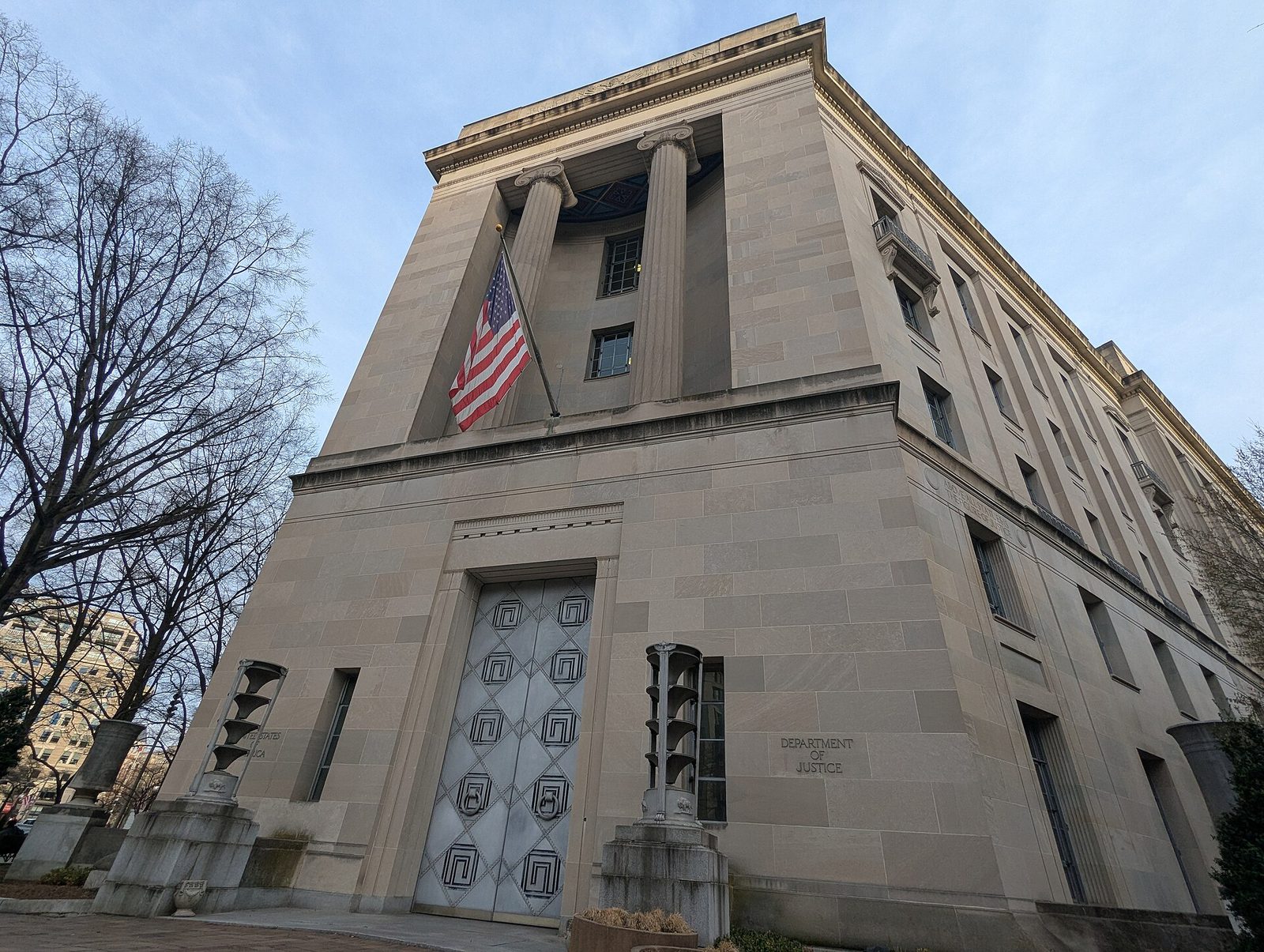
Photo: Sdkb, CC BY-SA 4.0 · Cropped for layout
This article is an automated aggregation of coverage from news outlets. Our editorials offer in-depth analysis curated by the NewsCord team.
DOJ will deploy about 1,000 election monitors across all 50 states. The 2026 midterms determine control of the House and Senate.
Save coverage image
DOJ deploys monitors
The Justice Department released its list of jurisdictions where it plans to send election monitors for the 2026 midterms, describing the effort as the "largest" federal monitoring effort in history.
The department said it will dispatch a total of roughly 1,000 monitors to all 50 states, while a court hearing Monday included an official estimate that the number was closer to 900 due to initial difficulties identifying and training personnel in time for Election Day.
D.C. District judge Reggie Walton rejected an emergency effort to limit the program after finding that civil rights groups including the NAACP failed to put forward sufficient evidence that the monitors would prove intimidating to voters.
The Justice Department said the monitoring deployments would draw on staff from the DOJ Civil Rights Division's Voting Section, and the department also disclosed it was pulling in officials from outside agencies such as the Bureau of Prisons and the Drug Enforcement Administration.
An official assured the federal judge that officials from those agencies would be "clerical" workers who are not authorized to carry guns as part of their daily work.
Election day timing
Americans went to the polls this Tuesday, November 3, for the midterm elections, with the first polling stations expected to close at 6 p.m. Eastern Time, i.e., midnight in France, in certain Indiana and Kentucky districts.
A first wave of closures was scheduled for 7 p.m. Washington time, i.e., 1 a.m. in France, with Georgia, Virginia, South Carolina and Vermont among the states affected.
North Carolina and Ohio were set to close at 7:30 p.m., 1:30 a.m. in France, while most other states were expected to close between 8 p.m. and 11 p.m. Eastern Time, i.e., between 2 a.m. and 5 a.m. in France.
California, Oregon, and Washington were listed among the last to close at 5 a.m. French time, and Hawaii was listed at 6 a.m. French time with Alaska at 7 a.m. in the final voting areas.
The source said each state applies its own vote-count rules, particularly regarding mail ballots, and it warned that in districts with small margins the tally could extend for several days.
Court fights and stakes
The Supreme Court rejected Trump’s request to discard 20,000 mail-in ballots in California in a brief ruling that dismissed the emergency petition filed just hours earlier by the Trump Administration. The ruling came after lower courts had also ruled against the Trump administration, and the source said the Court acted so quickly it did not even seek California’s opinion first, as is usual in such cases. The source described the emergency appeal as filed after a divided appeals court rejected the attempt to invalidate the votes of about 20,000 people who, according to the federal government, might not be citizens.
In the broader midterm fight, the Justice Department’s monitoring effort and the court’s ballot dispute both played out as Democrats and Republicans sought control of Congress in the election that the source said would determine control of Congress. The source also framed the stakes as the balance of power in Congress, noting that the House has 435 seats up for renewal for a two-year term and the Senate has only a third of the 100 senators up for renewal for six-year terms.