Syria · updated 58m ago · 3 min read
Kaja Kallas Visits Damascus as EU Plans New Syria Agreement and Recovery Support
EU aims to deepen partnership with Syria and finance its recovery, tied to domestic reforms Syria asks Brussels to condemn Israeli attacks and pressure to halt them
How much to foreground Israel attacks versus partnership law reforms.
3 of 5 outlets skipped it: syria seeks support for Syrian coast guard capacity..
13outlets compared
Same story, two versions
tap a side to read it in full
Daily Sabah
“urge the European Union on Tuesday to translate its concerns into concrete pressure on Israel”Read the original ↗
Türkiye Today
“The talks focused heavily on updating the legal framework governing EU-Syria relations.”Read the original ↗
Daily Sabah leads with the Israel-attack pressure demand, while Türkiye Today and Arab News emphasise the EU-Syria legal partnership talks and reform condition…
EU and Syria map next deal
Syria and the European Union discussed plans for a new agreement and support for Syria’s recovery, as Damascus called on the bloc to demand the withdrawal of Israeli occupation forces to the lines of Dec. 8, 2024, SANA reports.
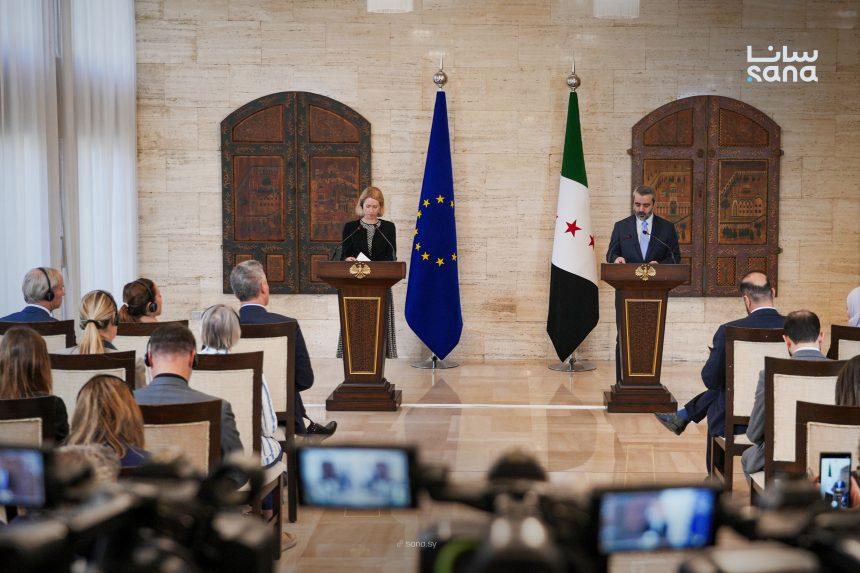
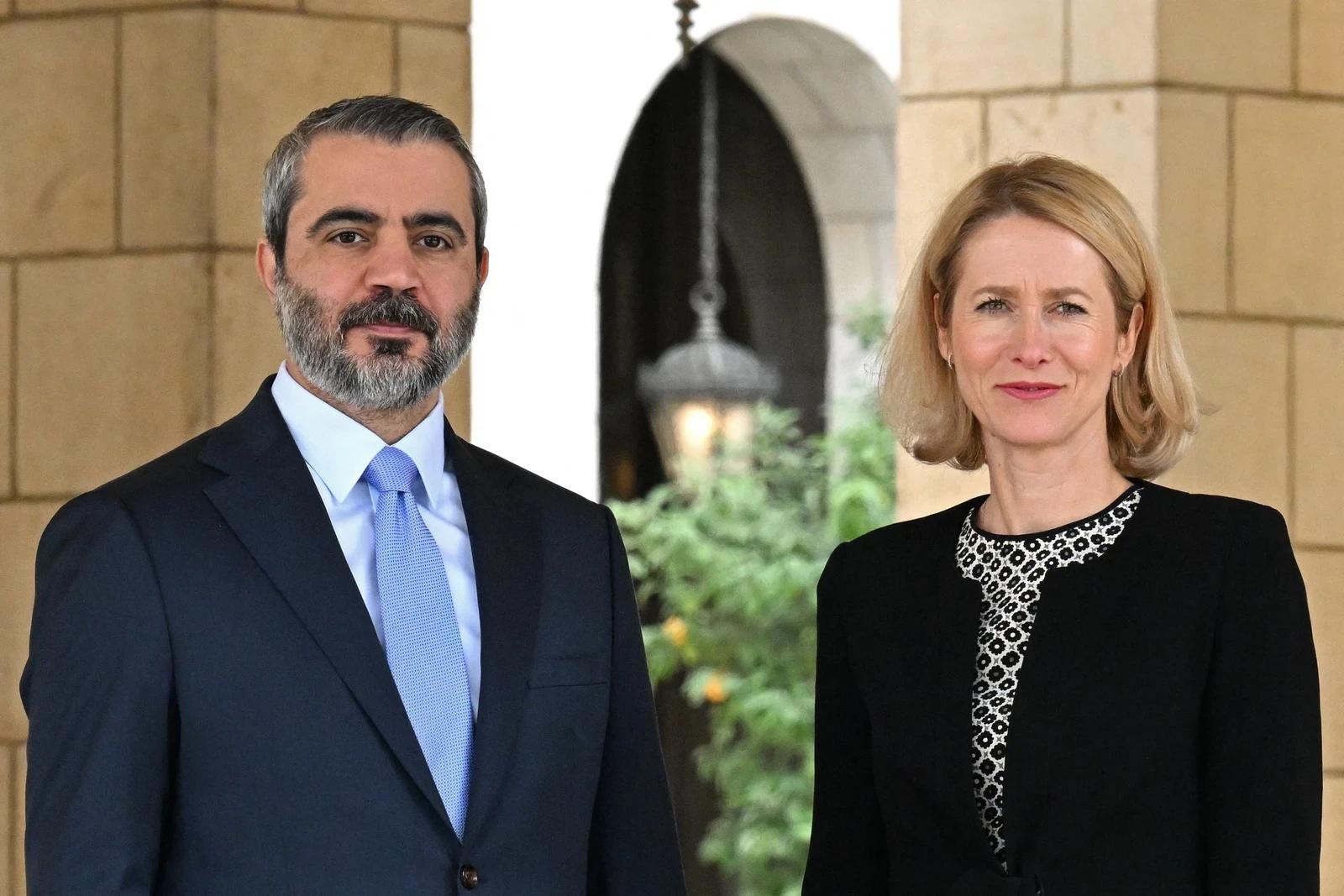
Foreign Minister Asaad Hassan al-Shaibani and Kaja Kallas, the EU’s High Representative for Foreign Affairs and Security Policy and Vice-President of the European Commission, outlined their positions at a joint press conference at Tishreen Palace in Damascus.
Kallas said the EU had begun providing €60.2 million to support Syria’s recovery and strengthen its institutions, and she said the European Investment Bank was considering support for infrastructure that forms the backbone of the Syrian economy.
Al-Shaibani said the two sides aimed to prepare a joint scoping paper by the end of the first quarter of 2027 as a step toward an agreement to replace their 1977 accord.
Al-Shaibani also said Syria sought inclusion in the EU’s Multiannual Financial Framework for 2028–2034, as Kallas said further discussions on the two sides’ high-level political dialogue were expected before next summer.
Reform conditions and investment
Kaja Kallas told a press conference with Syrian Foreign Minister Asaad al-Shaibani in Damascus that the European Union wanted to “upgrade” its partnership with Syria and help boost its recovery, while calling for further domestic reform.
Kallas said, “Aid alone cannot build Syria. Foreign and domestic investment needs trust, and trust needs security, clear rules, rule of law, functioning institutions,” and she added that equal participation of women in society and reconciliation and transitional justice were also required.

Al-Shaibani said the two sides aimed to produce a joint scoping document before the end of the first quarter of next year for a new partnership agreement to replace one dating to 1977, and he said negotiations would proceed through technical committees.
Kallas said the EU was already providing €620 million for recovery, humanitarian needs and strengthening institutions, and she tied further support to institutional and security improvements.
Al-Shaibani said he and Kallas had “discussed several tracks, beginning with achieving a new partnership agreement,” and he said Syria was active in combatting cross-border crime, illegal migration, drugs and human trafficking.
Israel pressure and next steps
Asaad al-Shaibani urged the European Union on Tuesday to translate its concerns into concrete pressure on Israel to halt its continued attacks on Syria, as Damascus pushed for international action to protect its sovereignty.
Al-Shaibani told the joint news conference, “This systematic aggression against a country that is recovering requires more than statements of concern; it requires effective pressure to stop these attacks,” and he called on the EU Foreign Affairs Council to take “a decisive position by calling these attacks by their true name.”
Al-Shaibani demanded the withdrawal of Israeli forces to the lines held on Dec. 8, 2024, and he reiterated that the occupied Golan Heights are Syrian territory while citing U.N. Security Council Resolution 497 as “null and void.”
Kallas limited herself to stressing the need to respect Syria’s sovereignty and to uphold the 1974 disengagement agreement, while she said Syria’s decision to stay out of the US-Iranian conflict helped prevent the spread and widening of the conflict.
Syria also used the same Damascus meeting to seek institutional follow-through, as al-Shaibani said the talks covered plans for a new Syria-EU partnership agreement to replace the 1977 accord and that the two sides agreed to institutionalize their discussions through technical committees.