North Korea15 August, 20263 min read
Lee Jae Myung Urges Inter-Korean Talks With North Korea, United States, China To End War
This article is an automated aggregation of coverage from news outlets. Our editorials offer in-depth analysis curated by the NewsCord team.
Lee calls for talks with North Korea involving US and China to end the war. Aim to replace armistice with a peace regime on the Korean Peninsula.
7 outlets told this the same way.
Liberation Day peace push
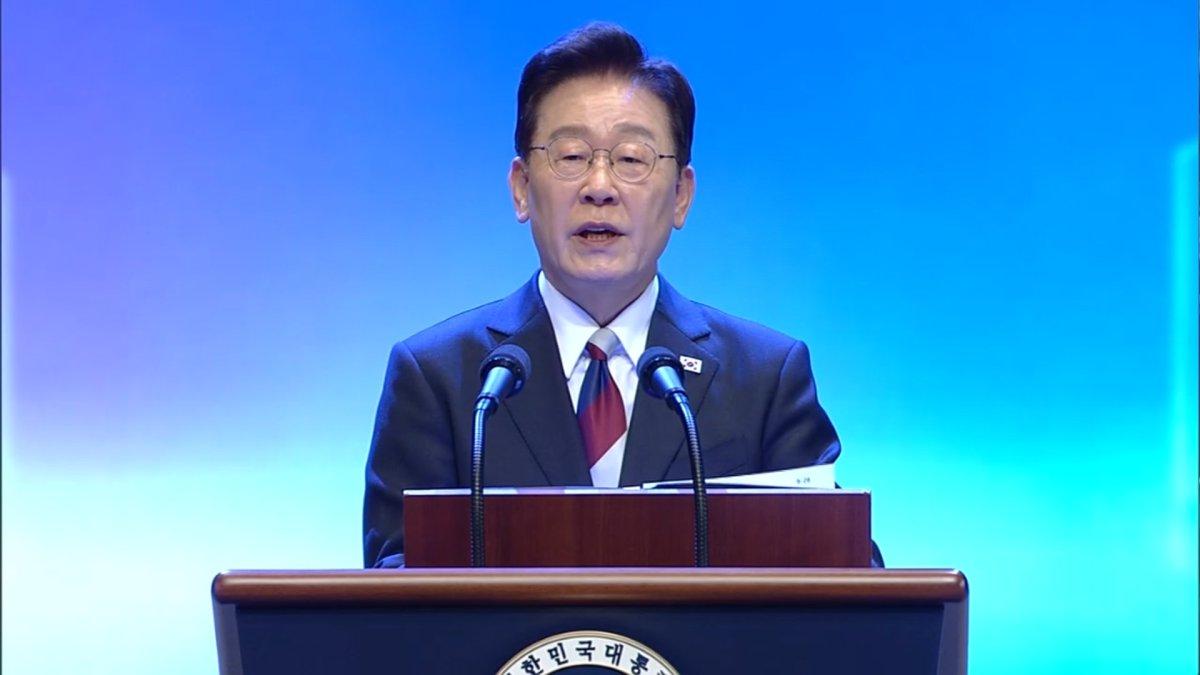
South Korean President Lee Jae Myung urged talks to replace the Korean Peninsula’s armistice with a peace regime and to curb North Korea’s nuclear advances in his Liberation Day address. Lee said South Korea "will embark on a journey to end war and transform the Korean Peninsula's unstable armistice into a peace regime," calling on the two Koreas to "drop all intentions of threatening one another and initiate dialogue among directly concerned parties to conclude this long war." The proposal calls for dialogue involving South Korea, North Korea and the United States, or those three plus China, to work toward a peace regime.
The 1950-53 Korean War ended in a ceasefire agreement signed by the U.S.-led United Nations Command, North Korea and China, but Lee said a permanent peace has proved elusive with both Koreas remaining technically at war. Lee also said such dialogue could help "devise effective ways to curb advances in the North's nuclear capabilities."

Safeguards and North’s stance
In a speech marking the anniversary of Korea’s liberation from Japanese colonial rule, Lee called for a sit-down for coexistence and said Seoul would take pre-emptive and sustained steps to ease tensions and build layered safeguards to contain escalation. The Guardian reported that Lee urged dialogue between North Korea and concerned parties to end the 1950-53 Korean war, which was stopped by a ceasefire, not a peace treaty, and said discussions could also explore measures to curb Pyongyang’s nuclear capabilities. The Guardian also said ties between North and South Korea remain frozen, with North Korean leader Kim Jong-un describing the South as its most hostile state and ordering stronger frontline defences.
In Yonhap’s account, Lee said, “Let us put aside our intentions to threaten each other and begin discussions to end the war, long since ongoing, with us as the directly concerned parties,” adding that “In this process, we may also discuss effective ways to halt North Korea’s advancing nuclear capabilities.” Yonhap said Lee’s offer for dialogue came despite North Korea’s continued nonresponse to Seoul’s repeated reconciliation initiatives since Lee took office last June.

What’s at stake next
Lee framed the push for a peace regime and nuclear dialogue as part of a broader security approach, saying Seoul would institute mechanisms for managing tensions and conflicts along with multiple safeguards for preventing crises and escalation. In the Guardian’s account, Lee’s call for talks also comes as North Korea has rebuffed engagement offers, criticised Seoul’s plan for nuclear-powered submarines, and denounced joint US-South Korean military drills as provocations. The Times of India reported that North Korea has condemned annual US-South Korean military exercises as provocative, noting that the 11-day joint exercises are scheduled to begin Monday.
The Times of India also said Washington maintains about 28,500 troops in South Korea as part of its security commitment to Seoul, and it quoted Colonel Ryan Donald saying, "They've taken those lessons they learned there and brought them back to North Korea," referring to military experience gained from the Ukraine war. Against that backdrop, Lee’s Liberation Day proposal sought to transform hostility and confrontation into momentum for peaceful coexistence and mutual growth, while aiming to replace the unstable armistice system with a peace regime.