Iran21 November, 20262 min read
Archive photo · 2 December 2020Lewis Pugh Warns Oil Pollution After Tanker Attack During Strait of Hormuz Swim
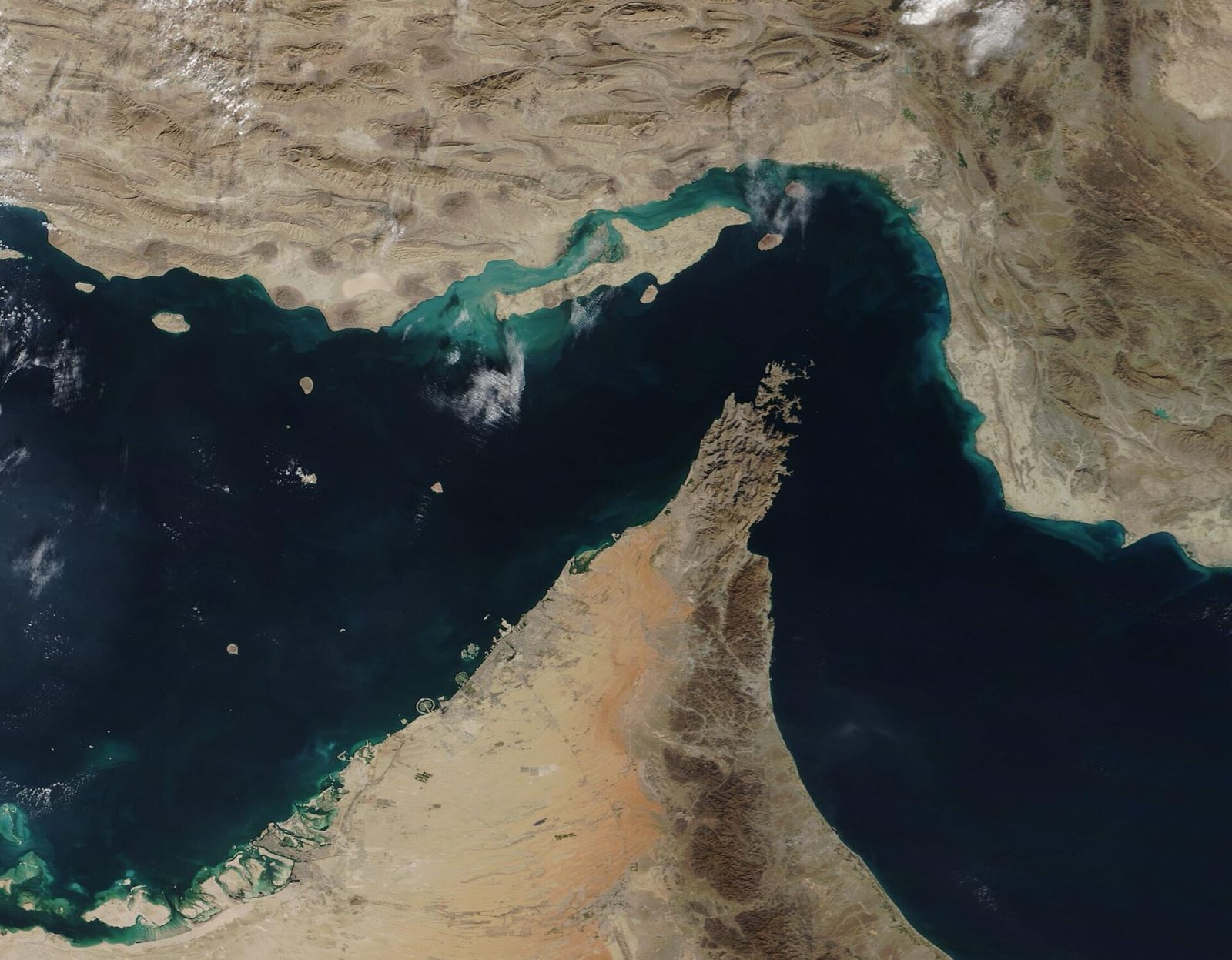
1 Asian1 West Asian1 Western AlternativePhoto: MODIS Land Rapid Response Team, NASA GSFC / US federal government, Public domain · Cropped for layout
This article is an automated aggregation of coverage from news outlets. Our editorials offer in-depth analysis curated by the NewsCord team.
Lewis Pugh swam 15 km over three days in the Strait of Hormuz amid attacks. He warned oil pollution could take decades to clean up after tanker attacks.
Save coverage image
3 outlets in this story. Read their headlines below.
Outlets did split on IRGC Aerospace Force Unveils Dual Liquid-Fuel Missile Launcher During Underground Facility Visit →
Shared framing
These headlines foreground environmental risks around the Strait of Hormuz, including swimmer Lewis Pugh’s campaign and Greenpeace’s warning about potential oil slicks. They report a risk, not a confirmed oil spill.
4 of 4 outlets · 4 of 4 headlines analysed
- Ratopati
Highlight Environmental Risks
- Al Jazeera
expose Hormuz contamination
- Ahram Online
warns of 609 potential oil slicks in Gulf, Strait of Hormuz
See the headlines
Possible contamination and marine-pollution risks
The headlines highlight environmental risks associated with activity and conflict around the Strait of Hormuz, including Pugh’s swim and Greenpeace’s warning about possible oil slicks. They report potential contamination; they do not establish that an oil slick occurred.
- RatopatiReporting · OngoingBritish Swimmer Lewis Pugh Swims 15km in Strait of Hormuz to Highlight Environmental Risks
- Al JazeeraReporting · OngoingSwimmer braves tanker attacks to expose Hormuz contamination | Climate
- Ahram OnlineReporting · OngoingGreenpeace warns of 609 potential oil slicks in Gulf, Strait of Hormuz - Region - World
- Modern GhanaReporting · OngoingSwimmer braves tanker attacks to expose Hormuz contamination
All 4 analysed headlines
- RatopatiReporting · OngoingBritish Swimmer Lewis Pugh Swims 15km in Strait of Hormuz to Highlight Environmental Risks
- Al JazeeraReporting · OngoingSwimmer braves tanker attacks to expose Hormuz contamination | Climate
- Ahram OnlineReporting · OngoingGreenpeace warns of 609 potential oil slicks in Gulf, Strait of Hormuz - Region - World
- Modern GhanaReporting · OngoingSwimmer braves tanker attacks to expose Hormuz contamination
Counts describe this collection. One headline may support more than one angle.
Analysed 21 Nov 2026.
Reviewed by Codex validator (AI) · 21 Nov 2026
Pugh highlights Hormuz contamination
Lewis Pugh swam approximately 15 kilometers over three days in the Strait of Hormuz to highlight the risks posed by the Iran war to the marine environment and wildlife. Pugh, who is a United Nations Patron of the Seas, witnessed an explosion when a nearby oil tanker was attacked during his swim. Pugh warned that oil pollution could take decades to clean up, long after the fighting ends.
Pugh said the attack on the ship and the resulting oil and chemical pollution can pose long-term risks to marine life, coral reefs, and mangrove forests. Pugh described seeing hundreds of sea turtles while swimming off the Omani coast before the war, and he said dolphins and osprey birds appeared during his latest swim.
Tanker attacks and wildlife
Tankers burned and explosions shook the Strait of Hormuz as Pugh entered the water to expose another casualty of the US-Israeli war on Iran: marine life. Pugh’s account tied the attack on the ship to oil and chemical pollution that can threaten marine life and habitats. Pugh said oil pollution is difficult to clean up and its effects can last for generations.
Pugh’s message was that the war must be stopped, the Strait of Hormuz must be kept open, and the pollution must be cleaned up. Pugh’s observations of sea turtles, dolphins, and osprey birds underscored the natural importance of the area even as tanker attacks continued.
Why the Strait matters
Before the war, about one-fifth of the world's total oil trade used to pass through the Strait of Hormuz. Pugh has been active in marine environmental protection for four decades and has drawn attention to environmental issues by swimming in the Arctic, Antarctica, and various marine areas around the world. Pugh’s swim was an effort to expose another casualty of the US-Israeli war on Iran, with marine life presented as the focus.
Pugh conveyed the message that the Strait of Hormuz must be kept open while pollution is cleaned up. Pugh’s observations of sea turtles, dolphins, and osprey birds underscored the natural importance of the area even as tanker attacks continued.