Technology and Science · 03 July, 2026 · 3 min read
LINK Spacecraft Rescue Mission Spins Out of Control in Earth Orbit, Engineers Race to Stabilize
Link spacecraft launched by private firm to boost NASA's Swift orbit. Link spacecraft began spinning out of control, losing attitude control and communications.
Whether partial loss is described as communication cuts vs. general stabilisation delay.
3 of 4 outlets skipped it: LINK’s rotation slowed from nine to four degrees/sec..
25outlets compared
Same story, two versions
tap a side to read it in full
Live Science
“LINK is now spinning at four degrees a second, instead of the previous nine.”Read the original ↗
La FM
“Ironically, the telescope to be rescued had previously suffered similar problems with its own reaction wheels years earlier.”Read the original ↗
Live Science stresses precise numbers and NASA quote; La FM adds extra details.
LINK starts spinning
NASA’s Swift telescope rescue mission hit a technical setback after the LINK spacecraft began spinning out of control in Earth orbit, complicating efforts to stabilize the vehicle before it can approach NASA’s nearly 22-year-old Neil Gehrels Swift Observatory.
“LINK began spinning in recent days after electrical power issues affected two of the devices that control the spacecraft’s orientation”
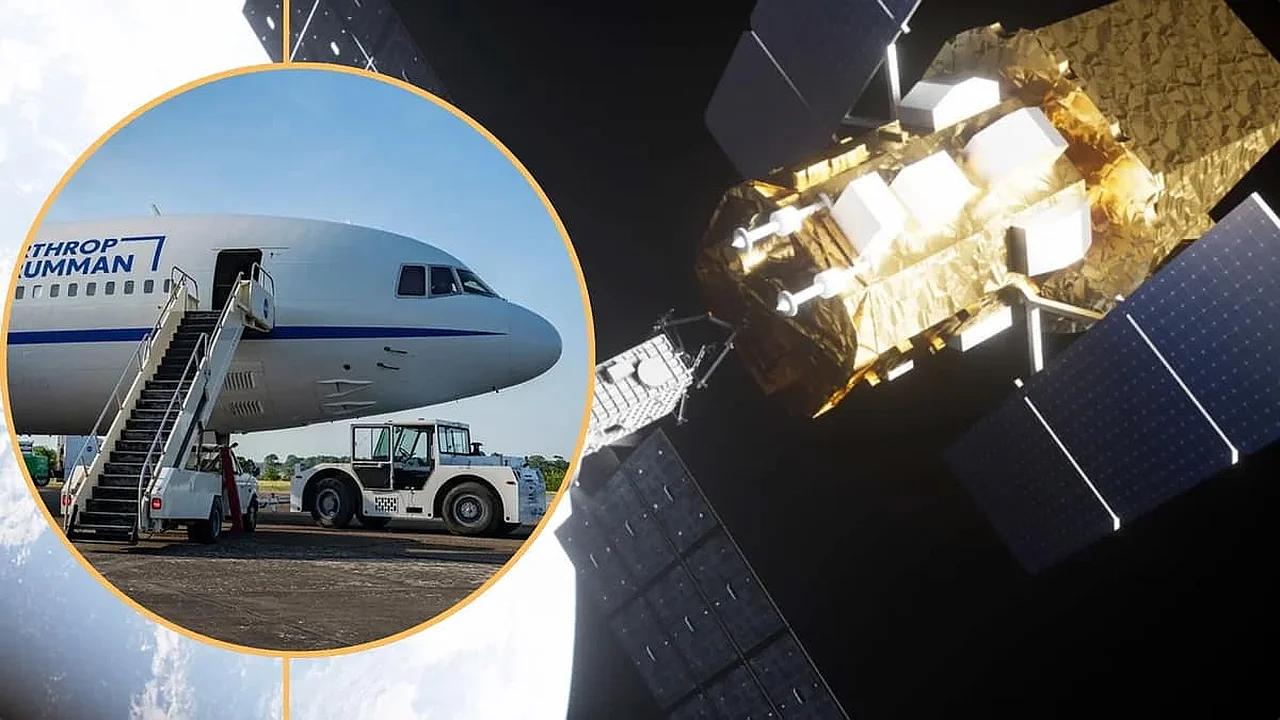
Live Science reported that LINK launched July 3 from a mid-air Northrop Grumman Pegasus XL rocket mounted aboard a modified Lockheed Martin L-1011 airliner, and that as of July 30 only one of the three reaction control system (RCS) wheels was working properly.L

Live Science said the $30-million LINK began spinning after electrical power issues affected two devices that control the spacecraft’s orientation, and that engineers reduced the rotation with engine fires while work to stabilize the spacecraft continued.L
Ars Technica described the same core problem as LINK rotating on multiple axes and being unable to maintain a reliable communications link with the ground, with two of the satellite’s three reaction wheels stopping working.
Ars Technica added that engineers used sporadic radio contact to discover a problem with some of the spacecraft’s cold gas thrusters used for finer attitude control, while the mission remained focused on reaching Swift before it fell too far for help.
Engineers race to regain
Katalyst’s leadership framed the situation as still salvageable, with Live Science quoting NASA administrator Jared Isaacman writing on X, "We are not giving up yet," as teams worked to stabilize LINK.L
Live Science also reported that Katalyst’s mission blog said engineers reduced the rotation with engine fires and that rotation dropped to four degrees a second instead of nine.L
Ars Technica said the clock is ticking because in a few months Swift will be too low for Katalyst to complete the rescue, and it described the immediate challenge as arresting the spin during passes without comms.
Ars Technica quoted Katalyst CEO Ghonhee Lee saying, "When this happened, it was during one of the passes without comms," and added that he said the company was "immediately prior, in a very stable configuration."
Ars Technica reported that the first step involves using the satellite’s plasma engines to gradually slow the spin, with the engines vectoring thrust using a two-axis gimbal to support attitude control.
What’s at stake for Swift
The rescue plan depends on LINK regaining control so it can approach and capture Swift, and Live Science said Swift must stay above a minimum rescue altitude of 185 miles (298 kilometers) for the mission to succeed.L
“Swift must stay above a minimum rescue altitude of 185 miles (298 kilometers) for the mission to succeed”
Live Science reported that NASA models suggest Swift’s fall is expected to occur this autumn, and that Swift had already reduced its science work to stay as streamlined as possible so drag doesn’t pull it into the atmosphere this summer.L
El Confidencial said LINK launched on July 3, 2026 with the task to reach the Neil Gehrels Swift Observatory, inspect it, grasp it with a robotic system, and raise it by about 240 km to prevent atmospheric drag from continuing to reduce the telescope’s altitude.
El Confidencial reported that preliminary investigations indicated two of LINK’s three reaction wheels are not functioning and that its cold-gas propulsion system has lost part of its capabilities, but it said the mission is not considered lost.
Live Science said the ultimate goal is to refuel and reboost Swift so it can continue its mission, and it quoted Swift principal investigator S. LBradley Cenko describing Swift as "NASA's multitool when it comes to studying the cosmos" that rapidly points at short-lived outbursts.