Sudan13 November, 20252 min read
Marco Rubio Urges G7 To Stop Arming Sudan's Rapid Support Forces Over El-Fasher Massacres
This article is an automated aggregation of coverage from news outlets. Our editorials offer in-depth analysis curated by the NewsCord team.
Marco Rubio urged G7 to cut weapons supplies to Sudan's Rapid Support Forces Rapid Support Forces accused of mass killings, rape, and sexual violence in El-Fasher

5 outlets told this the same way.
Appeal to Stop RSF Support
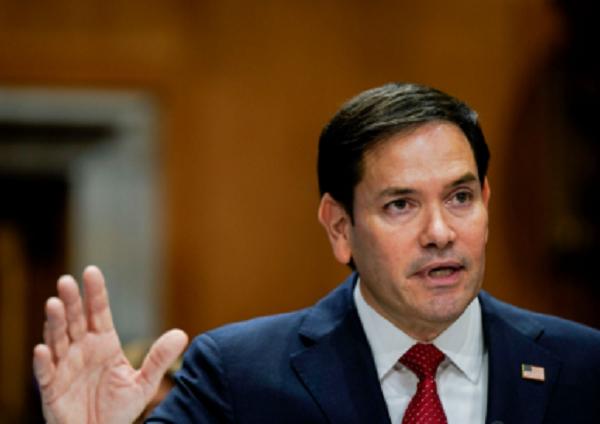
At a G7 foreign ministers meeting near Niagara Falls, U.S. Senator and Secretary of State Marco Rubio urged urgent international action to cut off weapons and other support to Sudan’s paramilitary Rapid Support Forces (RSF).
“U.S. Secretary of State Marco Rubio urged urgent international action to cut off weapons and other support to Sudan’s paramilitary Rapid Support Forces (RSF), saying external assistance must stop as humanitarian conditions rapidly worsen.”
He said external assistance must stop as humanitarian conditions rapidly worsen and described the situation as "horrifying."
He said Washington is coordinating with regional partners — including Egypt, Saudi Arabia and the UAE — and other Middle Eastern nations to pressure those supplying the RSF, though he declined to name specific suppliers.
Rubio’s call came amid reports of mass killings in el-Fasher and was framed as a demand to halt the flow of arms that enable atrocities and block humanitarian access.
El-Fasher atrocities and crisis
Reports cited by those outlets describe systematic atrocities in el-Fasher, including murder, rape and sexual violence. They say the RSF's capture of the town followed a long siege. The BBC says satellite imagery and eyewitness accounts show mass killings, bodies, and blood-stained ground.
Both BBC and GhanaWeb report that humanitarian groups and U.S. officials say non-Arab groups are being systematically targeted in what some describe as genocide. Yeni Safak highlights unprecedented malnutrition and suffering among displaced people, reinforcing the depiction of a deepening humanitarian catastrophe.

Allegations about UAE role
Coverage widely centers on allegations that the United Arab Emirates supplied the RSF with weapons and mercenaries. Sudan’s army formalized the accusation against the UAE. The BBC reports that both the UAE and the RSF deny the claims, while UN investigations have found evidence they describe as credible pointing to the UAE.
“Sudan’s army accuses the United Arab Emirates of supplying the RSF with weapons and mercenaries via African intermediaries; the UAE and the RSF deny the allegations.”
Yeni Safak notes that Senator Rubio declined to name specific suppliers even as Washington coordinates with regional partners. GhanaWeb records the UAE denial of involvement. These varying emphases show a divide between outlets reporting accusations and those exercising caution about publicly naming state actors.
Darfur conflict and crisis
The territorial and humanitarian picture in Darfur is grim. Sources report the RSF captured el-Fasher after an 18-month siege and now occupy major towns across Darfur. Satellite imagery and on-the-ground reports describe mass killings.
Yeni Safak cites WHO estimates that the broader conflict has killed at least 40,000 people and displaced about 12 million. GhanaWeb and the BBC similarly describe the RSF's seizure of el-Fasher and the surge in violence. The violence prompted a G7 condemnation and has been described as perhaps "the world's largest humanitarian crisis."
Diplomatic and humanitarian responses
Diplomatic options are being discussed, but their effectiveness is uncertain. BBC reports that the Quad, the UAE, Egypt and Saudi Arabia working with the US, proposed a three-month humanitarian truce followed by a permanent ceasefire and transition to civilian rule. The BBC also noted Rubio's remarks are among the most forceful, but their practical impact is unclear.
“The Quad proposed a three‑month humanitarian truce followed by a permanent ceasefire and transition to civilian rule.”
Yeni Safak underscores Washington's coordination with regional partners and pursuit of pressure on suppliers, and GhanaWeb highlights the G7's joint condemnation. Overall the sources convey a mixture of urgent humanitarian alarm and diplomatic caution.