Technology and Science07 October, 20262 min read
Mecka Raises $60M Series B Led by Sequoia Capital To Expand Robotics Data Infrastructure
This article is an automated aggregation of coverage from news outlets. Our editorials offer in-depth analysis curated by the NewsCord team.
Mecka AI raises $60M Series B led by Sequoia to expand robotics data infrastructure Nvidia, M12, Qualcomm Ventures, Samsung participate in the round alongside Sequoia
Sequoia backs Mecka
Mecka announced it raised a $60 million Series B round led by Sequoia Capital to expand its real-world robotics data infrastructure and commercial robot deployments. Sequoia described robotics as needing information about movements and interactions that does not exist as a ready-to-use collection, comparable to the text accumulated on the internet. Mecka said it surpassed $100 million in run-rate revenue in June 2026 and projected a $300 million run rate by year-end as it expanded from supplying robotics data into robot integration, post-training and ongoing deployment services.
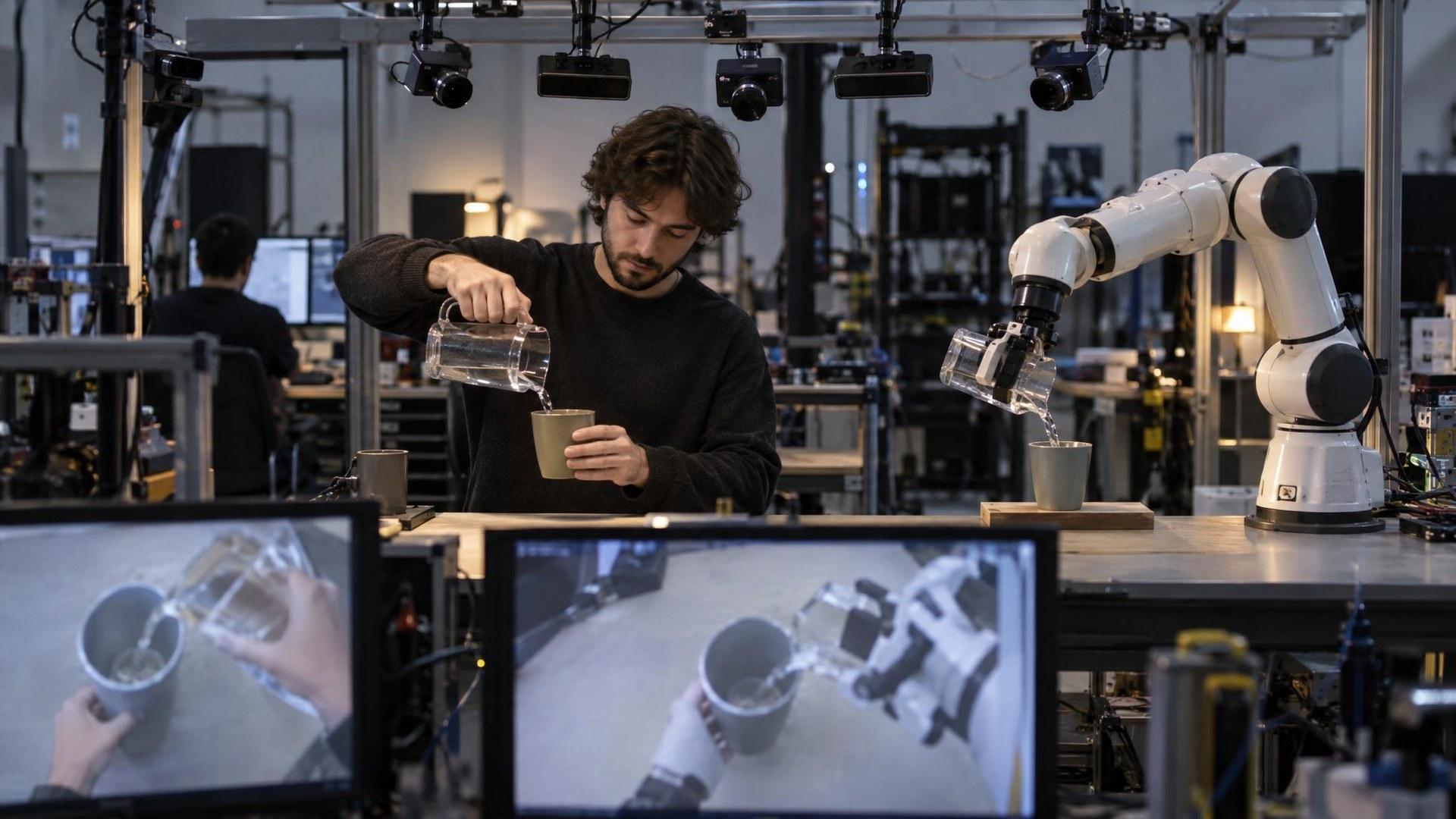
Mecka said it converts human demonstrations recorded with its own multi-sensor hardware into training signals for robots, including motion tracking, 3D reconstruction and sensor alignment. Mecka said it worked with researchers at Georgia Tech, Stanford, UC San Diego, ETH Zürich, MIT and Meta through EgoVerse, a study examining how human demonstrations can be transferred to robots across different laboratories, tasks and machines.
From demonstrations to datasets
Mecka said it records human demonstrations using its own multi-sensor hardware and converts that data into training signals for robots, including motion tracking, 3D reconstruction and sensor alignment. Mecka said it has built much of that system itself, including multi-sensor hardware designed and manufactured by Mecka to capture different types of physical signals. Mecka said it collects that information by recording people performing physical tasks and then turning the resulting sensor data into formats that can be used to train robots.
Mecka claimed its technology achieved sub-centimeter hand-pose tracking accuracy on data collected outside controlled laboratory settings. The EgoVerse preprint, published on arXiv and updated on July 7, 2026, described a dataset of 1,362 hours of human demonstrations, with 1,965 tasks and 2,087 participants.

Deployment layer and benchmarks
Mecka described itself as a robotics integrator that provides the robot hardware, captures data at the customer’s site, further trains the system on that information and handles integration and ongoing operations. Mecka said it expects different types of robots to require different forms of physical training data rather than relying on a single machine or approach. Mecka said it tested its bet on real-world human demonstrations with researchers from Georgia Tech, Stanford, UC San Diego, ETH Zurich, MIT, and Meta through EgoVerse.
Mecka said the EgoVerse paper reports that policy performance generally improves with more human data, but effective scalability depends on alignment between human data and the robot’s learning objectives. Mecka said it plans to open-source 100,000 hours of curated motion data with standardized labels as a public benchmark release later this quarter.