Technology and Science22 September, 20262 min read
Meta Says Muse Design Was Heavily Inspired By OpenClaw, Nat Friedman Confirms
This article is an automated aggregation of coverage from news outlets. Our editorials offer in-depth analysis curated by the NewsCord team.
Muse built from scratch but heavily inspired by OpenClaw, says Nat Friedman. Users detected similarities: identical file names and SOUL.md content.

6 outlets told this the same way.
Muse, OpenClaw, and Files
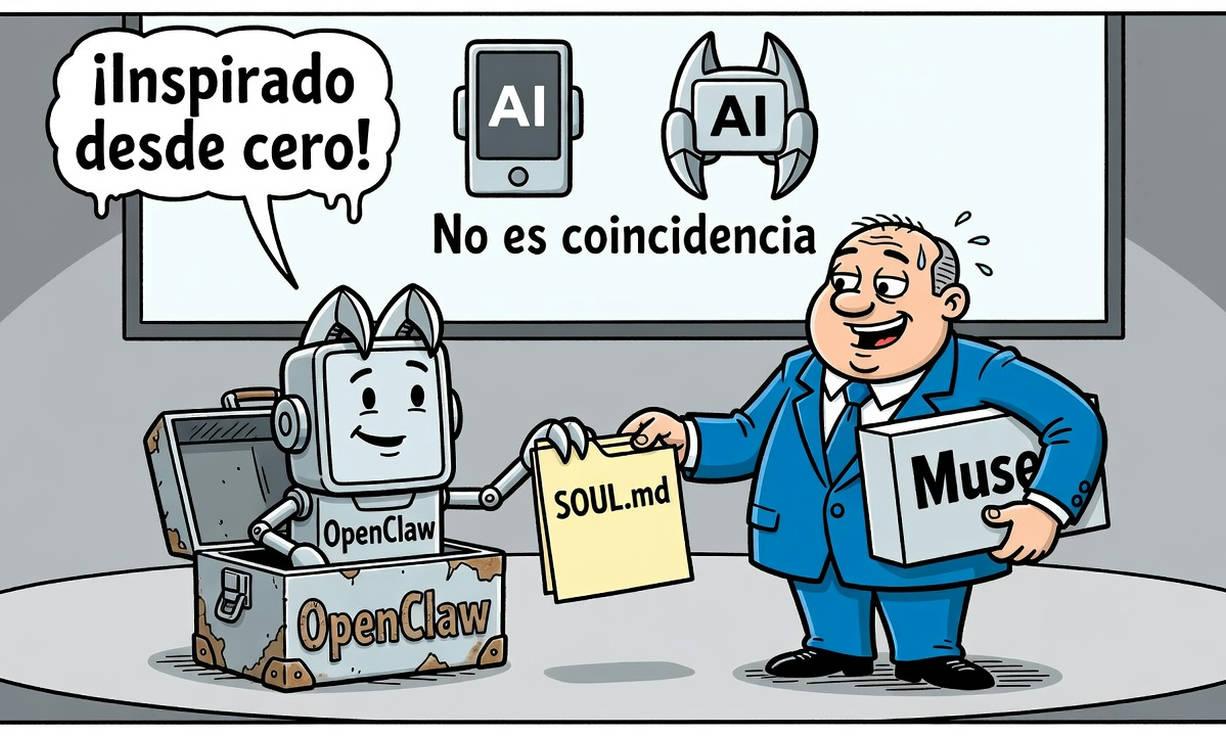
Meta acknowledged that its Muse was built from scratch while Nat Friedman said its product design was “definitely heavily inspired as a product by OpenClaw.” Friedman tied that influence to his own use of OpenClaw in January, saying he “bought hundreds of Mac minis for the MSL team” after he and others “fell in love with using OpenClaw (and other personal agents).”
“Muse was ‘definitely heavily inspired as a product by OpenClaw.’”
Users had driven the comparison by pointing to internal similarities, including a file named SOUL.md that both assistants use as a Markdown configuration for an agent’s personality, communication style, tone, values, behavioral boundaries, and expertise. Friedman also answered why Muse used the same workspace file names and why SOUL.md content looked “nearly identical,” replying that “we thought that Peter [Steinberger, OpenClaw’s creator] got those things exactly right.”
App Store Hit and Debate
Muse reached number one on the US App Store, and TechCrunch said the app has been a hit “having recently hit No. 1 on the U.S. App Store.”
DiarioBitcoin also said Muse “reached number 1 in the US App Store” while the debate over Meta’s strategy grew after users detected similarities in their files and how they worked.

Ansh Nanda’s viral claim framed the controversy as identity rather than inspiration, with TechCrunch quoting Nanda’s post that “Muse is LITERALLY OpenClaw for normies.”
Friedman responded to that kind of framing by insisting the product was built from scratch even as he maintained the influence, writing “We built Muse from scratch, but it is definitely heavily inspired as a product by OpenClaw.”
Platforms, Access, and Stakes
Amazon blocked Muse from accessing its online store, and TradingView reported that Amazon showed a pop-up message saying “continued access by an unauthorized AI agent violates Amazon’s Conditions of Use.” TradingView also said Amazon raised privacy and security concerns over Muse failing to identify itself while browsing and seemingly capturing customer credentials.
Meta countered the shopping issue by promoting Muse integration with Shopify, and TradingView quoted Mark Zuckerberg writing, “Teaming up with Shopify to make shopping and checkout easier in Muse.” Palo Alto Networks CEO Nikesh Arora warned that Amazon’s move could be the start of a “bigger battle than anyone anticipates,” arguing that platforms may have to decide whether to open their APIs to consumer AI agents.