Russia22 April, 20266 min read
NATO Intercepts Russian Tu-22M3 Bombers Over Baltic Sea With Italian F-35s From Ämari
This article is an automated aggregation of coverage from news outlets. Our editorials offer in-depth analysis curated by the NewsCord team.
Italian F-35s from Ämari intercepted Russian jets during NATO Baltic Air Policing in Estonia. Two Italian F-35s scrambled for the first time in Estonia.

Baltic intercepts and scramble
NATO intercepted Russian military aircraft flying over the Baltic Sea on Monday, in what El Mundo described as “a forceful display of air power on the alliance's eastern flank.” The French detachment reported that “French Rafale fighters were deployed from a Lithuanian air base” and that the aircraft were “armed with air-to-air missiles.” El Mundo said the Russian mission consisted of “two supersonic Tu-22M3s,” plus “about 10 fighters, both Su-30 and Su-35,” which rotated to escort the bombers.
The Russian Defense Ministry indicated that the long-range bomber flight was planned and conducted “in airspace over the neutral waters of the Baltic Sea,” and that “The flight lasted more than four hours.” El Mundo added that “In certain stages of the route, the long-range bombers were accompanied by fighters from foreign states,” and that Russian long-range aviation crews “regularly fly over the neutral waters of the Arctic, the North Atlantic, the Pacific Ocean, as well as the Baltic and Black seas.”
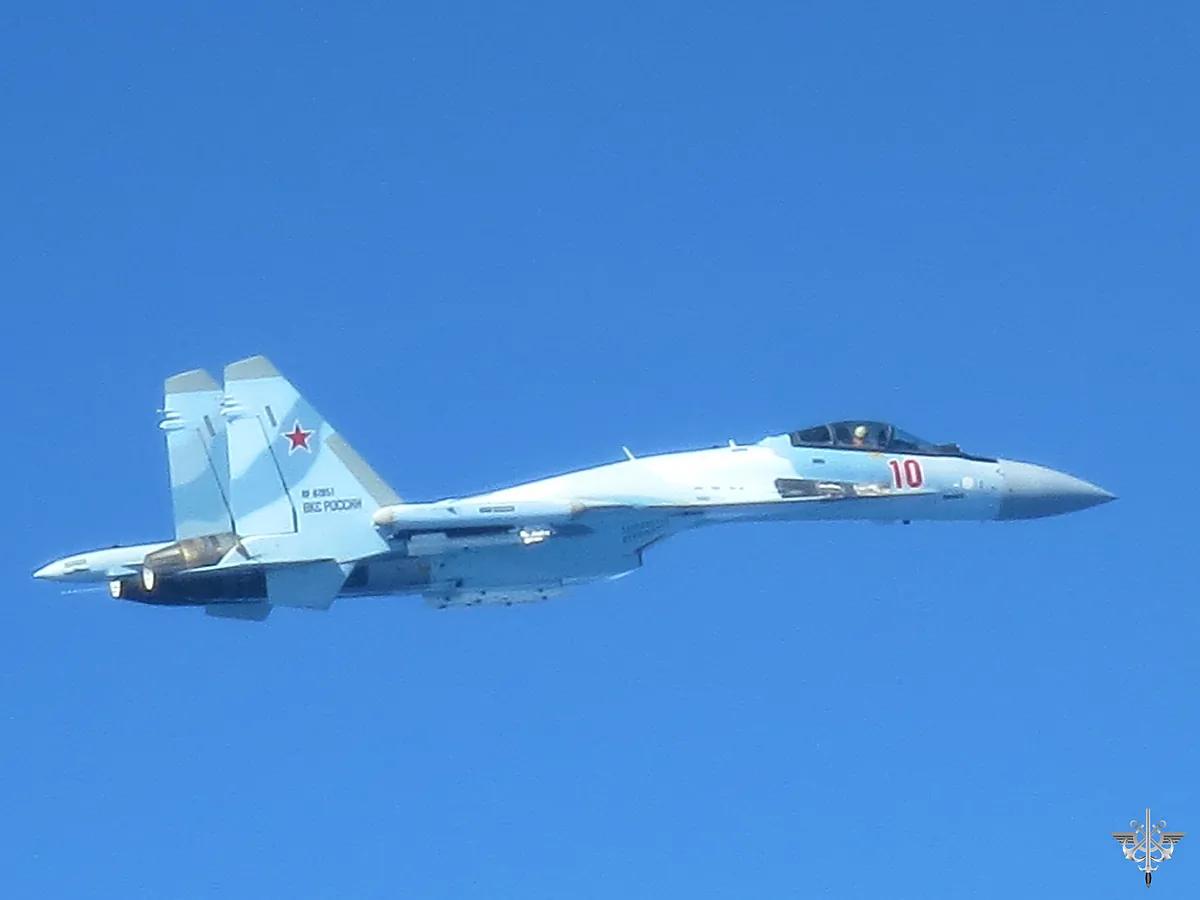
NATO’s Allied Air Command and the Russian Defense Ministry had not responded to requests for comment by Tuesday, El Mundo reported. Separately, Il Messaggero and Europa Today reported that “Per la prima volta due F-35 italiani decollano in Estonia” in response to Russian aircraft under NATO’s Air Policing mission, with the Italian task force based at Ämari on “stato di allerta rapida 24 ore su 24, 7 giorni su 7.”
Airspace rules and escalation
El Mundo framed Monday’s intercepts as part of a long-running NATO air surveillance effort, noting that the French Rafale deployment came from a Lithuanian air base “as part of a NATO air surveillance effort that goes back decades.” It said the Russian Defense Ministry described the bomber flight as conducted in “airspace over the neutral waters of the Baltic Sea,” and that “All flights of aircraft of the Russian Aerospace Forces are carried out in strict compliance with international rules for the use of airspace.” NATO’s posture, El Mundo added, is shaped by how Russian aircraft approach: “NATO says the Russian aircraft it intercepts generally do not use their transponders and do not communicate with air traffic controllers or file a flight plan.”
In those cases, El Mundo said “The alliance fighters take off to identify them,” and that NATO “usually orders fighter takeoffs to intercept warplanes that approach or fly near NATO airspace.” El Mundo also recalled that even before the war in Ukraine, NATO intercepted Russian aircraft “about 300 times a year,” mostly over waters near northern Europe, and that the Baltic air policing mission has been in force since Lithuania, Latvia and Estonia joined the alliance in 2004.
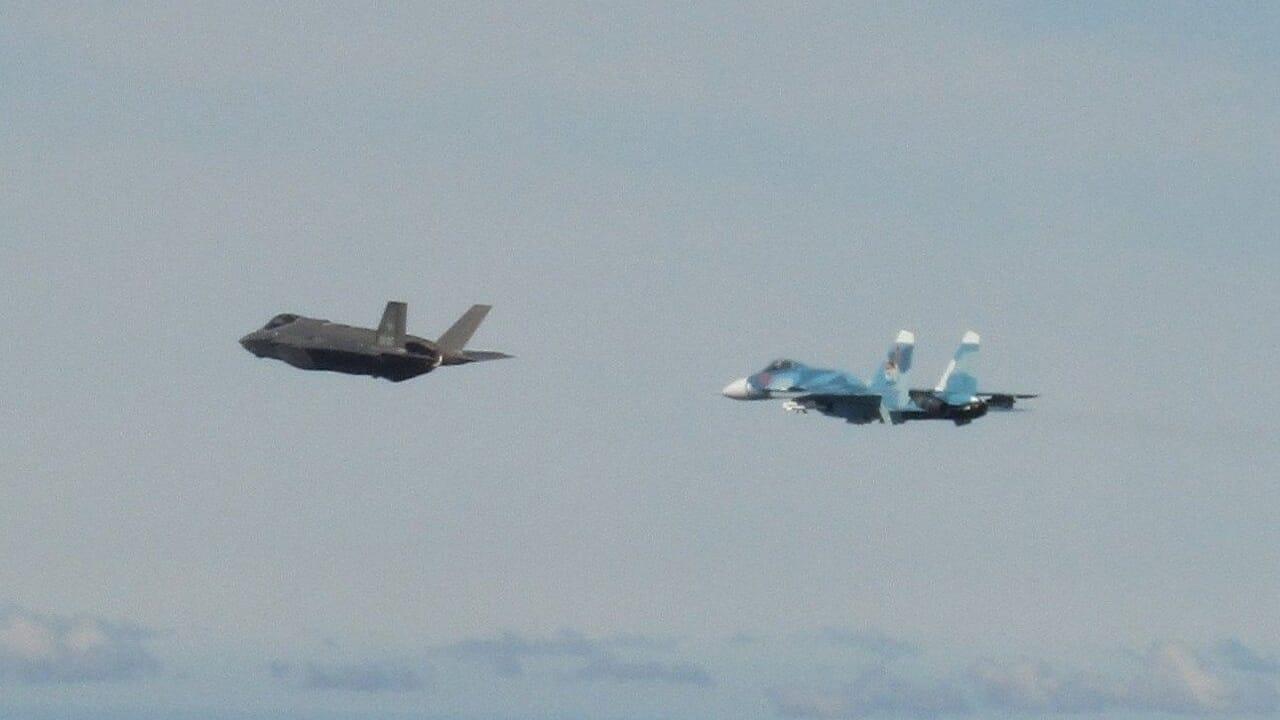
Lithuania’s Defense Ministry, El Mundo reported, said NATO aircraft took off “on four occasions between April 13 and 19” to intercept Russian aircraft that violated flight rules, including “turning off transponders and flying without a flight plan.” In the Italian reporting, Il Messaggero explained “scramble” as “il decollo immediato e non programmato” triggered when radar or command centers detect an unidentified aircraft or a possible intrusion, and Europa Today specified that the Italian F-35s launched in “modalità Qra (quick reaction alert).”
Italian F-35 details and command
Multiple outlets described the Italian role in NATO’s Baltic air policing, with Il Messaggero and Europa Today emphasizing that two Italian F-35s were the first to scramble in Estonia in response to Russian aircraft. Il Messaggero said the NATO Air Command announced that “Per la prima volta due F-35 italiani decollano in Estonia” and that the “Task Force Air italiana” is the “distaccamento del 32° Stormo presso la base aerea di Ämari.” Europa Today quoted the same NATO Air Command message on X and added that the task force is on “Quick Reaction Alert 24/7,” describing it as “a dimostrazione dell’impegno dell’Alleanza a salvaguardare lo spazio aereo della Nato.”
Il Sole 24 ORE provided additional operational context, saying that “Sono due gli F-35 italiani che si sono alzati in volo dalla base di Amari” after NATO radar detected Russian aircraft in Estonian airspace for a “scramble.” It said the F-35s took off in “modalità ‘Qra’ (quick reaction alert)” and that after the F-35 overflight the Russian aircraft “si sono poi allontanati.”
Il Sole 24 ORE also identified the Italian detachment as “la Task Force Air 32nd Wing” at Amari, serving “in servizio di Quick Reaction Alert 24/7 (decollo su allarme 24 ore su 24 e 7 giorni su 7).” Sky TG24 added that the Italian air fleet had “assunto il comando dell’operazione Baltic Eagle III” and described the Qra timeline as “in 10 minuti” between a NATO radar alert and the actual takeoff.
Competing narratives and denials
While NATO and Estonian officials described Russian behavior as violating airspace and rules, Russian authorities denied any incursion.
Fanpage reported that “According to the Alliance, Moscow’s fighter jets violated Estonian airspace for about 12 minutes” with behavior described as “reckless,” and it said the Friday morning alarm prompted Italian F-35s at Ämari to take off “within minutes.”
-U37587507734VSC-1440x752%40IlSole24Ore-Web.jpg%3Fr%3D1170x507&w=1920&q=75)
Fanpage also quoted Estonian officials, including the Estonian Foreign Minister’s statement that “Russia has already violated Estonian airspace four times this year, which in itself is unacceptable. But today’s incursion is brazen beyond belief,” and it said Prime Minister announced that “NATO Article 4… has been activated.”
Fanpage then contrasted this with Russia’s position, writing that “Russia, meanwhile, denies the incursion by its jets,” and that the Ministry of Defense stated the three MiG-31s were conducting a routine flight “from Karelia, east of Finland, to an airport in the Kaliningrad region.”
It added that Russia’s account said the jets flew “over the neutral waters of the Baltic Sea, more than 3 km from the Estonian island of Vaindloo,” “without violating Estonian airspace.”
Fanpage included a Kremlin-quoted line that the flight was conducted “in strict compliance with international airspace regulations, without violating the borders of other states, as confirmed by objective monitoring.”
In the same reporting, Fanpage said the jets “did not deviate from the agreed air route and did not violate Estonian airspace,” and that “The flight path lay over the neutral waters of the Baltic Sea.”
Capabilities, costs, and next steps
The Italian coverage tied the Baltic intercepts to broader defense planning, including the role of F-35 capabilities and the scale of Italy’s participation. Il Sole 24 ORE described the F-35 as “un caccia quinta generazione” and specified that the Italian Air Force has versions “A” and “B,” with “Conventional Take-Off and Landing, CTOL” and “Short Take-Off and Vertical Landing, STOVL.” It also listed technical parameters such as “apertura alare: 10,6 metri” and “lunghezza: 15,4 m/15,6 metri,” and it said the F-35 is powered by “1 turbofan Pratt & Whitney F135 da 191kN (con postbruciatore) o 187kN (con postbruciatore).”
Sky TG24 connected the Baltic air policing to Italy’s wider force posture, stating that “nel 2025 l’Italia partecipa con 15 mezzi aerei e 375 unità di personale militare” in Air Policing and Air Shielding, and it said the Italian program is supported by production at “Final Assembly and Check-out (Faco) di Cameri, in Piemonte.” Sky TG24 also discussed future procurement and projected fleet size, quoting that “il governo punta ad arrivare ad una flotta di 115 velivoli tra versione A e B” and adding that Alessandro Marrone estimated “entro il 2040 l’Italia avrà in dotazione oltre 180 caccia tra F-35 ed Eurofighter aggiornati.”
The same outlet emphasized constraints, saying “Le criticità A frenare il programma sui nuovi F-35 sono soprattutto gli alti costi” including “la manutenzione e la formazione dei piloti,” and it raised concerns about “dipendenza tecnologica.” Looking ahead, Il Sole 24 ORE said Italy is planning for “il Gcap… Dovrà entrare in servizio dal 2035,” and it reported that “A dicembre 2024 Leonardo… Bae Systems… e Japan Aircraft Industrial Enhancement… hanno sottoscritto la joint venture.”