Technology and Science01 September, 20263 min read
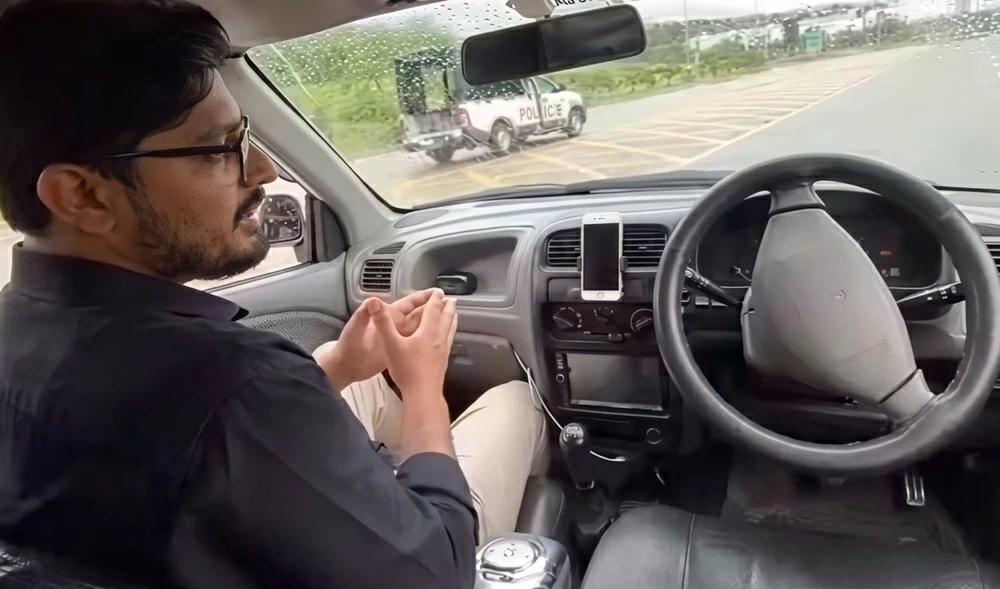
Pakistan’s Remote-Controlled Driverless Car Crashes Into Parked Police Van In Islamabad’s D-Chowk
This article is an automated aggregation of coverage from news outlets. Our editorials offer in-depth analysis curated by the NewsCord team.
A live-broadcasted self-driving car collided with a parked police van in D-Chowk. The vehicle was remotely controlled by Ihsan Abbasi, per reports.
7 outlets told this the same way.
Remote car hits van
A purported demonstration of a remote-controlled “driverless car” in Islamabad ended when the vehicle crashed into a parked police van, with journalist Muhammad Aalijah filming from the passenger seat and showing the car navigating on its own before it “suddenly changed course and crashed into a police vehicle.” Hindustan Times said Aalijah told Dawn that “Everything was fine until a technical fault occurred due to an internet disruption, causing the car to go out of control and crash into a police vehicle,” describing the car as being operated through satellite and internet connections. Gadget Review described the same incident as a connectivity dropout during a live demo near Parliament House in Islamabad’s D-Chowk on August 31, when the steering malfunctioned and Aalijah grabbed the handbrake but it was “not enough.”
WION also tied the crash to an internet disruption, quoting Aalijah: “Everything was fine until a technical fault occurred due to an internet disruption, causing the car to go out of control and crash into a police vehicle,” while adding that the car was controlled remotely over the internet. The different accounts still converge on the same setting—Islamabad’s D-Chowk—and the same core sequence: a remote-controlled vehicle appeared to drive itself until the connection failed and it struck a police vehicle.
_1788306388.webp&w=1920&q=75)
Police response and debate
After the crash, WION reported that the SP of City Zone, Dr Ayaz Hussain, said they decided “not to pursue any offence,” while Islamabad Police said they had enquired into the viral video and found “no evidence of any commission of an offence.”
WION also quoted SP Hussain calling the incident a “human mistake,” and said Islamabad Police considers Ehsan Zafar “this youth an asset for the country.”

Gadget Review described how Islamabad police temporarily detained the vehicle but did not formally penalize Zafar, framing the moment as an encouragement for youth innovation while flagging safety concerns.
Al-Jazirah Net added that after the collision, an official statement from Ayaz Hussain defended the young man, saying: “These youths are Pakistan’s future. They were testing an invention, and what happened was merely human error.”
Across the coverage, the same viral clip—Aalijah or other presenters seated in the passenger area while the car moved—became the focal point for both police restraint and public argument over what counts as safe testing.
What’s at stake next
The incident was presented as a test of a remotely operated vehicle built by Abbottabad-based tech enthusiast Ehsan Zafar, with Gadget Review saying he built the car and that the demo took place “near Parliament House in Islamabad’s D-Chowk.” Gadget Review said the steering failure followed the connection cut out during the live demo, and it described the collision as low-speed with “minor damage and zero injuries,” while also emphasizing that the system reportedly functioned as designed until the safety architecture met a dropped connection. Al-Jazirah Net offered a different technical explanation, saying Ihsan (identified there as a third-year computer engineering student at Comsats University in Abbottabad) said he was about 100 meters away and that he “accidentally pressed the left-turn button instead of the right, causing the collision.”
In the same account, Ayaz Hussain’s defense—“We in Islamabad Police encourage these youths; they are the wealth of our country”—sat alongside warnings in the text about the danger of relying on internet connectivity in driving systems and the need for a “backup safety plan” to automatically stop the vehicle in an emergency. Together, the sources portray the next step as a question of engineering readiness and safe testing conditions, with the crash serving as the proof point that remote control can fail when connectivity or human inputs go wrong.