Technology and Science16 September, 20263 min read
Pittsburgh Parking Authority Says Its AI Parking Enforcement Is Not Flock Cameras
This article is an automated aggregation of coverage from news outlets. Our editorials offer in-depth analysis curated by the NewsCord team.
Pittsburgh Parking Authority states it does not use Flock Safety license-plate readers. Clarification appears amid broader scrutiny of Flock ALPR deployments and contracts.
Pittsburgh draws a line
Pittsburgh Parking Authority deputy director Jodi Hart said the agency’s enforcement technology should not be conflated with Flock cameras as state lawmakers consider tighter regulations, including a potential Flock ban. Hart said PPA’s AI-assisted technology, supplied by Automotus, WiseSight and SenSen, is used only for parking enforcement by scanning plates in monitored parking and loading zones to detect violations like unpaid or expired parking or blocked spaces. She said the system does not connect to law enforcement networks or create searchable histories of a vehicle’s movements, and that PPA automatically deletes non-violation data while violation records are available only to authorized parking staff.
Hart said PPA uses 193 smart loading zone cameras, 16 mobile ALPRs and "multiple" cameras across 13 PPA facilities, and she argued that restrictions based on the "ALPR" label alone could make it harder to enforce curb turnover for businesses and protect accessible spaces and transit lanes. Hart said, "We are not asking for an exemption from scrutiny," and added, "We are asking that parking be regulated as parking."

Misuse and local backlash
In Eastpointe, Michigan, the city ended its contract with Flock after the police department found that two employees misused the company’s license plate reader system, with the Eastpointe City Council voting 4-1 to end the contract.
Police Chief Corey Haines said the department received information that two employees may have misused Flock license plate readers, and after a full investigation it determined that one employee used the system for personal purposes and the other violated department policy.

Mayor Michael Klinefelt said he does not believe the benefits of Flock outweigh the potential risks of misuse and raised concerns about the system’s network that allows information to be shared with other law enforcement agencies.
Klinefelt said, "I know that our police chief has worked hard to put policies in place for our personnel, but the nature of Flock is it is part of a network where information is shared with other law enforcement agencies," and Council member Rob Baker said, "I don’t believe that you eliminate the tools just because of some things that may have happened that need to be looked into."
In St. Johns County, Florida, Sheriff Rob Hardwick told a county budget hearing that homeowners associations and neighborhoods own at least 100 license plate readers that "don’t belong to us" and "belong to your neighborhoods," while Hardwick defended the sheriff’s office’s readers and urged commissioners to maintain $500,000 in the budget for the technology.
Supply chain, hacking, and policy
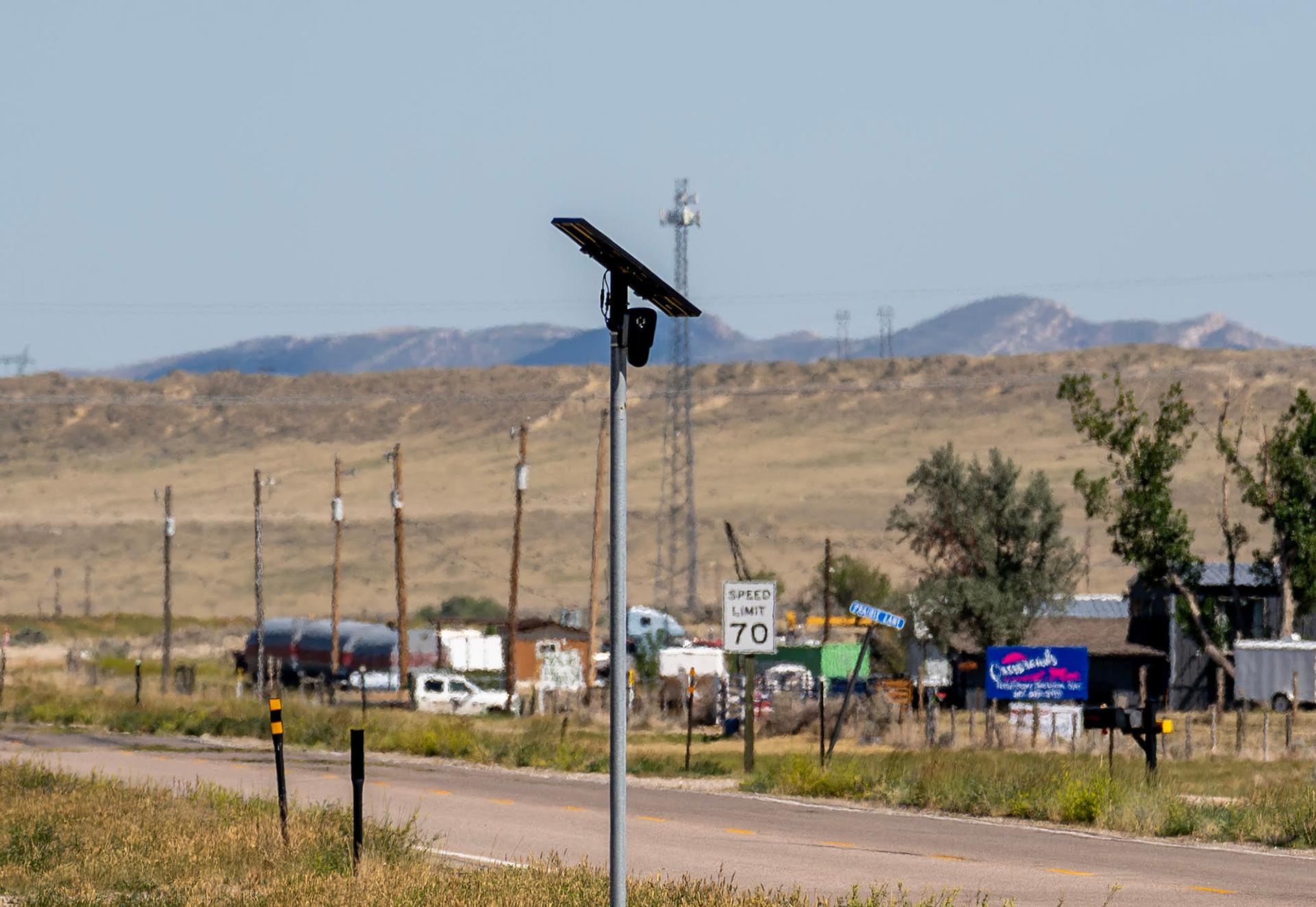
WIRED reported that Flock CEO Garrett Langley previously said the company made its first license plate cameras in his Atlanta home, but more recent marketing materials reviewed by WIRED no longer specify where its cameras come from. WIRED said import records collected by ImportGenius show Flock has been increasingly bringing "commodity" cameras, radar systems, and other components over from Primax Electronics in Thailand, and ImportGenius’ analyst Lynn Hughes said, "My understanding is that these are components, but it looks like Primax manufactures whole security camera solutions." Separately, The Hill reported that a group of hackers called stegan0gram ripped down a Flock camera and stole its data, finding that the cameras’ software can generate dozens of images from a single passing vehicle, and the outlets found that in a 21-day period the camera photographed roughly 50,200 vehicles and generated about 1.6 million images.
“The unauthorized removal and tampering of a Flock camera is illegal.”
The Hill quoted a stegan0gram-affiliated hacker saying, "We liberated hardware in the field, disarmed them, and proceeded with reverse engineering of the cameras and associated solar equipment," while a Flock spokesperson told The Hill, "The unauthorized removal and tampering of a Flock camera is illegal." Across jurisdictions, El Paso, Texas ordered decommissioned Flock cameras removed within 60 days and blocked new ALPR deals, with City Council representatives unanimously voting to remove the devices and directing that they be taken down within 60 days.