Published

Technology and Science

Record Rainfall Kills Eight in Japan’s Chiba, Strands Thousands at Narita Airport

Image via سانا

At a glance

  1. More than 360 millimeters of rain fell in 24 hours in Chiba.
  2. Thousands stranded at Narita Airport as floods disrupted transport.
  3. Death toll reported between four and eight across outlets.

Record rain hits Chiba

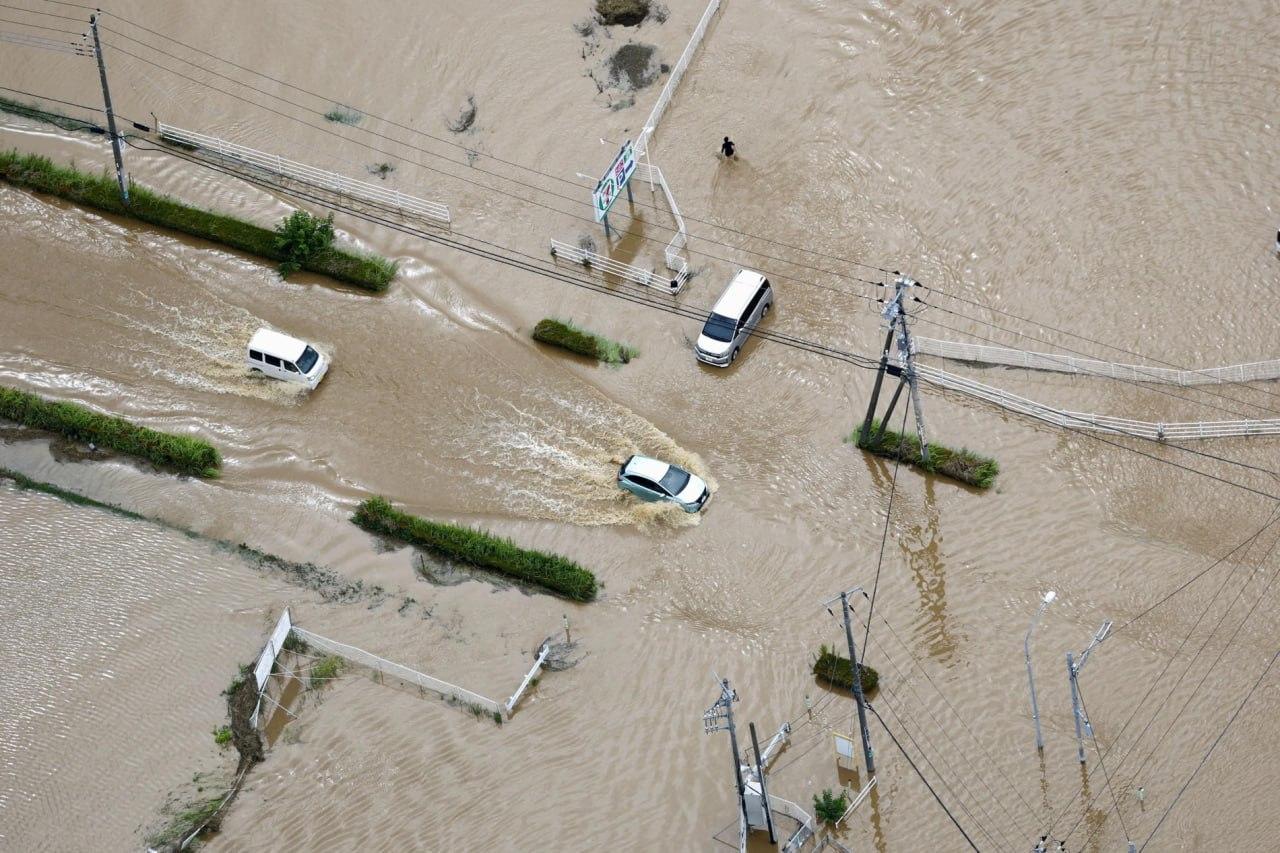
Record rainfall in Japan’s Chiba prefecture, east of Tokyo, killed eight people and stranded thousands of travellers at Tokyo’s Narita airport during one of Japan’s busiest holiday weeks.

Reuters said more than 360 mm of rain fell in 24 hours in parts of the Chiba area adjoining Tokyo, inundating roads and railways and knocking out power to 20,000 homes.

Consistent coverage

Where the coverage agrees

BBC and other outlets largely agree on the flooding and Narita disruption details

Chiba Governor Toshihito Kumagai told reporters on Friday morning, "This case was an extremely unusual situation, even by Japan's historical weather standards," and added, "I have responded to many disasters in the past, but I have never experienced a case like this."

The BBC reported that local authorities issued a level five emergency warning, its highest alert, on Thursday, which was downgraded to a level four by Friday morning while they continued to warn of landslide and flooding risks.

The BBC also said the rains cut power to more than 20,000 households and left 7,000 travellers stranded overnight at Tokyo's Narita airport.

Evacuations, outages, delays

As flooding disrupted transport, Reuters reported that airport staff distributed sleeping bags, water and snacks to hundreds of passengers, many of whom had bedded down on Thursday after transport disruptions stranded about 7,000 people.

Minoru Yamasaki, a 48-year-old Chiba resident returning from holiday, told Reuters, "I queued for a taxi, but the wait was four hours," after he had booked a hotel that he was later told could not put him up.

The Independent said Chiba city recorded 115mm in a single hour and Sakura 97mm, both records for those places, while the Japan Meteorological Agency issued its highest level of heavy rainfall warning for more than a dozen municipalities before downgrading it on Friday.

The Independent quoted Kazuhito Shimamoto from the land ministry advising the public, "For rivers where the risk of flooding is already high, please take action to protect your lives in any way possible," as officials urged people to evacuate early where risks were expected to increase.

Japan’s Ground Self-Defense Force dispatched buses to pick up about 4,000 people who had spent the night at the Soga train station, according to the BBC, while the Independent said some rail services connecting Narita to Tokyo had resumed by Friday morning.

What comes next

With the rain easing, the BBC said the Japan Meteorological Agency downgraded its most recent deluge warning to level four by Friday morning but continued to warn of landslide and flooding risks, while the rains were expected to last through late on Friday.

The Independent reported that more than 80 homes were flooded and nearly 230,000 residents across the prefecture were advised to leave for safety, and it said about 23,000 households were still without power on Friday morning after earlier outages.

Reuters said weather authorities reported the 367 mm of rain over a 24-hour period in Chiba exceeded the previous record of 309 mm set in October 2013, underscoring the scale of the event that disrupted power, highways, and rail services.

In the wider region, the BBC said Japan, the Philippines and China were hit by back-to-back storms—Dolphin, Chan-Hom and Peilou—churning across the region at the same time, and it reported that Dolphin brought heavy rain to Japan’s Okinawa island and that Chinese authorities evacuated more than a million people as Dolphin made landfall in China’s east.

For those affected locally, the BBC reported that authorities would prioritise saving lives and persist with rescue efforts, while the Independent said the Ground Self Defence Force sent buses to collect some 4,000 people from Soga station and that the theme park Tokyo Disney Resort reported no damage.

Explore the original reporting

Compare all 15 sources

How each outlet frames it

Every outlet we compared, the headline it ran, and a link to the original article.

Other

ABC News & Headlines – Australian Broadcasting Corporation

Four dead after record-breaking heavy rain inundates Japan

14 August, 2026

West Asian

Al Jazeera
Al Jazeera

Record rainfall leaves four dead, thousands stranded in Japan

14 August, 2026

Al-Jazeera Net
Al-Jazeera Net

8 deaths and thousands stranded at an airport in Japan due to the rain

14 August, 2026

https
https

Unprecedented Rainfall in Japan Kills Four and Strands Thousands at Narita Airport

14 August, 2026

سانا
سانا

Eight dead, thousands stranded after record rainfall hits Japan

14 August, 2026

Western Mainstream

BBC
BBC

'Unprecedented' rains in Japan kill four people

14 August, 2026

CBC
CBC

Record rainfall in Japan leaves at least 8 dead, strands travellers

14 August, 2026

DW
DW

At least six people have died in Japan due to rains and flooding.

14 August, 2026

France 24
France 24

Japan: Record rains kill eight, strand thousands at Narita airport

14 August, 2026

Reuters
Reuters

Japan's record rains strand thousands at Narita airport; kill eight

14 August, 2026

The Independent
The Independent

At least four dead and thousands stranded at Tokyo airport as record rain batters Japan

14 August, 2026

Asian

CNA
CNA

Record rain in Japan kills at least 8, leaves thousands stranded at Narita airport

14 August, 2026

South China Morning Post

Heavy rains in Japan leave 8 dead, thousands stranded at Narita airport

14 August, 2026

The News International

Japan rain kills 8: Thousand stranded at Narita airport amid severe flooding

14 August, 2026

VnExpress International

7,000 travelers stranded at Japan's second-busiest airport amid record rainfall

14 August, 2026

Read stored source text: ABC News & Headlines – Australian Broadcasting Corporation

In short: Four people have died after record-breaking heavy rain hit Japan and inundated roads and railways. Thousands of travellers were stranded at one of Tokyo's main airports, however all flights were scheduled to operate normally on Friday. What's next? The Japan Meteorological Agency downgraded its most severe warning for heavy rain in more than a dozen affected municipalities as rain subsided on Friday. At least four people died in eastern Japan after heavy rain that left thousands stranded at one of Tokyo's main airports overnight and inundated roads and railways, authorities said on Friday. The torrential downpours late on Thursday triggered landslide warnings and power outages, with forecasters issuing the highest-level heavy rain warning for the Chiba region for the first time. Those killed included a man in his 60s or 70s found floating on a flooded road and a 66-year-old woman stuck in her submerged car, the Chiba Prefecture Disaster Management Office said. The third fatality was a man of unknown age found collapsed on the street and the fourth a person of undetermined gender and age. A fifth person was feared dead and a sixth unaccounted-for. More than 360 millimetres of rain fell in 24 hours in parts of Chiba Prefecture, which adjoins the capital Tokyo, inundating roads and railways during one of Japan's busiest holiday weeks. Record-breaking rainfall of 115mm fell in just one hour in Chiba city and 97mm fell in one hour in Sakura, also a record for that city. The Japan Meteorological Agency downgraded its most severe warning for heavy rain in more than a dozen municipalities in Chiba Prefecture as rain subsided on Friday morning but forecast more rain later in the day. Photos and television footage showed widespread damage after daylight, with homes, cars and parts of railway tracks flooded with muddy water. "This case was an extremely unusual situation," Chiba Governor Toshihito Kumagai told reporters on Friday morning. "I have responded to many disasters in the past, but I have never experienced a case like this." Hundreds of people were left stranded in Chiba station due to suspended train services. "This happened all of a sudden so it was a complete surprise. The power is out so I'm worried whether I can open my business in the next couple of days," a woman in Chiba's Ichikawa city told NHK on Thursday. In Chiba city, hundreds of people spent the night under foil blankets at government buildings serving as temporary evacuation centres. As of Friday morning, more than 26,000 households across Chiba Prefecture were without power, the disaster management office said. Japan's Ground Self-Defense Force also said it dispatched buses to pick up about 4,000 stranded people who stayed overnight at the Soga train station, a local route that also serves Tokyo Disney. The theme park did not report any damage. Passengers stranded at major Tokyo airport The transport disruption left about 7,000 people stranded at Narita International Airport, one of two main airports serving Tokyo, however all flights were scheduled to operate normally on Friday, an airport spokesperson said. Japan Airlines said some flights may experience delays but no cancellations were expected. Many trains to and from the airport were cancelled until Friday afternoon, the Chiba disaster office said. Users on social media said that airport staff handed out free water, food and sleeping bags. "I never thought I'd spend the night at the airport but it is what it is and we are learning," one stranded air traveller told Japanese broadcaster NHK. "We're never going to forget this trip," he said. AFP/AP/Reuters

Read stored source text: Al Jazeera

Record rainfall has killed at least four people and stranded thousands of travellers in Japan’s Chiba prefecture, east of Tokyo. Areas of Chiba recorded upwards of 360mm of rain in 24 hours into Friday, flooding roads and rail lines during the Bon Buddhist holiday week, one of Japan’s busiest travel periods. Recommended Stories list of 2 items- list 1 of 2Indonesian officials race to contain wildfires as dozens of schools shut - list 2 of 2One million evacuated as Typhoon Dolphin pummels east China: What we know Those killed included a man in his 60s or 70s found floating on a flooded road and a 66-year-old woman trapped in her submerged car, the Chiba Prefecture Disaster Management Office said. The third death was a man of unknown age found collapsed on the street, and the fourth a person of undetermined gender and age. A fifth person was feared dead and a sixth unaccounted for. Soldiers have been dispatched to the area to help with relief efforts, officials said. “This case was an extremely unusual situation,” Chiba Governor Toshihito Kumagai told reporters on Friday morning. “I have responded to many disasters in the past, but I have never experienced a case like this.” More than 22,000 households were without power by 11am (02:00 GMT) Friday, according to Tokyo Electric Power. Some 80 homes experienced flooding and officials say more than 230,000 have been advised to take shelter. Japan’s Ground Self-Defence Force said it evacuated 4,000 people from Soga train station after they were stranded by the flooding for hours. Thousands more people were stuck overnight at the Narita airport serving the Tokyo region, with trains out of the area stopped. Services partially resumed Friday morning with delays, while flights in and out of Narita were operating normally on Friday, with many people returning home at the end of Japan’s Bon Buddhist holiday week. Hundreds of people took shelter overnight at the Chiba prefectural government building. The Japan Meteorological Agency downgraded its most severe warning for heavy rain in more than a dozen municipalities in Chiba prefecture as rain subsided Friday morning but forecast more rain later in the day. Photos and television footage showed widespread damage after daylight, with homes, cars and parts of railway tracks flooded with muddy water.

Read stored source text: Al-Jazeera Net

Eight people were killed and thousands of travelers were stranded at Narita Airport in Tokyo on Friday due to record rains and floods. The floods disrupted transportation and left about 20,000 homes without power, as rainfall exceeding 360 millimeters fell in 24 hours in parts of Chiba Prefecture, adjacent to Tokyo. The rain and floods flooded roads and railways during one of Japan’s busiest holiday weeks, while soldiers were deployed to assist in rescue efforts. Chiba Governor Toshihito Kumagai described the event to reporters as 'an extremely extraordinary situation,' noting that while he has dealt with many disasters in the past, he had never seen anything like this before. Nippon News Network, citing Chiba authorities and police, reported that among the eight dead, one person was trapped in a submerged car. At Narita Airport, staff distributed sleeping bags, water, and snacks to hundreds of passengers, many of whom spent the night there on Thursday after transport disruptions stranded about 7,000 people, creating widespread chaos. Minoru Yamasaki, 48, a Chiba resident returning from vacation, said, 'I waited in line for a taxi, but the wait was four hours.' He said he had booked a hotel room but was later told that he could not be accommodated, forcing him to return to the airport with nowhere else to go. A Narita Airport spokesperson said that most flights are expected to operate normally on Friday. Power and gas outages Tokyo Electric Power Company said more than 20,000 homes were without power in the early hours of Friday after a substation was flooded, and gas supplies were temporarily cut to about 13,000 customers. In the city of Chiba, one of the hardest-hit areas, hundreds spent the night under aluminum foil sheets in government buildings used as temporary evacuation centers. Nexco East, which runs expressways, said some major roads in Chiba were closed, forcing drivers to use alternate routes and causing severe traffic congestion. Several rail services were halted on Friday, but some trips between Narita and Tokyo resumed, helping ease congestion at the international transportation hub. The meteorological authorities said the 367 millimeters of rainfall in 24 hours in Chiba exceeded the previous record of 309 millimeters set in October 2013.

Read stored source text: BBC

- Published At least four people have died and five others are wounded in eastern Japan as record rainfall pummelled the Chiba prefecture near the capital Tokyo. The rains, which authorities have described as "unprecedented", cut power to more than 20,000 households while 7,000 travellers were stranded overnight at Tokyo's Narita airport. Local authorities issued a level five emergency warning, its highest alert, on Thursday. This was downgraded to a level four by Friday morning, but they continue to warn of landslide and flooding risks. The deluge comes after a series of storms swept through Japan and neighbouring countries this week, in what's been forecast to be an unusually active typhoon season. Japan's Meteorological Agency said the most recent deluge was brought by warm, humid air flowing into the country's east that combined with cold air above to make atmospheric conditions extremely unstable. The rains are expected to last through late on Friday. "This case was an extremely unusual situation, even by Japan's historical weather standards," Chiba Governor Toshihito Kumagai told reporters on Friday morning. "I have responded to many disasters in the past, but I have never experienced a case like this." Chiba, which sits right next to the capital city of Tokyo, has logged more than 100mm of rain per hour since Thursday afternoon, authorities say. This is about three times the average rainfall in August, and the highest volume of precipitation ever recorded in the country. Authorities would prioritise saving lives and persist with rescue efforts, Kumagai added. Among those killed was a woman who died inside her car submerged on a flooded road, authorities said. Two others collapsed along the streets and later died. The Japan Meteorological Agency earlier described the situation as an "unprecedented level of heavy rain". Several rail services remain suspended on Friday morning while some major highways are also shut. More than 100,000 households have been asked to evacuate on Thursday after the rain triggered landslides and power outages. All flights are scheduled to operate normally on Friday, a spokesperson from Narita airport said. Flag carrier Japan Airlines said some of its flights may be delayed but that it does not expect any cancellations. Passengers were stranded at metro stations, while around 1,800 people spent the night at the Chiba Prefectural Government building. A woman in Chiba's Ichikawa city told NHK the rain "happened all of a sudden so it was a complete surprise". "The power is out so I'm worried whether I can open my business in the next couple of days," she said. Meanwhile in the Philippines, authorities have again shut schools and government offices are again shut in most of the country's north, citing the threat of floods. Earlier this week, Japan, the Philippines and China were hit by back-to-back storms – Dolphin, Chan-Hom and Peilou – churning across the region at the same time. Dolphin brought heavy rain to Japan's Okinawa island, cutting power to tens of thousands of buildings, toppling trees and cancelling flights. Over the weekend, Chinese authorities evacuated more than a million people from their homes as Dolphin, the strongest typhoon to hit China so far this year, made landfall in the country's east.

Read stored source text: CBC

‌Record rainfall in Japan stranded thousands of travellers at Tokyo's Narita airport on Friday, bringing floods to the surrounding area that disrupted transport, knocked out power to 20,000 homes and killed eight. More than 360 millimetres of rain fell in 24 hours in parts of Chiba prefecture, which adjoins the capital Tokyo, inundating roads and railways during one of Japan's busiest holiday weeks. "This case was an extremely unusual situation," Chiba Gov. Toshihito Kumagai told reporters on Friday morning. "I have responded to many disasters in the past, but I have never experienced a case like this." The eight dead included one person trapped in a submerged vehicle, public broadcaster NHK said, citing Chiba authorities and police. At Narita, airport staff distributed sleeping bags, water and snacks to hundreds of passengers, many of whom had bedded down ⁠on Thursday after transport disruptions stranded about 7,000 people, causing widespread chaos. "I queued for a taxi, but the wait was four hours," said Minoru Yamasaki, a 48-year-old Chiba resident returning from holiday, ‌who had booked a hotel only to be told it could not put him up. With nowhere else to go, he returned to the airport. An airport spokesperson said most flights were expected to operate normally on Friday. More than 20,000 ​homes were without power in the early hours of Friday, after rain flooded a power substation, utility Tokyo Electric Power ⁠said, while gas supply to nearly 13,000 was temporarily cut. In Chiba city, one of the ⁠worst-hit spots, hundreds of people spent the night under foil blankets at makeshift evacuation centres ⁠in ⁠government buildings. Some major highways in ​Chiba were shut, forcing drivers to take alternative routes that clogged traffic, said highway operator NEXCO East. Several ​rail services were also ⁠suspended on Friday, though some services from Narita to Tokyo resumed, easing congestion at the international transport hub. Weather authorities said the 367 millimetres of rain over a 24-hour period in Chiba exceeded the previous record of 309 millimetres set in October 2013.

Read stored source text: CNA

Record rain in Japan kills at least 8, leaves thousands stranded at Narita airport The torrential downpours triggered landslide warnings and power outages, with forecasters issuing the highest-level heavy rain warning for the Chiba region for the first time. TOKYO: Record rainfall left thousands of travellers stranded at Tokyo's Narita airport on Friday (Aug 14), as flooding in the surrounding area disrupted transport and knocked out power to more than 20,000 homes. At least eight people were killed. The torrential downpours late on Thursday triggered landslide warnings and power outages, with forecasters issuing the highest-level heavy rain warning for the Chiba region for the first time. More than 360mm of rain fell in 24 hours in parts of Chiba prefecture, which adjoins the capital Tokyo, inundating roads and railways. Those killed included a man in his 60s or 70s found floating in a flooded road and a 66-year-old woman stuck in her submerged car, the Chiba Prefecture Disaster Management Office said. A third fatality was a man of unknown age found collapsed on the street, and another person of undetermined gender and age was also killed. Meanwhile, close to 26,000 households across Chiba prefecture were without power, the disaster management office said. A total of 45 houses flooded in cities such as Ichikawa, Kashiwa and Sakura. Another 39 homes saw water seeping in below the floorboards. Hundreds spent the night in shelters in Chiba, NHK reported, showing cars in flood water up to their headlights in Kashiwa city. "This case was an extremely unusual situation, even by Japan's historical weather standards," Chiba Governor Toshihito Kumagai told reporters on Friday morning. "I have responded to many disasters in the past, but I have never experienced a case like this." "This is shaping up to be an unprecedented level of heavy rain," a Japan Meteorological Agency (JMA) official had told a news conference on Thursday. The transport disruption left around 7,000 people stranded at Narita, an airport spokesperson said, adding that all flights are scheduled to operate normally on Friday. Japan Airlines said some flights may experience delays but no cancellations are currently expected. Users on social media said that airport staff handed out free water, food and sleeping bags. "I never thought I'd spend the night at the airport but it is what it is and we are learning," one stranded air traveller told NHK. "We're never going to forget this trip," he said. A traveller from the United Kingdom who gave his name as Philip told AFP that he had to go through a nine-hour journey, including a taxi ride, before finally arriving at the airport early on Friday morning. With a sleeping bag in hand, he said he has "just been trying to get some sleep and watching Netflix now". "Just get on with it, really. Nothing else you can do," he said. Major highways in Chiba, including routes linking Narita airport, one of Japan's main international transport hubs, with central Tokyo, remained closed, forcing drivers onto alternative routes and causing heavy traffic, according to highway operator NEXCO East. Several rail services remained suspended on Friday morning, though some trains connecting Narita to Tokyo had resumed operations. Hundreds of people were also left stranded in Chiba station due to suspended train services, an AFP journalist saw. "This happened all of a sudden so it was a complete surprise. The power is out so I'm worried whether I can open my business in the next couple of days," a woman in Chiba's Ichikawa city told NHK on Thursday. The level-5 warnings of heavy rain were all downgraded to level-4 as of Friday morning. Scientists say human-driven climate change is making extreme weather more frequent, prolonged and intense.

Read stored source text: DW

Record rainfall left thousands of travelers stranded at Tokyo’s Narita Airport this Friday (08/14/2026), as flooding in the surrounding area disrupted transportation, left homes without power, and claimed at least six lives. More than 360 millimeters of rain fell in 24 hours in parts of Chiba Prefecture, which borders Tokyo, flooding roads and rail lines during one of Japan’s busiest holiday weeks. Officials said six deaths have been confirmed so far, including a person trapped in a submerged vehicle, while another person remains missing. Soldiers have been dispatched to the area to assist with rescue efforts. “This was an extremely unusual situation,” Chiba Governor Toshihito Kumagai told reporters Friday morning. “I’ve responded to many disasters in the past, but I never experienced anything like this.” More than 22,000 homes remained without power on Friday at 11:00 a.m. (04:00 CET), according to Tokyo Electric Power. In Chiba City, one of the hardest-hit areas, hundreds of people spent the night under thermal blankets in government buildings serving as temporary evacuation centers. Transportation disruptions left about 7,000 people stranded at Narita, a spokeswoman for the airport said, adding that all flights were expected to operate normally later on Friday. Japan Airlines indicated some flights might experience delays, but there were currently no cancellations expected. Several major expressways in Chiba were closed, forcing drivers to take alternate routes and causing heavy traffic, according to freeway operator NEXCO East. Several rail services also remained suspended on Friday morning, though some trains connecting Narita to Tokyo had resumed operations, easing congestion at the international transport hub. Overnight, hundreds of passengers lined up to receive blankets, water bottles, and snacks from airport staff before settling down to sleep in the terminal, footage from public broadcaster NHK showed.

Read stored source text: France 24

To display this content from YouTube, you must enable advertisement tracking and audience measurement. One of your browser extensions seems to be blocking the video player from loading. To watch this content, you may need to disable it on this site. Issued on:14/08/2026 - 13:48Modified:14/08/2026 - 13:48 Record rainfall has caused deadly flooding in Japan, leaving thousands stranded at Narita Airport during the Obon holiday period. Headings To display this content from YouTube, you must enable advertisement tracking and audience measurement. One of your browser extensions seems to be blocking the video player from loading. To watch this content, you may need to disable it on this site. Issued on:14/08/2026 - 13:48Modified:14/08/2026 - 13:48 Record rainfall has caused deadly flooding in Japan, leaving thousands stranded at Narita Airport during the Obon holiday period. © 2026 Copyright France 24 - All rights reserved. France 24 is not responsible for the content of external websites. Audience ratings certified by ACPM.ACPM The content you requested does not exist or is not available anymore.

Read stored source text: https

Record-breaking rainfall in Japan’s Chiba Prefecture caused severe flooding that killed four people and trapped 7,000 travelers at Narita Airport. Question this story, inspect its evidence or connect it to earlier Streamline reporting. A historic and unrelenting deluge of rain across eastern Japan has claimed at least four lives and paralyzed the region’s critical transport infrastructure, stranding roughly 7,000 travelers overnight at Tokyo’s Narita International Airport. The torrential downpours struck Chiba Prefecture on Thursday night, triggering massive power outages and forcing the Japan Meteorological Agency (JMA) to issue a rare Level 5 emergency warning. As global climate patterns continue to fuel extreme weather events—from unprecedented heat domes in Europe to devastating El Niño flooding in East Africa—Japan’s latest crisis highlights the escalating vulnerability of even the world’s most advanced infrastructural networks. Bands of intense rain clouds repeatedly formed over the prefecture, dumping catastrophic volumes of water onto densely populated urban centers. Chiba city’s Chuo Ward recorded a staggering 367 millimeters of rainfall in just 12 hours leading into Friday morning. The torrential volume easily matched the amount of rain the region typically receives throughout the entire month of August. The devastating floodwaters resulted in four confirmed fatalities. Rescue workers recovered the body of a man in his 60s floating on a submerged road in Ichikawa City, while a 66-year-old woman tragically drowned after her vehicle became trapped in rising floodwaters in Sakura City. Two other individuals suffered fatal cardiopulmonary arrests after being unable to escape submerged vehicles in neighboring municipalities. One person remains missing as military personnel continue to comb the heavily flooded zones. The flooding completely severed ground transportation links to Narita International Airport, one of the globe’s busiest aviation hubs. Major highways operated by NEXCO East were submerged and promptly closed, while the JR and Keisei electric railway services halted operations indefinitely. Taxi and bus services were completely suspended, effectively turning the airport into an island. Inside the terminals, an estimated 7,000 passengers were forced to sleep on floors as airport staff frantically distributed emergency sleeping bags, drinking water, and dry biscuits. While flights in and out of Narita resumed near-normal operations by Friday morning, the lack of ground transport meant arriving passengers could not leave the facility, further compounding the severe logistical bottleneck during the peak of Japan’s busy Bon Buddhist holiday week. Chiba Governor Toshihito Kumagai described the storm as an absolute anomaly, noting that the volume and intensity of the rain bypassed all localized historical weather standards. “I have responded to many disasters in the past, but I have never experienced a case like this,” Governor Kumagai told reporters during a Friday morning press briefing. In response to the total systemic failure of local transport, the prefectural government requested a disaster relief deployment from the Japan Ground Self-Defense Force at 5:00 a.m. on Friday. Military troops utilizing heavy-duty trucks and buses successfully evacuated approximately 4,000 commuters who had been trapped overnight at JR Soga Station, relocating them to a designated temporary shelter at the Chiba Prefectural Cultural Hall. The sheer scale of the disruption in Chiba Prefecture offers a stark warning regarding global infrastructural resilience. Emergency planners in East Africa are uniquely positioned to understand this specific brand of chaos; the recent El Niño rains severely flooded critical access routes to Jomo Kenyatta International Airport (JKIA) in Nairobi, causing similar, albeit smaller-scale, passenger strandings. Whether evaluating the multi-billion dollar transit networks of Tokyo or the vital economic arteries of Mombasa and Kampala, the reality of climate change is universally apparent. Urban drainage systems engineered in the 20th century are routinely proving entirely inadequate against 21st-century atmospheric anomalies. As Japanese authorities work to restore power to the remaining homes and clear massive debris fields, international policymakers are once again confronted with the urgent, multi-trillion-dollar necessity of upgrading civil infrastructure to withstand the unpredictable extremes of a rapidly warming planet. No sign-in required. Choose up to two. This captures your response to the story—it is not a vote on whether the reporting is true. The documents, data and reporting consulted for this article. Links open the original material so readers can inspect the evidence directly. Evidence used Keep the conversation in one place—threads here stay linked to thestoryand in the forums. Sign in to start a discussion Start a conversation about thisstoryand keep it linked here. Other hot threads E-sports and Gaming Community in Kenya Active15 months ago The Role of Technology in Modern Agriculture (AgriTech) Active15 months ago Popular Recreational Activities Across Counties Active15 months ago Investing in Youth Sports Development Programs Active15 months ago No weak match is forced. These are the latest verified stories from Environment & Climate Change. More fromEnvironment & Climate Change Aug 14, 2026 More fromEnvironment & Climate Change Aug 14, 2026 More fromEnvironment & Climate Change Aug 14, 2026

Read stored source text: Reuters

OAMISHIROSATO, Japan, Aug 14 (Reuters) - Record rainfall in Japan stranded thousands of travellers at Tokyo's Narita airport on Friday, bringing floods to the surrounding area that disrupted transport, knocked out power to 20,000 homes and killed eight. During one of Japan's busiest holiday weeks, more than 360 mm (14 inches) of rain fell in 24 hours in parts of the Chiba area adjoining Tokyo, inundating roads and railways, with soldiers sent to help with rescue efforts. Sign up here. "This case was an extremely unusual situation," Chiba Governor Toshihito Kumagai told reporters. "I have responded to many disasters in the past, but I have never experienced a case like this." The eight dead included one person trapped in a submerged vehicle, public broadcaster NHK said, citing Chiba authorities and police. At Narita, airport staff distributed sleeping bags, water and snacks to hundreds of passengers, many of whom had bedded down on Thursday after transport disruptions stranded about 7,000 people, causing widespread chaos. "I queued for a taxi, but the wait was four hours," said Minoru Yamasaki, a 48-year-old Chiba resident returning from holiday, who had booked a hotel only to be told it could not put him up. With nowhere else to go, he returned to the airport. An airport spokesperson said most flights were expected to operate normally on Friday. More than 20,000 homes were without power in the early hours of Friday, after rain flooded a power substation, utility Tokyo Electric Power said, while gas supply to nearly 13,000 was temporarily cut. In Chiba city, one of the worst-hit spots, hundreds of people spent the night under foil blankets at makeshift evacuation centres in government buildings. Some major highways in Chiba were shut, forcing drivers to take alternative routes that clogged traffic, said highway operator NEXCO East. Several rail services were also suspended on Friday, though some services from Narita to Tokyo resumed, easing congestion at the international transport hub. Weather authorities said the 367 mm (14.5 inches) of rain over a 24-hour period in Chiba exceeded the previous record of 309 mm (12.17 inches) set in October 2013. Reporting by Issei Kato, Hina Suzuki, Mariko Katsumura, Joseph Campbell and John Geddie; Editing by Stephen Coates and Clarence Fernandez Our Standards: The Thomson Reuters Trust Principles.

Read stored source text: South China Morning Post

Heavy rains in Japan leave 8 dead and thousands stranded at Narita airport Record rainfall in Chiba prefecture inundates transport routes, cuts power to thousands and disrupts peak holiday travel near Tokyo Record rainfall left thousands of travellers stranded at Tokyo’s Narita airport on Friday morning as flooding in the surrounding area disrupted transport, knocked out power to 20,000 homes and claimed at least eight lives. The eight dead included one person trapped in a submerged vehicle, public broadcaster NHK said, citing Chiba authorities and police. “This case was an extremely unusual situation, even by Japan’s historical weather standards,” Chiba Governor Toshihito Kumagai told reporters on Friday morning. “I have responded to many disasters in the past, but I have never experienced a case like this.” The transport disruption left around 7,000 people stranded at Narita, an airport spokesperson said, adding that all flights are scheduled to operate normally on Friday. Japan Airlines said some flights may experience delays but no cancellations are currently expected. Users on social media said that airport staff handed out free water, food and sleeping bags. “I never thought I’d spend the night at the airport but it is what it is and we are learning,” one stranded air traveller told NHK. “We’re never going to forget this trip,” he said.

Read stored source text: The Independent

At least four people died and some 7,000 travellers were left stranded at one of Tokyo's international airports after record rainfall flooded roads, rail lines and homes east of the Japanese capital. Chiba, the prefecture bordering Tokyo, recorded over 360mm of rain in 24 hours in some parts during one of the busiest holiday weeks of the Japanese year. Chiba city recorded 115mm in a single hour and Sakura 97mm, both records for both places. The Japan Meteorological Agency issued, for the first time, its highest level of heavy rainfall warning for more than a dozen municipalities in the prefecture on Thursday but downgraded it on Friday as the rain eased, although it forecast more later in the day. “For rivers where the risk of flooding is already high, please take action to protect your lives in any way possible,” Kazuhito Shimamoto, from the land ministry, advised the public. “There are also rivers where the risk of flooding is expected to increase further, so please check the evacuation advisories issued by your local municipalities and evacuate early.” Takuya Hosomi, a forecaster at the weather agency, told a televised emergency news conference that Chiba recorded unprecedented levels of rainfall. “This case was an extremely unusual situation, even by Japan's historical weather standards," Chiba’s governor, Toshihito Kumagai, told reporters on Friday. "I have responded to many disasters in the past, but I have never experienced a case like this." A man was found floating down a flooded road in Ichikawa and a 66-year-old woman was killed after her car was trapped in floodwaters in Sakura city. Another person was pulled from a flooded car in Kashiwa and was presumed dead. One person remains missing. Soldiers have been sent to the area to help with the disaster response. Footage from public broadcaster NHK showed water spurting violently from what appeared to be a maintenance hole and exceeding the height of a nearby five-storey building in Chiba’s central ward. More than 80 homes were flooded and nearly 230,000 residents across the prefecture were advised to leave for safety, according to Chiba officials. About 23,000 households were still without power on Friday morning, down from 68,000 earlier, the TEPCO Power Grid said. Around 7,000 people spent the night at the Narita international airport, queueing for blankets, water and snacks from staff before bedding down across the terminal, footage broadcast by NHK showed. "We are never going to forget this trip," an American traveller stranded there with his family told the broadcaster. The Ground Self Defence Force sent buses to collect some 4,000 people who had spent the night at the Soga station on the line serving the Tokyo Disney Resort, which reported no damage. Hundreds more sheltered overnight at the Chiba prefectural government building, sleeping under foil blankets. Some rail services connecting Narita to Tokyo had resumed by Friday morning, easing the congestion at the airport, though several lines remained suspended. Major roads in Chiba were closed, including routes between Narita and central Tokyo, pushing drivers onto alternative routes, the highway operator NEXCO East said. An airport spokesperson said all flights were scheduled to run normally on Friday. Japan Airlines said some delays were possible but no cancellations were expected. The flooding comes at the end of a fortnight of severe weather across Japan. A run of typhoons and extreme heat, which killed three lions at a Tokyo zoo and brought the first recorded “cruelly hot day”, have left the country reeling. Scientists say a warmer atmosphere holds more moisture, making the heaviest downpours heavier.

Read stored source text: The News International

Japan rain kills 8: Thousand stranded at Narita airport amid severe flooding Around 7,000 travelers were left stranded overnight at Tokyo's Narita International Airport after surrounding roads and railway lines were severely flooded Eight killed after heavy rain spell in Japan. Unprecedented torrential rains struck eastern Japan, heavily impacting Chiba prefecture and causing major travel chaos, power outages, and fatalities. Record rainfall in Japan stranded thousands of travellers at Tokyo's airport on Friday, bringing floods to the surrounding area that disrupted transport, knocked out power to 20,000 homes. The eight dead included one person trapped in a submerged vehicle, public broadcaster NHK said, citing Chiba authorities and police. "This case was an extremely unusual situation," Chiba Governor Toshihito Kumagai told reporters. "I have responded to many disasters in the past, but I have never experienced a case like this." As reported, around 7,000 travelers were left stranded overnight at Tokyo's Narita International Airport after surrounding roads and railway lines were severely flooded or suspended. Passengers were provided emergency blankets, water, and supplies inside the terminal. Parts of Chiba prefecture recorded over 360 millimeters (14 inches) of rain within a 24-hour window. At the height of the storm, hourly rates hit roughly 115 mm—equivalent to an entire typical month's worth of rain for August. More than 20,000 homes were without power in the early hours of Friday, after rain flooded a power substation, utility Tokyo Electric Power said, while gas supply to nearly 13,000 was temporarily cut. In Chiba city, one of the worst-hit spots, hundreds of people spent the night under foil blankets at makeshift evacuation centres in government buildings. Some major highways in Chiba were shut, forcing drivers to take alternative routes that clogged traffic, said highway operator NEXCO East. Several rail services were also suspended on Friday, though some services from Narita to Tokyo resumed, easing congestion at the international transport hub. Weather authorities said the 367 mm (14.5 inches) of rain over a 24-hour period in Chiba exceeded the previous record of 309 mm (12.17 inches) set in October 2013. - England wildfires devastation: Several destroyed as record heat sparks major incidents - Nigel farage wins Clacton's by election by defeating Count Binance to reclaim UK parliamentary seat - China rejects New Zealand Spy allegations as false amid bilateral tensions - Boat operator fined over $5,000 for waking sleeping polar bear with foghorn - Massive oil spill off Oman sparks fears of Arabian Sea ecological disaster - US gun rules change as court ruling deregulates silencers, rifles and shotguns - South Korea’s Incheon becomes world’s busiest airport as Iran war disrupts Middle East travel - Pete Hegseth responds to reports of food shortages aboard USS Abraham Lincoln - Ontario cuts social assistance eligibility for people without legal status in Canada - Mark Carney faces pressure to keep Netflix, foreign streamers paying for Canadian content - Toronto police officer shot during e-bike theft investigation, suspect arrested - Trump’s tariffs could could pit Canadian provinces against each other, experts say - World’s deepest undersea mine? US, Japan target China’s rare earths dominance - Why Italy’s Meloni is facing a major 'youth' problem ahead of elections - USS Abraham Lincoln aircraft carrier faces investigation calls over sailor safety concerns - Japan PM condemns Putin’s visit to disputed Kuril islands as ‘unacceptable’ - Trump Media sued over Truth Social’s paid early-access feed in First Amendment lawsuit - Natalie Harp to replace Karoline Leavitt? Trump’s close aide in the spotlight

Read stored source text: VnExpress International

More than 360 mm of rain fell in 24 hours in parts of Chiba prefecture, which adjoins the capital Tokyo, inundating roads and railways and knocking out power to nearly 25,000 households during one of Japan's busiest holiday weeks. The authorities said four deaths have been confirmed so far, including at least one person trapped in a submerged vehicle. Soldiers have been dispatched to the area to help with relief efforts. "This case was an extremely unusual situation, even by Japan's historical weather standards," Chiba Governor Toshihito Kumagai told reporters on the morning of Aug. 14. "I have responded to many disasters in the past, but I have never experienced a case like this." The transport disruption left around 7,000 people stranded at Narita, an airport spokesperson said, adding that all flights are scheduled to operate normally on Aug. 14. Japan Airlines said some flights may experience delays but no cancellations are currently expected. Major highways in Chiba, including routes linking Narita airport, one of Japan's main international transport hubs, with central Tokyo, remained closed, forcing drivers onto alternative routes and causing heavy traffic, according to highway operator NEXCO East. Several rail services remained suspended on the morning of Aug. 14, though some trains connecting Narita to Tokyo had resumed operations.

Read stored source text: سانا

Tokyo, Aug. 14 (SANA) Eight people were killed and thousands of travelers stranded at Tokyo’s Narita Airport after record rainfall triggered flooding across Japan’s Chiba prefecture, disrupting transport and cutting power to thousands of homes. More than 360 mm of rain fell in 24 hours in parts of Chiba, neighboring Tokyo, flooding roads and railway lines during one of Japan’s busiest holiday periods. Soldiers were deployed to assist rescue operations, according to Reuters. “This was an extremely exceptional situation,” Chiba Governor Toshihito Kumagai told reporters, adding that he had never experienced a disaster of this kind despite dealing with many emergencies in the past. Japanese broadcaster NHK, citing local authorities and police, said one of the eight people killed was trapped inside a vehicle submerged by floodwaters. At Narita Airport, transport disruptions left about 7,000 travelers stranded, with many spending Thursday night at the airport. Staff distributed sleeping bags, water and snacks to passengers. Most flights were expected to operate normally Friday, an airport spokesperson said. More than 20,000 homes remained without electricity early Friday after floodwaters inundated a power substation, while gas supplies were temporarily disrupted for about 13,000 customers, Tokyo Electric Power Company said. Hundreds of people in Chiba city, one of the hardest-hit areas, spent the night in government buildings being used as temporary evacuation centers. Some major roads were closed and several railway services suspended, although some train services between Narita and Tokyo later resumed. Weather authorities said Chiba recorded 367 mm of rain in 24 hours, surpassing the previous record of 309 mm set in October 2013. I.Z/A