Climateupdated 16m ago2 min read
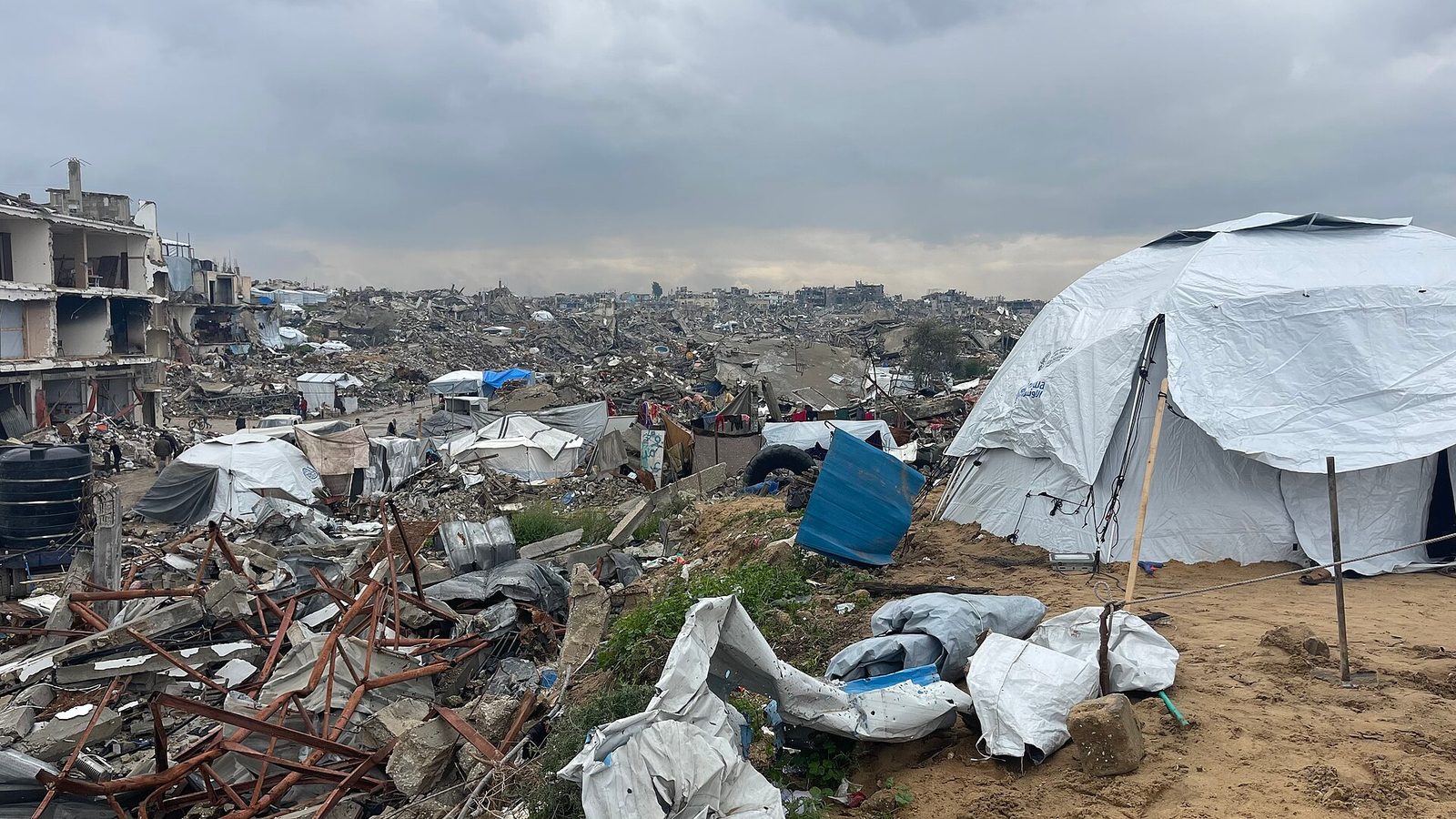
Archive photo · 23 February 2025Peace Council Warns Gaza Flooding Leaves Displaced Families Exposed to Cold
“‘Hamas alone is responsible for the suffering of Gaza's residents,’ the Prime Minister's Office said.”
“Israel says Gaza will not be rebuilt until Hamas disarms.”
Photo: Jaber Jehad Badwan, CC BY-SA 4.0 · Cropped for layout
This article is an automated aggregation of coverage from news outlets. Our editorials offer in-depth analysis curated by the NewsCord team.
Torrential rains flooded tens of thousands of tents, leaving Gaza’s displaced exposed to cold. Hamas accused of blocking reconstruction and seizing tents, while Israel rejects blame for delays.
Save coverage image
Floods, tents, and deaths
Severe flooding and heavy rains in the Gaza Strip inundated tens of thousands of tents and shelter centers over two days, turning the situation into an urgent humanitarian emergency, the Peace Council said. The New York Times reported that floods killed four people from one family when a sand embankment collapsed on a tent in Deir al-Balah, central Gaza. The New York Times said Ahmad Nabhan, 36, buried his wife Tahrir, 36, his son Salah, 8, his daughter Mariam, 5, and his niece Habiba, 4, after the rains buried them inside the tent.
The New York Times also reported that thousands of other Palestinians lost their shelters and belongings in the weekend storm, and it said the United Nations reported the same. The Peace Council warned that the flooding left displaced families exposed to cold and unsafe conditions, and it urged Israel to authorize additional materials for temporary shelter, sanitation, drainage and sewage disposal.
Israel, Hamas, and the dispute
Israel’s Prime Minister's Office rejected Board of Peace criticism over Gaza flooding and blamed Hamas for blocking reconstruction, while insisting Israel had facilitated the entry of humanitarian supplies. The Prime Minister's Office said Israel had approved additional humanitarian supplies despite Hamas's refusal to fulfill its commitments under US President Donald Trump's 20-point peace plan. Hamas accused the Council of presenting a distorted image of the crisis caused by the floods in Gaza and of ignoring Israel’s role in obstructing U.S.-backed peace plans.
Hamas said, “Children who died under the sand or drowned in the rain are not party to the negotiations,” and it argued they should not be bargaining chips to achieve Israel’s aims. The Peace Council said it had repeatedly pressured Hamas “to agree to lay down its weapons, relinquish governing authority and fulfill its obligations under the plan,” while Hamas said the Council’s narrative ignored Israel’s responsibility for obstructing the plan’s implementation.
What comes next for winter
The Board of Peace warned that flooding over the past two days inundated tens of thousands of tents and temporary shelters, and it urged Israel to authorize additional materials for temporary shelter, sanitation, drainage and sewage disposal. Israel’s Prime Minister's Office said Israel had coordinated winter preparations with the Board of Peace, United Nations and international organizations, including the delivery of more than 91,000 tents and 8,200 truckloads of winter supplies. The Prime Minister's Office said the preparations also included 12 sewage removal trucks, infrastructure repairs and fuel for pumping facilities, and it accused Hamas of diverting humanitarian materials toward military infrastructure.
Ramiz Al-Akebrov, the Humanitarian Coordinator for the Occupied Palestinian Territory and Deputy Special Coordinator for the United Nations for the Peace Process, said the humanitarian catastrophe was man-made through Israel’s destruction of Palestinian homes, their neighborhoods, and essential infrastructure. Samiha Hamad, Palestinian Social Development Minister, confirmed that all Gaza residents, about 2.1 million people, “need protection and assistance during the winter,” and she said more than 65% of households live in tents and temporary shelters.