Technology and Science25 September, 20252 min read
Scientists Reclassify Million-Year-Old Skull, Challenging Human Evolution Timeline
This article is an automated aggregation of coverage from news outlets. Our editorials offer in-depth analysis curated by the NewsCord team.
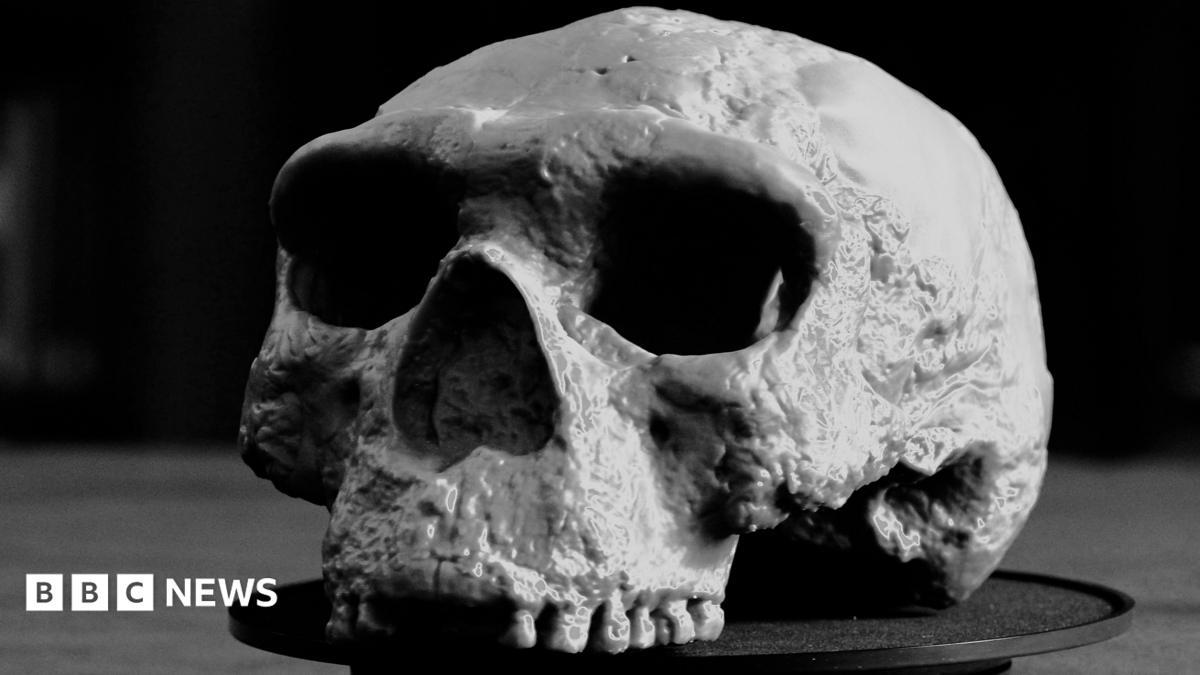
The 1-million-year-old Yunxian 2 skull was digitally reconstructed to correct distortions. Yunxian 2 belongs to Homo longi, a sister lineage closely related to modern humans.
7 outlets told this the same way.
Reevaluation of Human Evolution
Researchers have virtually reconstructed a 1 million-year-old human skull, known as Yunxian 2, found in central China. This reconstruction has led to a significant re-evaluation of human evolutionary history. Initially classified as Homo erectus, the skull is now believed to be more closely related to the "Dragon Man" species and the Denisovans, an extinct group of humans.
“Researchers have virtually reconstructed a 1 million-year-old human skull, known as Yunxian 2, found in central China. Previously thought to belong to Homo erectus, the new analysis shows it is more closely related to the ‘Dragon Man’ species and the Denisovans.”
This reclassification suggests that the lineage known as Homo longiclade, which includes Denisovans, diverged from a common ancestor around 1.2 million years ago. This divergence occurred after the Neanderthal lineage but before Homo sapiens. This finding highlights the rapid diversification and evolution of early human groups in Asia, challenging previous timelines of human evolution.

New Insights on Human Evolution
The reanalysis of the Yunxian 2 skull has profound implications for our understanding of human evolution, particularly regarding the timeline of modern human relatives. According to the BBC, the findings suggest that advanced large-brained humans existed much earlier than previously believed, potentially coexisting with early Neanderthals and Homo sapiens a million years ago. This could push back the timeline of modern human relatives by at least 500,000 years.
The research, led by Fudan University and the UK's Natural History Museum, is supported by both skull morphology and genetic analysis. However, some experts remain cautious about fully accepting the new timeline.

Denisovan and Human Evolution
CNN reports that the study suggests Denisovans, including Homo longi, are more closely related to modern humans than Neanderthals. This challenges the previous view of Neanderthals as our closest sister species. The research indicates that Neanderthals diverged from the human evolutionary line around 1.38 million years ago.
“A recent study suggests that Denisovans (including Homo longi) are more closely related to modern humans (Homo sapiens) than Neanderthals are, challenging the previous view of Neanderthals as our closest sister species.”
This implies that the common ancestor of Homo sapiens, Denisovans, and Neanderthals likely dates back to Homo erectus about 1.5 million years ago. These findings challenge the traditional view of human evolution and raise questions about the geographic origins of these groups. In particular, it is uncertain whether their ancestors lived inside or outside Africa.
Human Evolution Research Insights
The Guardian highlights the significance of the digital reconstruction of the Yunxian 2 skull.
It notes that if further fossil and genetic evidence supports these results, the proposed divergence dates would be surprising.

Dr. Frido Welker, an expert in human evolution not involved in the research, suggests that molecular data from the specimen could help verify the study’s morphological conclusions.
This underscores the importance of integrating both fossil and genetic data to understand human evolution.
It also emphasizes the need for further research to confirm these findings.