Iran31 August, 20262 min read
SCO Leaders Sign Bishkek Declaration Condemning US Strikes on Iran, Back Khamenei Condolences
This article is an automated aggregation of coverage from news outlets. Our editorials offer in-depth analysis curated by the NewsCord team.
SCO Bishkek Declaration condemns US-Israel strikes on Iran and Western sanctions. Declaration says such actions violate international law and UN Charter and threaten regional stability.

The Guardian was read line by line by the Watchdog: 4.9. See the score →
SCO backs Iran
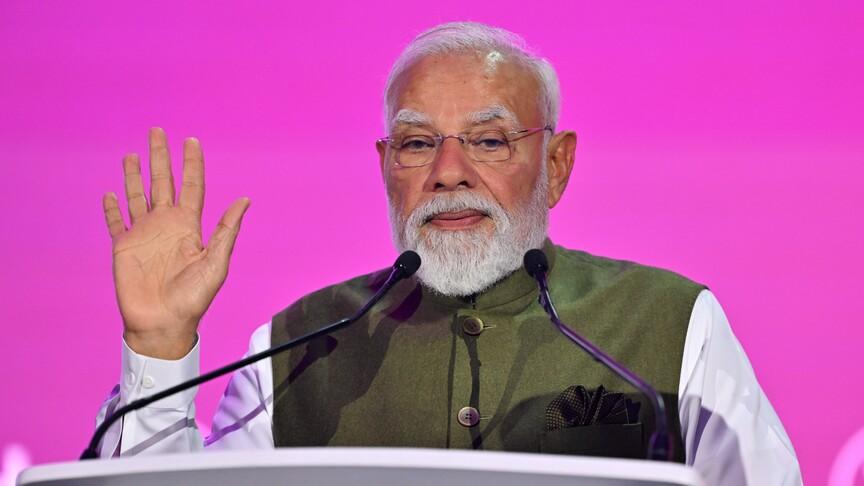
Leaders of the Shanghai Cooperation Organisation signed the “Bishkek Declaration” after a two-day summit in Kyrgyzstan’s capital, Bishkek, condemning “military strikes on the territory of the Islamic Republic of Iran” and Western sanctions on some member states. The declaration, signed by Chinese President Xi Jinping, Russian President Vladimir Putin, Indian Prime Minister Narendra Modi and Pakistani Prime Minister Shehbaz Sharif, also said SCO members “express their sincere condolences to the people and Government of the Islamic Republic of Iran” for the “tragic death of Supreme Leader Seyyed Ali Khamenei.”
SCO members reaffirmed “their support for the sovereignty and territorial integrity of the Islamic Republic of Iran” and advocated “a resolution to the conflict solely through political and diplomatic means.” The SCO also backed Iran’s Nuclear Non-Proliferation Treaty (NPT) rights, emphasizing “their inalienable right” to develop research, produce and use atomic energy “for peaceful purposes.”
Oil markets react
Renewed fighting between the U.S. and Iran stoked supply fears, with Reuters reporting oil prices climbed about 2% to a one-week high on Wednesday as Brent futures rose $1.55, or 1.7%, to $92.04 a barrel at 10:33 a.m. EDT.
Reuters said U.S. West Texas Intermediate (WTI) crude rose $1.84, or 2.2%, to $87.60, while Iran said on Tuesday it would reciprocate if the U.S. honored its commitments under a June interim deal on halting their conflict.
Reuters also tied the market move to the resumption of direct strikes, noting the conflict shifted into an economic standoff before a U.S. attack on Iran's Larak Island on Sunday, which Iran responded to by launching missiles overnight at two U.S. air bases in Jordan.
Saxo Bank analyst Ole Hansen said, “Fresh hostilities between the U.S. and Iran raised concerns about prolonged disruptions to energy flows through the Strait of Hormuz,” as Reuters cited Kpler shipping data showing about five visible commodity vessels transiting the Strait of Hormuz on Monday.
Strikes and retaliation
The Guardian reported the U.S. reverted to military attacks on Iran for the first time in a month, firing missiles and drones at Iranian rocket launchers on an island in the strait of Hormuz, prompting Iranian military retaliation against US military bases in Jordan and the United Arab Emirates. A US official told The Guardian: “I can confirm that earlier today US forces struck two Iranian launchers on Larak Island,” and the same report said Islamic Revolutionary Guard Corps forces were observed preparing to launch rockets with sea mines into the strait of Hormuz.
In response, the IRGC said it “targeted technical infrastructure, maintenance facilities and enemy fighter jet positions at the US-operated King Hussein and al-Azraq airbases in Jordan” with ballistic missiles, causing “heavy damage,” according to state TV. The Guardian also reported that Tanker Trackers said on Sunday: “Past seven days daily average of crude oil exports via the strait of Hormuz was 3.8m barrels per day,” during a formal ceasefire period that “in effect only lasted for 25 days” exports were “9.8mbpd.”