Finance09 October, 20263 min read
Scott Bessent Says U.S. Will Seize About $1 Billion Iran-Linked Crypto This Week
This article is an automated aggregation of coverage from news outlets. Our editorials offer in-depth analysis curated by the NewsCord team.
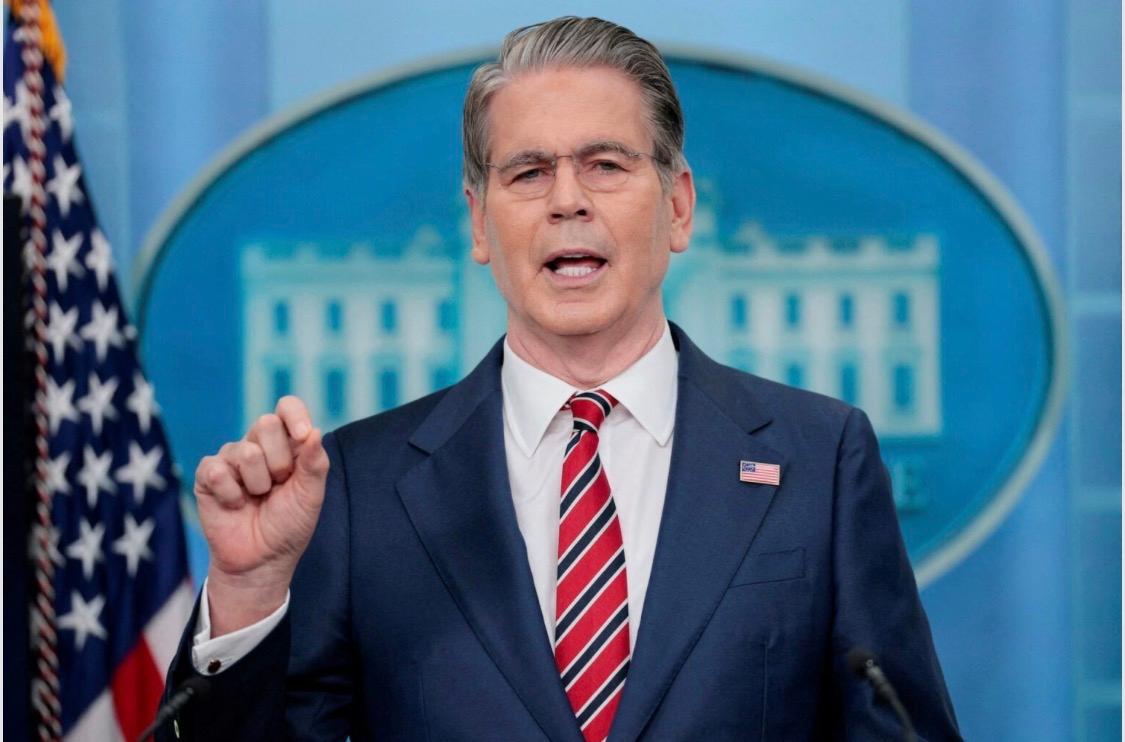
Scott Bessent says the US will seize about $1 billion in Iran-linked crypto this week. Authorities have located the assets and could seize them this week.
8 outlets told this the same way.
Bessent Signals $1B Seizure
Treasury Secretary Scott Bessent said the United States would probably seize about $1 billion of Iran-linked crypto this week, while also saying authorities already knew where the assets sit. Bessent told Greta Van Susteren at Newsmax’s NPolicy Summit in Washington, D.C. that the administration’s approach was an “absolute isolation campaign,” and he said, “We’re probably gonna seize a billion dollars of crypto this week.” Bessent added, “And, you know, we know where it is and we are isolating them,” while the reporting also noted that no tokens, addresses, or venues were named and Treasury had not officially announced that any such seizure had been made.
“We're probably gonna seize a billion dollars of crypto this week.”
The potential action was framed as under active consideration rather than a completed enforcement measure, and the reporting said no wallets, exchanges, or legal filings tied to the contemplated seizure had been made public. The $1 billion figure was presented as coming from the Treasury Secretary’s reported statement and was described as not independently verified through on-chain data or court records.
Sanctions Push and Context
Treasury’s sanctions push included an Oct. 8 action in which OFAC designated 17 shadow fleet vessels for transporting Iranian crude oil and petroleum and petrochemical products under Executive Order 13902.
The same notice removed the HAKUNA MATATA and the PINOCCHIO from the sanctions list after their sale to non-sanctioned operators, and the reporting said both had been identified in June 2025 as part of Iran's shadow fleet.

Bessent described the strategy as shifting away from maximum pressure toward an “absolute isolation campaign,” and the reporting said he linked that campaign to financial limits, maritime controls and travel restrictions.
Cointelegraph reported that Bessent said the planned seizure was part of US sanctions on Iran amid the country’s most recent military conflict, which started in February, while also noting Bessent did not clarify whether the targeted assets involved specific exchanges or stablecoin issuers.
The reporting also tied the broader enforcement posture to Treasury’s Office of Foreign Assets Control targeting crypto exchanges facilitating transfers of funds to Iran’s Islamic Revolutionary Guard Corps, as described in the Cointelegraph account.
What Enforcement Could Mean
The reporting said the gap between announcing consideration of a seizure and completing one can span months of civil asset forfeiture filings, subpoenas, and litigation, and it said that distinction carries significant weight. BigGo Finance reported that if Treasury followed through, it would likely need a court order and coordination with blockchain analytics firms capable of identifying and freezing the relevant addresses. The same reporting said that if the effort stalls, the public statement alone could still pressure exchanges globally to screen and block flagged wallets, even without a completed transfer into government custody.
Altcoin Buzz described prior Iranian-linked crypto enforcement as involving cumulative seizures of roughly $1 billion as of late May after an April estimate near $500 million, while also saying Bessent’s remarks did not say whether the new figure was additional to that total or included in it. Altcoin Buzz also said Tether froze approximately $550 million across wallets in 2026 connected to Iran's Central Bank and Iranian sanctions networks, including $344 million in April and more than $130 million across four wallets in July.