China30 October, 20253 min read
Trump Orders Pentagon to Resume Nuclear Weapons Testing to Match Russia and China
This article is an automated aggregation of coverage from news outlets. Our editorials offer in-depth analysis curated by the NewsCord team.
Trump directed the Pentagon to resume nuclear weapons testing for the first time since 1992. The nuclear testing directive aims to match Russia and China’s military capabilities.
8 outlets told this the same way.
U.S. Nuclear Testing Resumption
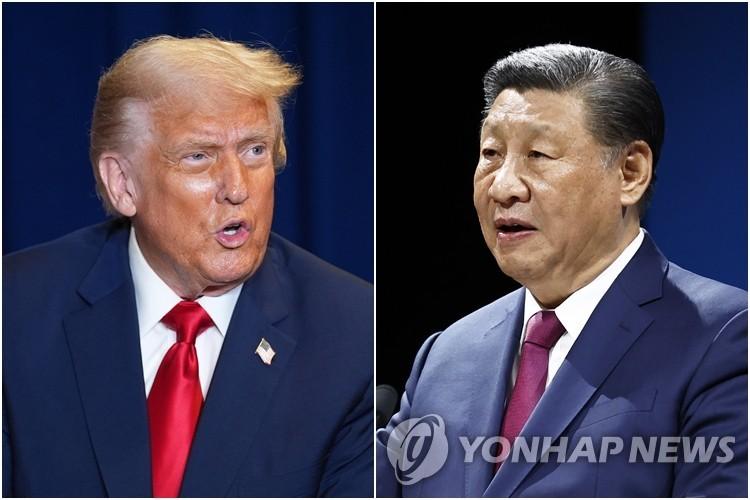
President Donald Trump announced that he has directed the Pentagon to resume U.S. nuclear weapons testing. He framed the decision as necessary to keep pace with Russia and China. Trump made the declaration ahead of his meeting with Chinese President Xi Jinping in South Korea.
“President Donald Trump announced on Thursday morning in Gyeongju, South Korea, that he has directed the Pentagon to begin nuclear weapons testing ‘on an equal basis’ with Russia and China.”
The Washington Post reports that Trump made the announcement in Gyeongju, South Korea, saying tests would proceed “on an equal basis” with Russia and China. ABC News adds that he posted the order on social media shortly before his face-to-face meeting with Xi, describing it as a break with the voluntary U.S. testing moratorium in place since 1992.

The Independent specifies the platform as Truth Social and notes Trump highlighted the size and modernization of the U.S. arsenal. Financialexpress reports the resumption was intended “to match other countries’ programs,” situating the move within heightened global tensions.
Media Perspectives on US Test Move
The stated rationale varies by outlet. The Washington Post reports the move as a show of strength ahead of trade talks with Xi. ABC News emphasizes Trump’s stated need to match other countries’ testing programs, even as it notes the 1992 moratorium.
The Independent underscores that Trump highlighted the United States’ largest and modernized arsenal in his announcement. Financialexpress frames the decision as a response to heightened global tensions, reiterating parity with other countries’ programs. Together, these accounts depict a mix of strategic signaling, parity claims, and geopolitical posturing.

Trump-Xi Meeting Overview
The timing and context intersected with the Trump–Xi meeting in South Korea. ABC News reports the session at a South Korean air base lasted about 1 hour and 45 minutes and aimed to ease the prolonged trade war, with both leaders sounding optimistic but releasing no detailed outcomes. Financialexpress, by contrast, describes a several-hour meeting in Busan that followed a basic framework agreement which buoyed markets, and it uniquely reports Xi praising Trump’s role in mediating peace in Gaza and Southeast Asia.
“President Donald Trump and Chinese President Xi Jinping held their first face-to-face meeting in six years at a South Korean air base, lasting about 1 hour and 45 minutes... The talks aimed to ease a prolonged trade war... There was no immediate detailed summary of the meeting's outcomes.”
Times Kuwait injects skepticism, citing experts who foresee only limited, tactical deals amid enduring conflicts of interest. The Independent adds expected pressure from Xi for Trump to reaffirm the “one-China” policy and reject formal ties with Taiwan.
Tech Trade and Nuclear Tensions
Beyond the testing order, some coverage widened the lens to broader tech‑trade and supply‑chain tensions. Firstpost (Asian) details a Europe–China chip dispute that forced Volkswagen to suspend Golf production, tracing it to Beijing’s ban on exports from Dutch‑based, Chinese‑owned Nexperia and to U.S. pressure on the Netherlands. It adds that Trump and Xi were expected to address tech‑related trade issues in their upcoming meeting, with China adopting a more cooperative tone toward Europe after a tougher approach to the U.S.
Times Kuwait notes China’s premeditated leverage, including threats over rare earths, reinforcing the strategic tech backdrop. Against this, Washington Post and ABC News anchor the day’s key escalation on the nuclear front, describing Trump’s testing order and its timing relative to the summit.
&w=1920&q=75)
U.S. Nuclear Testing and Diplomacy
What remains unclear in the immediate reporting are the practical specifics—how, when, and where U.S. nuclear testing would resume. The diplomatic backdrop is depicted in divergent ways. ABC News notes no immediate detailed summary of the Trump–Xi meeting’s outcomes even as it alone flags the break with the 1992 moratorium.
“There was no immediate detailed summary of the meeting's outcomes.”
Times Kuwait’s experts expect only limited, tactical agreements. Financialexpress points to rising global tensions and a U.S. public mood tilting toward cooperation with China.

The Independent underscores that the testing order preceded a meeting in which Xi was expected to push the “one‑China” line. This highlights how nuclear signaling and Taiwan tensions can intersect in U.S.–China relations.