Technology and Science13 May, 20263 min read
University of Glasgow Develops 3D Printer for Zero-Gravity Orbital Factories in Space
This article is an automated aggregation of coverage from news outlets. Our editorials offer in-depth analysis curated by the NewsCord team.
NASA and ESA back space-based manufacturing research, including microgravity experiments. ISS experiments advance drug development and materials science in microgravity.

3D Printing in Orbit
Researchers at the University of Glasgow in Scotland have developed a system aimed at solving problems associated with 3D printing in zero gravity, with the goal of enabling orbital factories that can fabricate technologies directly in space.
“Researchers at the University of Glasgow in Scotland have developed a system capable of solving the problems associated with 3D printing in zero gravity.”
For several years, Dr. Gilles Bailet of the University of Glasgow has been developing a 3D printer prototype designed to operate in space, and the technology underwent intensive testing during experimental flights aboard a research aircraft nicknamed the vomit comet.
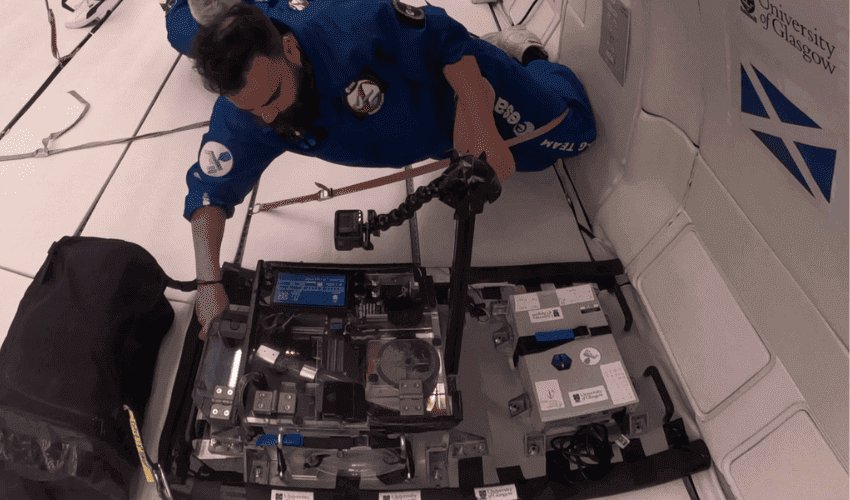
Dr. Bailet said, “Currently, everything that goes into Earth orbit is built on the ground and sent into space by rockets,” adding that rockets have “a very limited mass and volume” and can break into pieces during launch.
He argued that placing manufacturing in space to build structures on demand would free projects from payload constraints, and he said, “This could pave the way for far more ambitious, resource-efficient projects.”
Last November, the prototype proved its effectiveness in microgravity during the 85th parabolic flight campaign of the European Space Agency in Bordeaux, France, with three flights producing more than 90 brief periods of weightlessness.
Adenot’s ISS Week
On February 14, Sophie Adenot’s Crew Dragon capsule was en route to the International Space Station (ISS) as part of a nine-month-or-so stay with the Crew-12 crew, and after the hatch could be opened she joined Expedition 74, bringing the overall crew to seven. A NASA situation update shared on February 17, 2026 described her first notable activity as high-end maintenance, saying she “replaced the computer hardware used for research on drug manufacturing in space.” The same update said she “then exercised for research while high-end video equipment monitored her musculoskeletal system during her microgravity training,” and it added that she had to install and calibrate the four specialized cameras.
On February 18, 2026, another NASA update said Adenot underwent a series of venous scans performed by her colleague Jack Hathaway to monitor the “fluid shift,” and it described her starting the RelaxPro study of the European Space Agency. For the weekend of February 21–22, 2026, NASA said the crew familiarized themselves with station systems and procedures after a first week full of scientific operations, while also preparing the departure of the Dragon cargo ship.
Drug Manufacturing Momentum
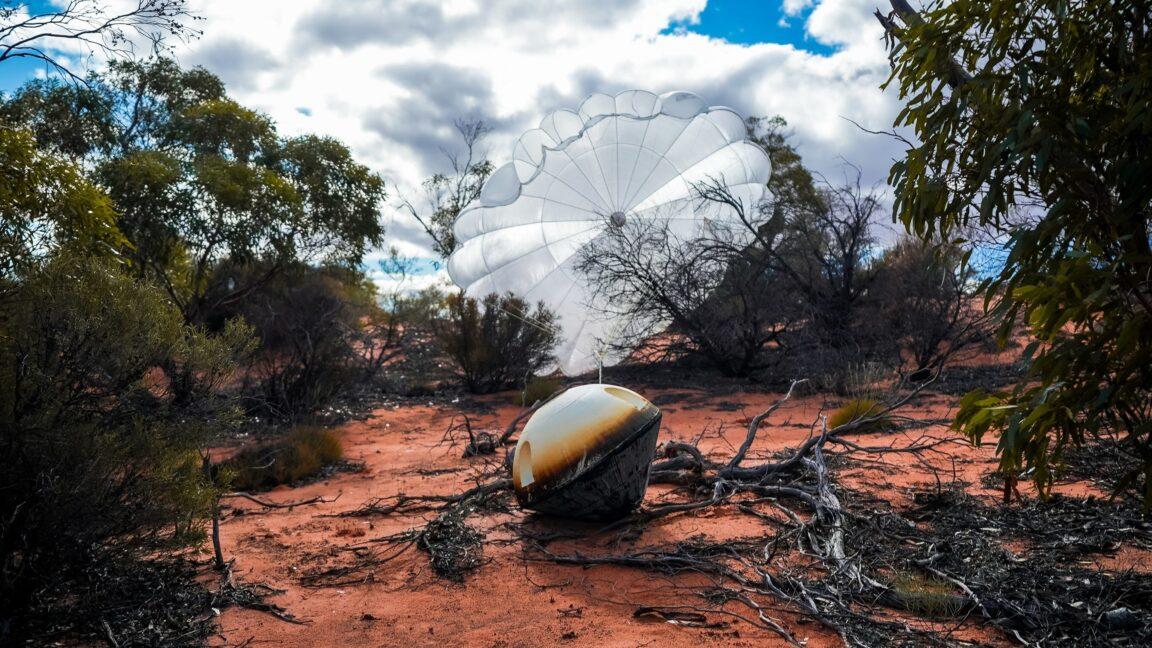
Ars Technica described how NASA enabled scientists to study the impact of microgravity on drug development for decades, and it pointed to a success in 2019 when researchers grew a more uniform crystalline form of the cancer drug Keytruda. The article said NASA subsidized much of this work, typically paying costs to transport research to the ISS and for astronaut time, but it also noted trade-offs such as long lead times to get research into space. Ars Technica then shifted to commercial activity, saying the private space company Varda Space Industries began flying small, uncrewed capsules equipped with autonomous bioreactors that spend a few weeks to months in microgravity to process pharmaceuticals.
It reported that Varda announced a collaboration with United Therapeutics Corporation to explore microgravity’s influence on the structure and crystallization properties of therapeutic compounds to improve stability and delivery, and it quoted Varda president and co-founder Delian Asparouhov saying, “This is the first time that a large, publicly traded company is using capital from their own balance sheet, not just from NASA.” The same Ars Technica piece framed the moment as a potential turning point for the orbital economy, with Asparouhov adding, “I do think it’s a really good historical moment for the space industry.”