North Korea13 March, 20262 min read
U.S. Treasury Sanctions Six Individuals, Two Companies Over North Korean IT-Worker Fraud Funding Weapons
This article is an automated aggregation of coverage from news outlets. Our editorials offer in-depth analysis curated by the NewsCord team.
U.S. Treasury Department's OFAC sanctioned six individuals and two companies. Networks used remote IT workers to defraud businesses worldwide.
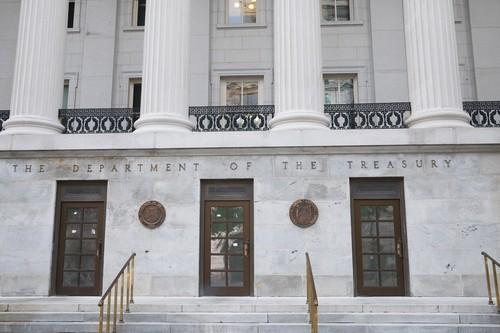
Sanctions announced by OFAC
The U.S. Treasury Department's Office of Foreign Assets Control (OFAC) announced sanctions targeting six individuals and two entities accused of running North Korea-orchestrated IT-worker fraud schemes that defrauded businesses and funded Pyongyang's weapons programs.
“The sanctions, revealed by the U.S. Treasury Department's Office of Foreign Assets Control and first reported by CBS News, target networks that allegedly helped North Korean operatives pose as legitimate information technology specialists, securing jobs at legitimate companies using stolen identities, forged documents and fake online personas.”
The actions were described by Treasury as part of efforts to counter wide-ranging North Korean revenue-generation networks, and were first reported by major outlets alongside the OFAC announcement.
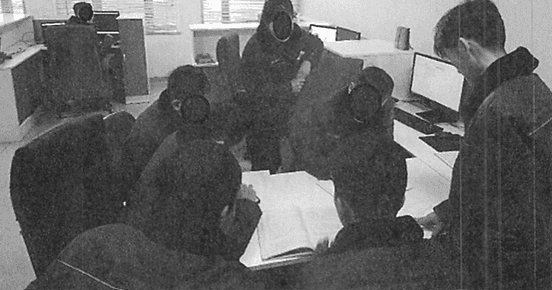
Officials framed the move as a coordinated U.S. government response to deceptive overseas IT operations linked to the DPRK.
Modus operandi of schemes
Treasury officials allege the schemes relied on stolen and forged identities, fake online personas, and other deceptions to place DPRK-affiliated IT workers in legitimate companies and then siphon wages and sensitive data. The department warned that these overseas IT operatives “weaponize sensitive data and extort businesses for substantial payments,” and that in certain cases workers “covertly introduced malware into company networks to extract proprietary and sensitive information.” U.S. reporting emphasized the use of forged documents and fake profiles to secure employment and access corporate systems.
Individuals and entities named
OFAC identified specific individuals and companies tied to the networks, naming six people and two firms across multiple countries. The sanctions list includes Yun Song-guk, York Louis Celestino Herrera, and four Vietnamese nationals — Nguyen Quang Viet, Do Phi Khanh, Hoang Van Nguyen and Hoang Minh Quang — and designates Amnokgang Technology Development Company (a North Korean firm) and Quangvietdnbg International Services Company (based in Vietnam). U.S. and regional coverage highlighted the multinational footprint of the operation, spanning DPRK personnel and facilitators in Southeast Asia and beyond.
“Added to the OFAC sanctions list are Yun Song-guk, a North Korean citizen; York Louis Celestino Herrera of the Dominican Republic; and four Vietnamese nationals — Nguyen Quang Viet, Do Phi Khanh, Hoang Van Nguyen and Hoang Minh Quang. The two entities added to the list are Amnokgang Technology Development Company, a North Korean firm, and Quangvietdnbg International Services Company, a firm based in Vietnam.”
Financial facilitation and laundering
The Treasury described financial facilitation and laundering tied to named intermediaries, accusing some facilitators of converting millions into cryptocurrency and helping open bank accounts for procurement networks. Officials said one intermediary “converted about $2.5 million into cryptocurrency for North Koreans,” while other associates coordinated dozens of transactions and enabled counterfeit-linked deals exceeding $200,000. U.S. reporting linked these financial flows to broader sanctions concerns, noting that the DPRK reportedly appropriates most wages and that the schemes generate substantial funds for weapons programs.
U.S. rationale and quotes
U.S. officials, including Treasury Secretary Scott Bessent, framed the sanctions as part of a 'whole-of-government' push under the current administration to 'follow the money' and protect U.S. businesses from malicious activity. Bessent was quoted saying the regime targets American companies through deceptive overseas IT operatives and that, "Under President Trump's leadership, Treasury will continue to follow the money in order to protect U.S. businesses from these malicious activities and ensure those responsible are held accountable." Coverage emphasized both the national-security and economic-protection justifications for the designations.
“‘Under President Trump's leadership, Treasury will continue to follow the money in order to protect U.S. businesses from these malicious activities and ensure those responsible are held accountable,’ he added.”