Sudan17 July, 20263 min read
WFP Warns El-Obeid Humanitarian Needs Outpace Aid Amid Displaced Influx
This article is an automated aggregation of coverage from news outlets. Our editorials offer in-depth analysis curated by the NewsCord team.
El-Obeid hosts a rapidly growing displaced population with needs outpacing aid World Food Programme warns funding shortfall will slash food aid and ration coverage
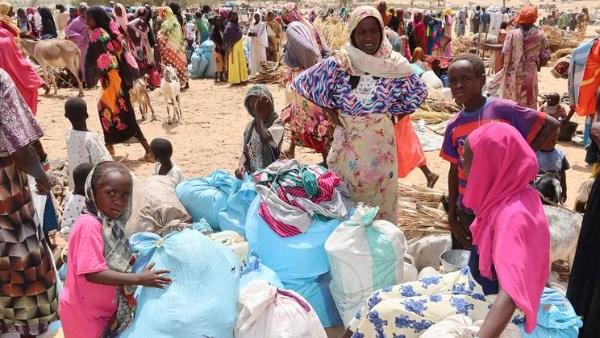
El-Obeid’s aid crisis
The World Food Programme warned that humanitarian needs in El-Obeid in Sudan's North Kordofan state are rising faster than available aid as a large influx of displaced people continues to flee fighting. WFP Sudan director Abdullah Al-Wardat told reporters in Geneva after a visit to El-Obeid that the city, which originally housed between 500,000 and 600,000 people, is currently hosting roughly double that number. Al-Wardat said more than 120,000 internally displaced people are spread across shelter camps, host-family homes, and temporary shelters where they face extremely harsh living conditions amid scarce resources.
The UN official said shortages of food, water, and fuel have become among the main concerns, and he added that WFP provides food aid to more than 100,000 people inside the camps while large numbers of those in need still lack adequate support. He also warned that humanitarian conditions are likely to deteriorate further in the coming period if funding is not provided, urging increased support to meet the growing needs of those affected by the conflict.

Rations cut, camps overflow
The UN and WFP warned that El-Obeid is under pressure for food, water, and fuel, with displaced camps overflowing as new people arrive. Volker Türk, the United Nations High Commissioner for Human Rights, recently warned that the paramilitary forces appear to be preparing an offensive, while the UN said on Friday, July 17 that the humanitarian situation is deteriorating rapidly. Abdallah Alwardat said after visiting El-Obeid on Thursday that the population has almost doubled and that more than 120,000 people live in camps, while many others are hosted by communities or building their own shelter.
In a separate WFP warning relayed by Al Jazeera Net, a WFP representative said the program is no longer able to provide more than half of the displaced people's allocated food rations after a decline in international funding reduced its operations. The same Al Jazeera Net report said the camp hosts more than 7,000 families and that the Humanitarian Aid Commission of North Kordofan estimates displaced in Al-Obaid at about 1.2 million people, of whom only 400,000 receive food assistance.

What’s at stake next
WFP said it is trying to keep El-Obeid functioning as a lifeline for displaced families, but it stressed that its capacity is being overwhelmed by the scale of need. UN News said hunger is worsening for displaced families in El Obeid and quoted Abdallah Alwardat saying, "We are not even providing the full food ration to these people, but this reduced ration is still shared by beneficiaries with other families, because they know they have no other source of income,". UN News added that the city has been besieged for 18 months and that its residents have endured repeated drone strikes while paramilitary forces appear to be preparing an offensive.
Alwardat told UN News that WFP is currently providing food assistance to more than 100,000 displaced people in the El Obeid camps but needs far exceed the agency's current capacity, and he said, "What we need to do now is really plan to scale up aid beyond the 100,000 people we are already supporting." The UN News briefing also said WFP provides nutritional support to 17,000 children affected by the crisis and that WFP has already begun distributions for July and is ready to do the same for August as long as financial support continues.