Sudan02 May, 20268 min read
Berlin Conference Coalition Unveils Expanded Berlin Principles to End Sudan War, Pledges €1.5bn
This article is an automated aggregation of coverage from news outlets. Our editorials offer in-depth analysis curated by the NewsCord team.
Expanded Berlin Principles reaffirmed as roadmap to end Sudan war. Donors pledged about €1.5 billion for Sudan humanitarian relief.
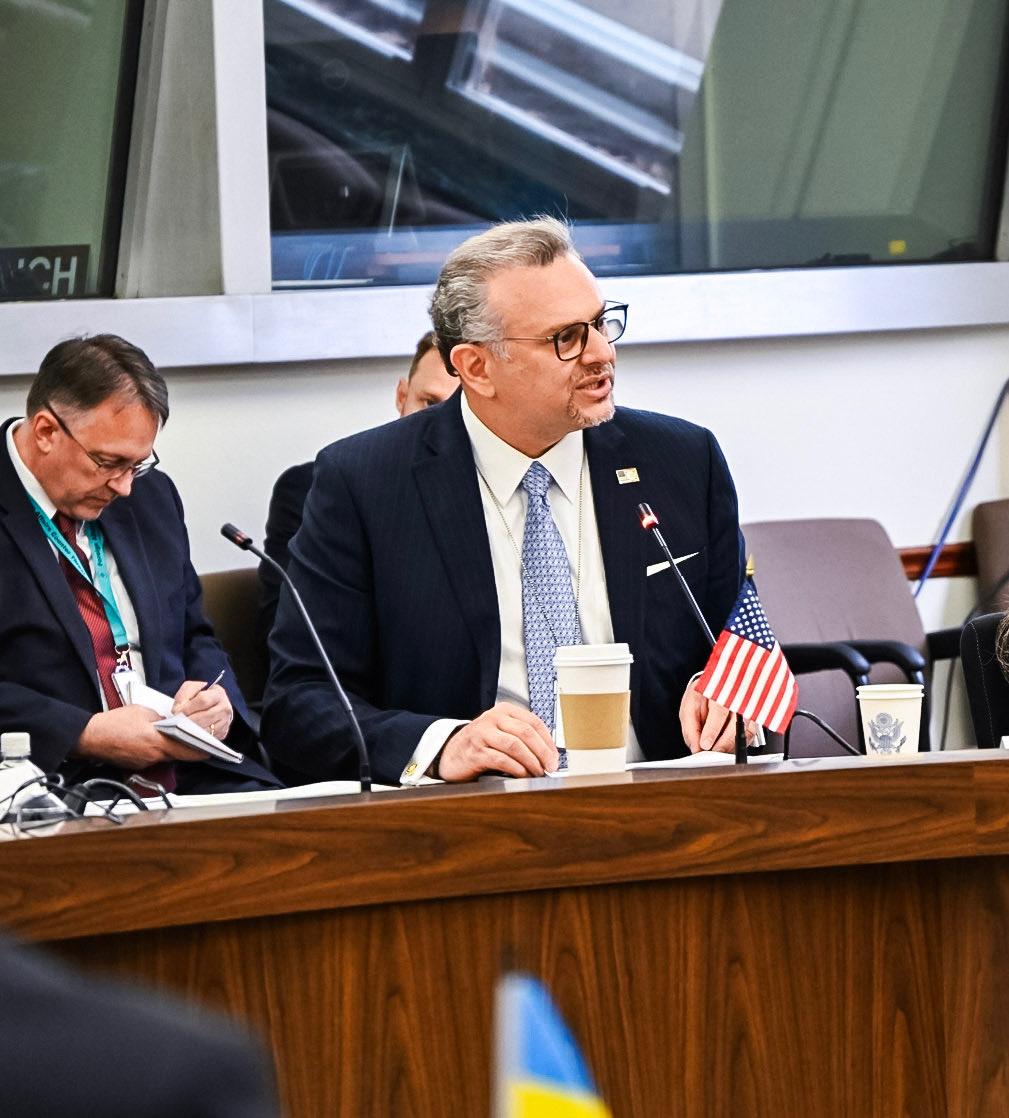
Berlin pushes ‘Berlin Principles’
A coalition of international and regional actors renewed its push to end the war in Sudan by unveiling an expanded framework under the “Berlin Principles” after a high-level conference held on April 15, 2026, in Berlin. The initiative was described as building on earlier diplomatic efforts, including the 2024 Paris and 2025 London conferences, and it marked “three years since the outbreak of the devastating conflict,” according to Capitalfm.co.ke. The April 15 meeting brought together foreign ministers and senior representatives from a wide alliance of stakeholders, including the African Union, European Union, and co-host nations France, Germany, the United Kingdom, and the United States of America, the same source said.
Regional participants listed included Kenya, Ethiopia, South Sudan, Uganda, and Egypt, as well as Gulf states such as Qatar, Saudi Arabia, and the United Arab Emirates. Multilateral organizations represented included the United Nations, the Intergovernmental Authority on Development, and the League of Arab States, Capitalfm.co.ke reported. At the core of the updated Berlin Principles adopted on April 30 is “a detailed set of 12 guiding commitments,” the article said, emphasizing Sudan’s sovereignty, unity, and territorial integrity.
The coalition also stressed “there is no military solution,” calling for “an immediate humanitarian truce followed by a sustained ceasefire” and an inclusive, civilian-led political dialogue, according to Capitalfm.co.ke. In a separate report on the conference’s reaffirmation, Dabanga Radio TV Online said co-hosts and participants reaffirmed “guiding principles for a peaceful and durable resolution of this conflict” and that the co-hosts issued a joint statement pledging “€1.5bn” after the conference.
Why the talks were tense
Ahead of the Berlin conference, a Five-Party Committee—comprising the United Nations, the African Union, the European Union, the League of Arab States, and the Intergovernmental Authority on Development (IGAD)—warned that the situation in Sudan was deteriorating and that the conflict had entered its fourth year. In a joint statement published one day ahead of the Third International Conference on Sudan in Berlin, the committee said continued hostilities, “widespread violence against civilians,” and “an increasing risk of fragmentation” were driving displacement and worsening humanitarian needs, according to Al-Sharq. The committee stressed the urgent need to “de-escalate violence” and to “ensure the protection of civilians and vital national infrastructure,” while enabling “full, safe, fast, and sustainable delivery of humanitarian assistance,” the report said.
It also rejected “any attempt to undermine these principles,” including “the imposition of parallel governing structures that threaten to fragment the Sudanese state,” Al-Sharq reported. The same report said Berlin would host an international conference on Sudan on Wednesday with participation of ministers and international officials, while “representatives of the two sides of the conflict—the Sudanese army and the Rapid Support Forces (RSF)—are absent.” Al-Sharq added that the conference includes three tracks: “the political ministerial meeting, the humanitarian meeting, and the Sudanese civil society meeting.”
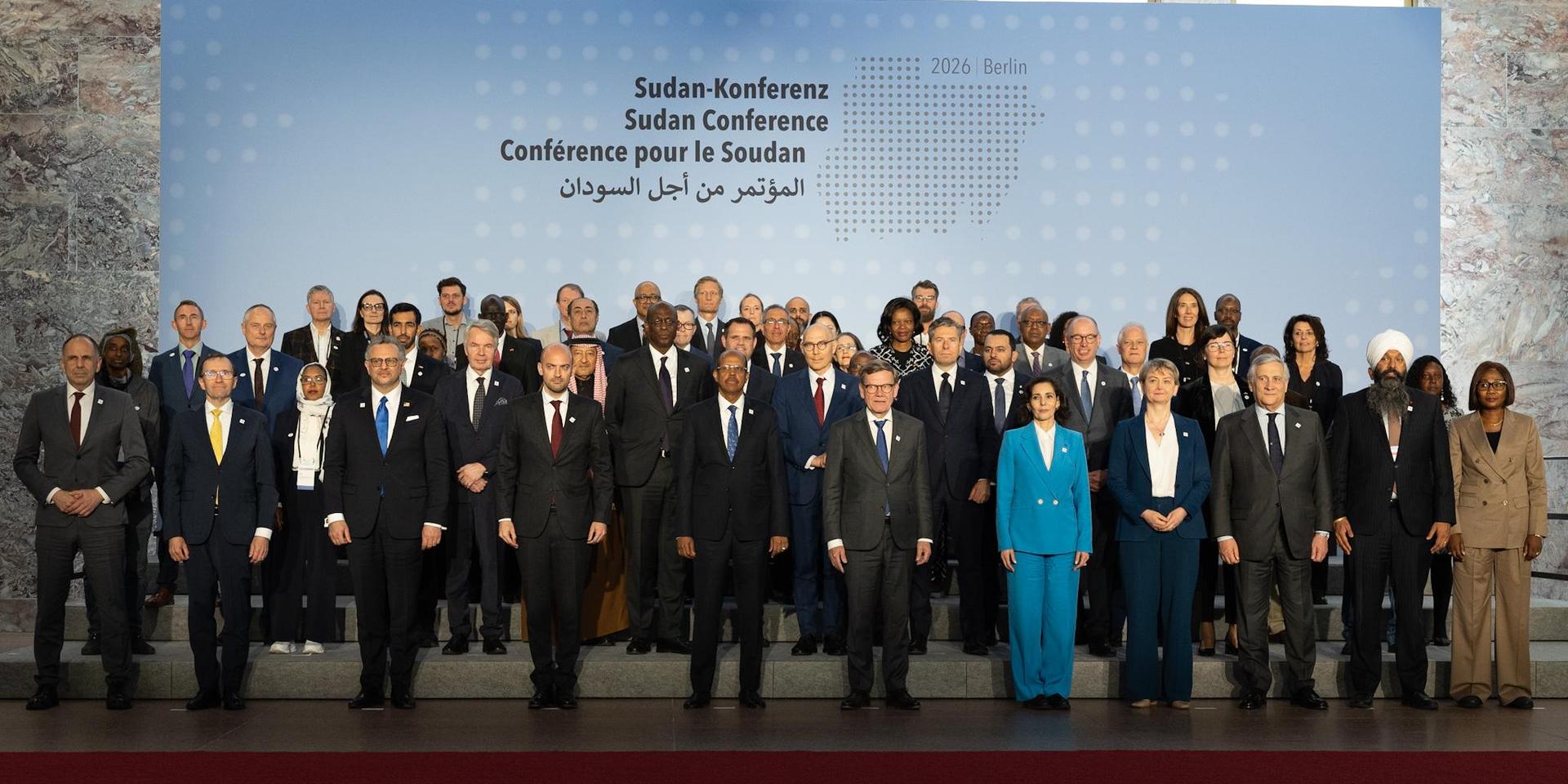
In parallel, Sudan’s government signaled opposition to the conference’s format and participation, with Al-Youm Al-Sabea reporting that Khartoum informed Berlin of its objection to excluding the government. That report said Sudan’s ambassador to Berlin, Ilham Ibrahim Salamat, handed a formal memorandum to the German Foreign Ministry rejecting holding the Berlin conference “without the government's participation, approval, and consultation in all arrangements.” The dispute over sovereignty and representation also appeared in Al-Quds Al-Arabi, which said the Berlin Conference coincided with the third anniversary of the outbreak of the war between the Sudanese army and the RSF and that the absence of the Sudanese government from its arrangements raised questions about the “on-the-ground feasibility” of outputs.
Voices: Boulos, Khartoum, and parties
The Berlin Principles were publicly championed by Massad Boulos, who described the coalition as “unprecedented” and said the framework reflected a “firm, collective commitment to end the war and support a peaceful future for Sudan.” Capitalfm.co.ke quoted Boulos saying, “The Berlin Principles are not just words — they reflect a firm, collective commitment to end the war and support a peaceful future for Sudan,” and Dabanga Radio TV Online repeated Boulos’s assessment that the coalition delivered “a clear and unified message: the war in Sudan must end, now.” Dabanga Radio TV Online also quoted Boulos describing the coalition as “an unprecedented coalition” and linking the Berlin Principles to “an immediate humanitarian truce followed by a ceasefire, full humanitarian access and funding, recognition there is no military solution, an end to all external military support.”
“‘The Berlin Principles are not just words — they reflect a firm, collective commitment to end the war and support a peaceful future for Sudan,’ Boulos said.”
On the other side, Sudan’s government rejected the conference’s legitimacy and criticized the absence of Khartoum from arrangements, with Al-Quds Al-Arabi reporting that the Sudanese ambassador to Berlin, Ilham Ibrahim Mohammed Ahmed, emphasized that bypassing the Sudanese government constitutes “a violation of international law and an affront to state sovereignty.” Al-Quds Al-Arabi said Deputy head of the Sovereignty Council Malik Agar warned that the conference “does not reflect the Sudanese people’s aspirations,” stressing that resolution must come from within and warning against “external interference in the peace process and humanitarian work.” The same outlet reported that Omar al-Diqir, head of the Sudanese Congress Party, argued that describing the conference as contrary to the will of the Sudanese people is “misleading,” explaining that it is “a humanitarian platform aimed at mobilizing support to confront the worsening catastrophe, not to impose political solutions.”
Meanwhile, Al-Quds Al-Arabi said the Civil Democratic Alliance for the Revolution, Samood, welcomed the conference and said it would send a delegation to the civilian political meeting to agree on a joint call to stop the war and support “launching a civilian-led political process.” In a separate report, Sudan’s prime minister Kamil Idris dismissed the Berlin conference, with Dabanga Radio TV Online quoting him as saying the omission was a “grave mistake” signaling the conference’s likely failure.
Different framings of the same conference
Reporting on Berlin repeatedly returned to the same central facts—an April 15 conference in Berlin, a focus on humanitarian needs, and the absence of Sudan’s government from arrangements—while framing the meaning of those facts differently. Capitalfm.co.ke described the coalition’s updated framework as a roadmap built around “12 guiding commitments” and emphasized that the principles call for “an immediate humanitarian truce followed by a sustained ceasefire” and “an inclusive, civilian-led political dialogue.” Dabanga Radio TV Online, while also quoting Massad Boulos and reaffirming the “Berlin Principles,” framed the outcome as a reaffirmation of “guiding principles for a peaceful and durable resolution” and highlighted that co-hosts pledged “€1.5bn,” including “€750mn from the European Union and its Member States.”
In contrast, Al-Quds Al-Arabi foregrounded the government rejection and described the absence of the Sudanese government as raising questions about “how effective its outputs will be and their on-the-ground feasibility,” while also detailing Khartoum’s diplomatic meetings in Geneva with leaders from the International Committee of the Red Cross, OCHA, WFP, and IOM. Al-Quds Al-Arabi also reported that Khartoum handed Germany an official note declaring its firm rejection of holding the conference without involving it, and it quoted the ambassador warning that equating the government with what she described as an “terrorist militia” would undermine state institutions. Al-Youm Al-Sabea likewise emphasized the sovereignty dispute, saying Sudan’s ambassador to Germany, Gesa Brautigam, stated that any attempt to circulate or report about Sudan without involving its government constitutes “a flagrant violation of international law and the UN Charter.”
Meanwhile, Al-Sharq focused less on the sovereignty dispute and more on the committee’s warning that the conference was an opportunity to strengthen international engagement and highlight the views of Sudanese civilians, noting that participation “does not confer any official status” and that the conference includes three tracks. The Tag Press report added another layer by stating that donors announced “about 1.5 billion euros” and that ministers and representatives from “55 countries” participated, while also asserting that the Sudanese government was absent because it deemed the conference a “guardianship approach.”
Humanitarian stakes and next moves
The Berlin conference was presented across the reporting as a response to a worsening humanitarian crisis and as an attempt to shape the next diplomatic steps, even as analysts warned of limited prospects for a ceasefire. Tag Press said donors at the conference in Berlin announced the collection of “about 1.5 billion euros” to address the humanitarian situation in Sudan, and it stated that ministers and representatives from “55 countries” participated, with the Sudanese government absent. It also said the participants endorsed the “Five-Mechanism's efforts” to find a solution to the conflict, and it quoted the final communique that “donors announced providing around 1.5 billion euros, half of which comes from the European Union and its member states, to meet humanitarian needs.”
“The UN humanitarian affairs chief (OCHA), Tom Fletcher, is among the leading participants.”
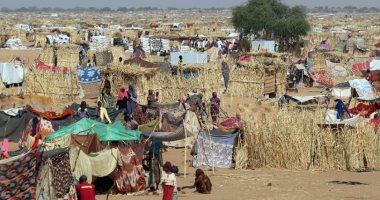
The same report described the scale of need, stating that participants said Sudan has “more than 13 million people displaced,” including “seven million internally displaced” and “more than four million forced to flee to neighboring countries,” and it added that “about 33.7 million people” were in need. It also asserted that “famine confirmed in numerous parts of the country” and “nearly 30 million people needing food aid” were among the drivers of urgency, while urging warring parties to remove obstacles to lifesaving aid and ensure safe, rapid, and unobstructed delivery of humanitarian supplies and personnel. Dabanga Radio TV Online similarly said the conference did not succeed in achieving a truce or cessation of hostilities, but it reported that co-hosts pledged “€1.5bn” and that the conference included “some 40 political and civilian figures” while warring parties were absent.

Separately, Al-Youm Al-Sabea reported that the UN humanitarian affairs chief (OCHA), Tom Fletcher, was among the leading participants, and it said the meeting was hosted by Germany together with the African Union, the European Union, France, the United Kingdom, and the United States. The DPA report in Jorunal Oman quoted political analyst Ahmed Suleiman saying diplomatic efforts should be given priority to a political process led by Sudanese themselves, and it described the war as in its fourth year with “no clear horizon for resolving the world’s worst humanitarian crisis.”