Technology and Science14 March, 20263 min read
Devendra Singh Chaplot Joins Elon Musk's xAI to Develop Superintelligence
This article is an automated aggregation of coverage from news outlets. Our editorials offer in-depth analysis curated by the NewsCord team.
IIT Bombay graduate Devendra Singh Chaplot joined SpaceX and xAI to develop advanced AI He announced the move on X, saying he would work directly with Elon Musk
Career Move Announcement
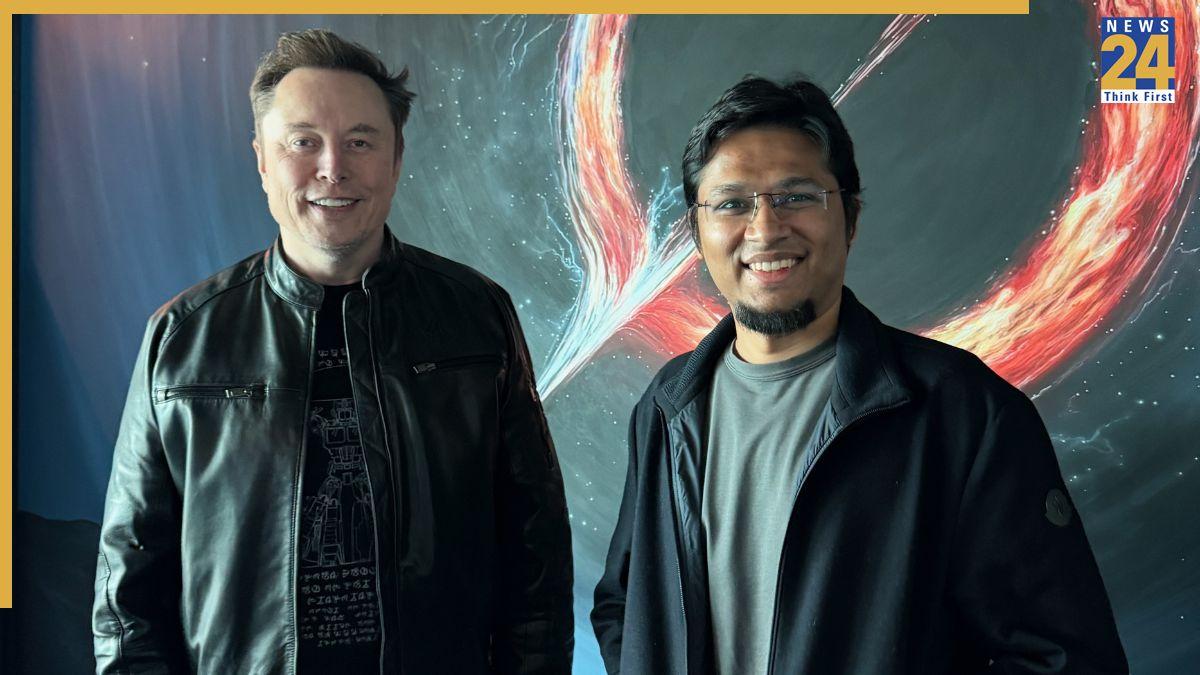
Indian AI researcher and robotics expert Devendra Singh Chaplot has made a significant career move by joining Elon Musk's SpaceX and xAI companies. The announcement, made through a social media post on March 13, 2026, marks Chaplot's transition from leading European AI organizations to working directly under Musk's vision.
“Devendra Singh Chaplot has announced that he will be joining Elon Musk's companies SpaceX and xAI, marking a significant step in his career in advanced artificial intelligence.”
Chaplot expressed excitement about combining physical and digital intelligence, stating that together SpaceX and xAI create unique opportunities. He mentioned working under Musk's leadership who understands hardware at the deepest level with frontier-scale resources and a high-agency culture.
Educational Background
Chaplot's journey to becoming a leading figure in global tech began with remarkable academic achievements in India. In 2010, he secured All India Rank 25 in the prestigious IIT-JEE examination and achieved International Rank 5 in the International Mathematics Olympiad (IMO). These accomplishments paved his way to pursue a Computer Science and Engineering degree at IIT Bombay, one of India's premier technical institutions.
After completing his undergraduate studies in India, Chaplot went on to earn a PhD from the Machine Learning Department at Carnegie Mellon University. At Carnegie Mellon, his research focused on autonomous systems and AI navigation.
Professional Background
Prior to joining Musk's companies, Chaplot built an impressive professional career spanning major AI research organizations. He served as a founding member of Mistral AI, helping to develop high-efficiency large language models that positioned him as a key figure in the European AI ecosystem.
“Devendra Singh Chaplot, who was a founding member of one of the leading AI organisations, including Mistral AI, is widely recognised for his research in robotics, embodied AI and autonomous systems. He later co-founded Thinking Machines Lab, an initiative focused on expanding LLM training infrastructure and making advanced AI development tools more accessible to a wider community.”
Chaplot also worked as a research scientist at Facebook AI Research (FAIR), where he focused on the intersection of machine learning, computer vision, and robotics. Additionally, he co-founded Thinking Machines Lab, an initiative aimed at expanding LLM training infrastructure and making advanced AI development tools more accessible.
Research Achievements
Chaplot's research contributions have been recognized through multiple awards and competitive successes in the AI field. His work has led to the development of several award-winning AI systems that have won prestigious competitions including CVPR-2019 PointNav, CVPR-2020 ObjectNav, and NeurIPS-2022 Rearrangement Habitat Challenges. His systems also won the Visual-Doom AI Competition 2017, showcasing his versatility across different AI domains.
He has received the Facebook Fellowship Award and his research has earned Best Paper and Best Demo awards at leading AI conferences. These achievements demonstrate his expertise in robotics, computer vision, and machine learning—fields focused on developing systems that can perceive visual information and operate independently in complex real-world environments.

Industry Significance
Chaplot's move to SpaceX and xAI comes at a pivotal moment when Musk's companies are rapidly advancing the integration of cutting-edge machine learning with physical technologies. This collaboration represents a growing global trend toward developing future intelligent systems by combining robotics, machine learning, and space technology. The timing is particularly significant as Musk's companies work on projects ranging from Starship missions to humanoid robots.
“The announcement comes at a time when Elon Musk's companies are rapidly advancing the integration of cutting-edge machine learning with physical technologies, from Starship missions to humanoid robots.”
These projects require the expertise that Chaplot brings in bridging digital AI models with physical robotics systems. His announcement reflects the broader industry shift toward creating more embodied and integrated AI systems that can operate effectively in real-world environments.
Future Implications
The development of superintelligence through collaboration between Chaplot and Musk's companies has transformative potential across science, medicine, and technology. This development also raises significant ethical and safety concerns that the industry must address. Chaplot's expertise in developing systems that can perceive visual information and operate independently in intricate real-world situations positions him well to contribute to Musk's vision.
His background in creating award-winning AI systems that navigate complex environments suggests he will play a crucial role in developing the next generation of intelligent systems. As the field continues to evolve, Chaplot's move highlights the increasing convergence of different AI disciplines and the growing importance of researchers who can bridge theoretical AI research with practical applications.