Iran · 02 August, 2026 · 3 min read
Iranian Foreign Minister Seyed Abbas Araghchi Visits Najaf as Millions of Arbaeen Pilgrims Enter Iraq
Millions of Iranian pilgrims cross into Iraq for Arbaeen. Bashmaq and Tamarchin border crossings designated for pilgrims.
How the story connects Arbaeen to war and retaliation discipline.
9 of 11 outlets skipped it: bashmaq and Tamarchin recommended to reduce Mehran crowds.
Tehran Times was read line by line by the Watchdog: 4.4. See the score →
12outlets compared
Same story, two versions
tap a side to read it in full
Al-Monitor
“fresh strikes rattled the region, drawing Iraq back into the Middle East war.”Read the original ↗
Tehran Times frames Arbaeen as resistance and martyrdom; Al-Monitor adds war-strikes context
Pilgrims, war, and Khamenei
Iranian and Iraqi coordination around Arbaeen is unfolding as the first Arbaeen since the U.S.-Iran war began draws millions of worshippers into Iraq, with pilgrims described as carrying grief and converting it into militant resolve.
“The pilgrims did not scatter. They have multiplied.”
Tehran Times says the road from Najaf to Karbala became a focal point after “American and Israeli warplanes ignited the current war,” and it describes the pilgrimage as a moment when “The pilgrims did not scatter. TThey have multiplied.”

The same Tehran Times account ties the pilgrimage to earlier funerary movement, saying that in early July “More than 10 million Iraqis flooded the streets” as the martyred Leader’s body moved through Iraq’s shrine cities and Karbala recognized him as the first pilgrim of this year’s Arbaeen.
It also links the route to the Diyala airstrikes, stating that on July 29 “20 Iraqi fighters and five Iranian advisers were martyred in the same salvos,” and it says the Islamic Resistance in Iraq postponed retaliation until after the pilgrimage.
In parallel, ISNA reports that Iranian Foreign Minister Seyed Abbas Araghchi will travel to Najaf on Wednesday to participate in Arbaeen, “a day before millions of Shia Muslims worldwide mark the end of the 40-day mourning period for Imam Hussein.”
Security claims and pilgrim flows
Iranian Police told reporters that no security incidents had been reported along Arbaeen pilgrimage routes or border crossings, with Border Police Commander Brigadier General Ali Akbar Javidan saying the pilgrimage was conducted “without the slightest security problem.”
IRNA says Javidan made the remarks during a visit to the Khosravi border crossing and Iraq’s Mundhiriyah crossing, and it quotes Iraqi Border Guard Inspector Saadi Abul Hassan describing capabilities deployed with “the support of the Popular Mobilization Forces.”

IRNA also gives movement figures, saying “more than 2.65 million pilgrims have departed the country for Iraq” and “over one million have already returned,” while it frames the operation as secure across routes from the border to Baghdad and onward to Karbala and other holy cities.
At the same time, other Iranian reporting emphasizes different totals and border-specific accounting, with ABNA English saying local Iranian media reported “nearly 2 million Arbaeen pilgrims” used the Mehran Border Crossing in Ilam Province since month of Safar.
Islamic Republic reporting on border management similarly stresses order and welfare, with the Iran Online account saying “There are no problems at the country’s Arbaeen borders; all borders are fully secure” and urging pilgrims to use Bashmaq and Tamarchin to reduce crowding at Mehran.
Numbers, diplomacy, and what’s at risk
Iraqi and Iranian officials’ expectations for the pilgrimage are presented through competing figures, with Islam تايمز quoting Iraq’s newly appointed ambassador to Iran, Yasser Abdulzahra Al-Hajjaj, predicting “around four million Iranian pilgrims are expected to attend the Arbaeen ceremonies.”
“around four million Iranian pilgrims are expected to attend the Arbaeen ceremonies”
Kurdistan24 frames the pilgrimage as the first Arbaeen since war erupted between the United States and Iran earlier this year, and it quotes a pilgrim, Amir, saying “The difference is that we are at war.”
Taghribnews and other Iraqi reporting add a separate scale of arrivals, with taghribnews quoting Saad Maan, head of the Iraqi Security Media Center, saying “3,435,492 pilgrims had arrived in Iraq through various border crossings as of Thursday night.”
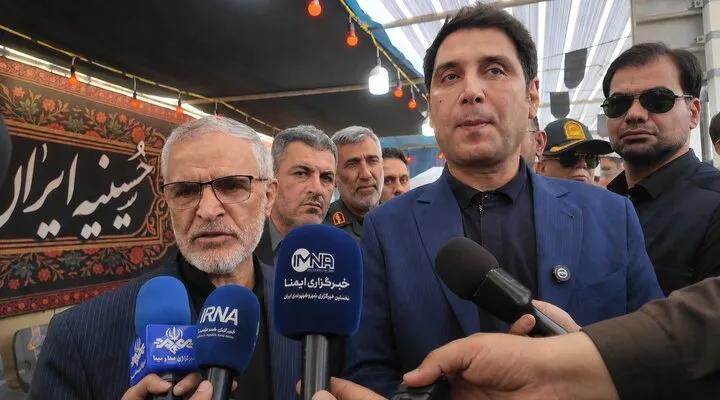
On the Iranian side, the Deputy Minister of Interior and Head of the Central Arbaeen Headquarters, Ali Akbar Pourjamshidian, told reporters at the Bashmaq International Border that “so far around 3,200,000 people have left the country’s borders” and “about 1,600,000 compatriots have returned home,” while describing Bashmaq and Tamarchin as “Borders of Unity.”
Across these accounts, the stakes are tied to maintaining safe movement and services for pilgrims, with IRNA stressing secure routes and with the Iran Online report warning that if overcrowding at Mehran increases “providing good services to pilgrims will be difficult; therefore travel management through the use of all Arbaeen border crossings is essential.”