Iranupdated 54m ago4 min read
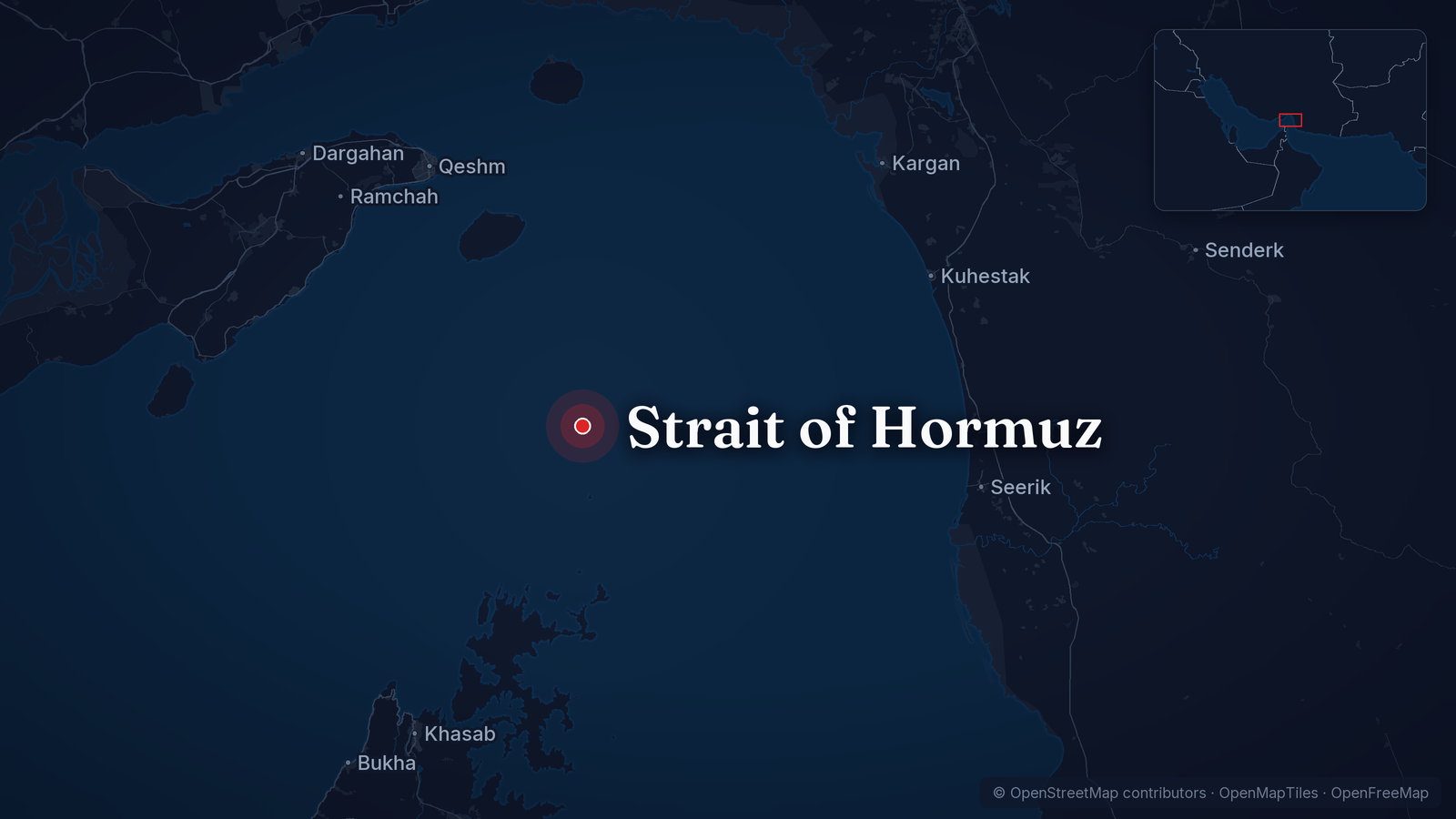
MapIran’s IRGC Says Four Tankers Hit Mines, Catch Fire in Strait of Hormuz
7 Other6 West Asian4 Western Mainstream4 Other source typesMap: © OpenStreetMap contributors, ODbL · Cropped for layout
This article is an automated aggregation of coverage from news outlets. Our editorials offer in-depth analysis curated by the NewsCord team.
Iran's IRGC says four tankers struck mines in Strait of Hormuz and caught fire. Oman evacuated 25 crew from a burning tanker near the Strait of Hormuz.
Save coverage image
Reuters was read line by line by the Watchdog: 3.0. See the score →
Mine strikes and oil loss
Iran’s Supreme Leader Mojtaba Khamenei ordered his military chiefs to respond to any attack on Iran with an "immediate, impactful, and geographically unrestricted response," as reports described oil tankers hitting mines and catching fire in the Strait of Hormuz. The Islamic Revolutionary Guard Corps said four oil tankers, including a "supertanker" carrying more than 2 million barrels of oil, hit mines and caught fire while travelling through the Strait of Hormuz, and the IRGC said the tankers suffered explosions on Friday after attempting to use unauthorised routes. The Iranian Army’s Naval Force said an oil tanker caught fire on Saturday afternoon after striking naval mines while navigating a restricted maritime zone east of the Strait of Hormuz, and it said the tanker had violated maritime restrictions and ignored repeated warnings.
The United Kingdom Maritime Trade Operations agency reported a vessel was hit by an unknown projectile about 40 nautical miles (74 km) south of Iran’s Lavan Island, causing a fire on board, and it said the crew was reported safe and there was no reported environmental impact. Oman said it evacuated 25 crew members from a burning crude oil tanker in the Strait of Hormuz, and it said the vessel was flying the Panamanian flag while the tracking website MarineTraffic identified it as a crude oil tanker.
Threats, readiness, and talks
Iran’s Foreign Minister Abbas Araghchi told Al Jazeera that a US effort to open dialogue with Iran was "a positive step," and he said Qatari mediators proposed shortening the implementation period of the Iranian proposal to five days and that the parties reached a proposal to reduce it to two days. Araghchi said Iran’s conditions included lifting the sanctions imposed following the Islamabad memorandum and reducing US forces in the region, and he said Iran demanded the restoration of oil waivers and the release of all its frozen funds, including those held in Qatar. Araghchi said, "We do not rule out any possibility regarding the outbreak of war, and we are prepared for all scenarios," and he added that Iran had upgraded its weaponry, addressed vulnerabilities, and tested new arms.
The US Secretary of State Marco Rubio accused Iran of destabilizing international shipping routes, and he said, "We now live in a world in which Iran is trying to render international shipping routes unsafe and is freely attacking commercial ships, oil tankers, and gas carriers." The Iranian deputy coordinator of the Navy of the Army, Admiral Jalil Moghadam, said there is a possibility of war and described the Strait of Hormuz as a "trump card" for the Islamic Republic of Iran, while he argued that American forces’ presence prevents security from returning to a desirable state.
Shipping risk and regional pressure
The US military said it was conducting daytime and nighttime aerial missions to enforce a naval blockade of Iran’s ports and to protect commercial ships in the Strait of Hormuz, and it described fighter jets stationed on the aircraft carrier USS George Washington departing at night to track cruise missiles and drones launched by Iran toward merchant vessels. DW cited American officials saying the continued, high-frequency flights place substantial strain on aircraft and crews, and it said the width of the airspace over the strait is about 20 miles, with many airborne objects moving within it. CENTCOM announced that a naval blockade of all maritime traffic entering and leaving Iran’s ports would begin on April 13, 2026, and it said the restriction would apply to all countries whose ships go to or from Iran’s ports and coastal areas while vessels passing through the Hormuz Strait en route to or from other countries’ ports would not be disrupted.
In parallel, Al Jazeera reported that Iran said four tankers attempting to use "unauthorised routes" to cross the Strait of Hormuz were halted, and it quoted the IRGC saying two more tankers each carrying more than two million barrels of oil "exploded and caught fire" as a result of hitting mines while attempting to pass through an "unauthorised route." The incidents came as the UK’s Maritime Trade Operations (UKMTO) agency said shipping in the Strait of Hormuz was operating at about 70 percent below pre-war levels, and the US military denied the naval mine claims while Brad Cooper said the Strait of Hormuz’s "internationally recognised primary transit routes" had been successfully cleared of Iranian sea mines.