Iranupdated 40m ago3 min read
MapIRGC Navy Says Two Oil Tankers Halted South Of Strait Of Hormuz After Ignoring Radio Warnings
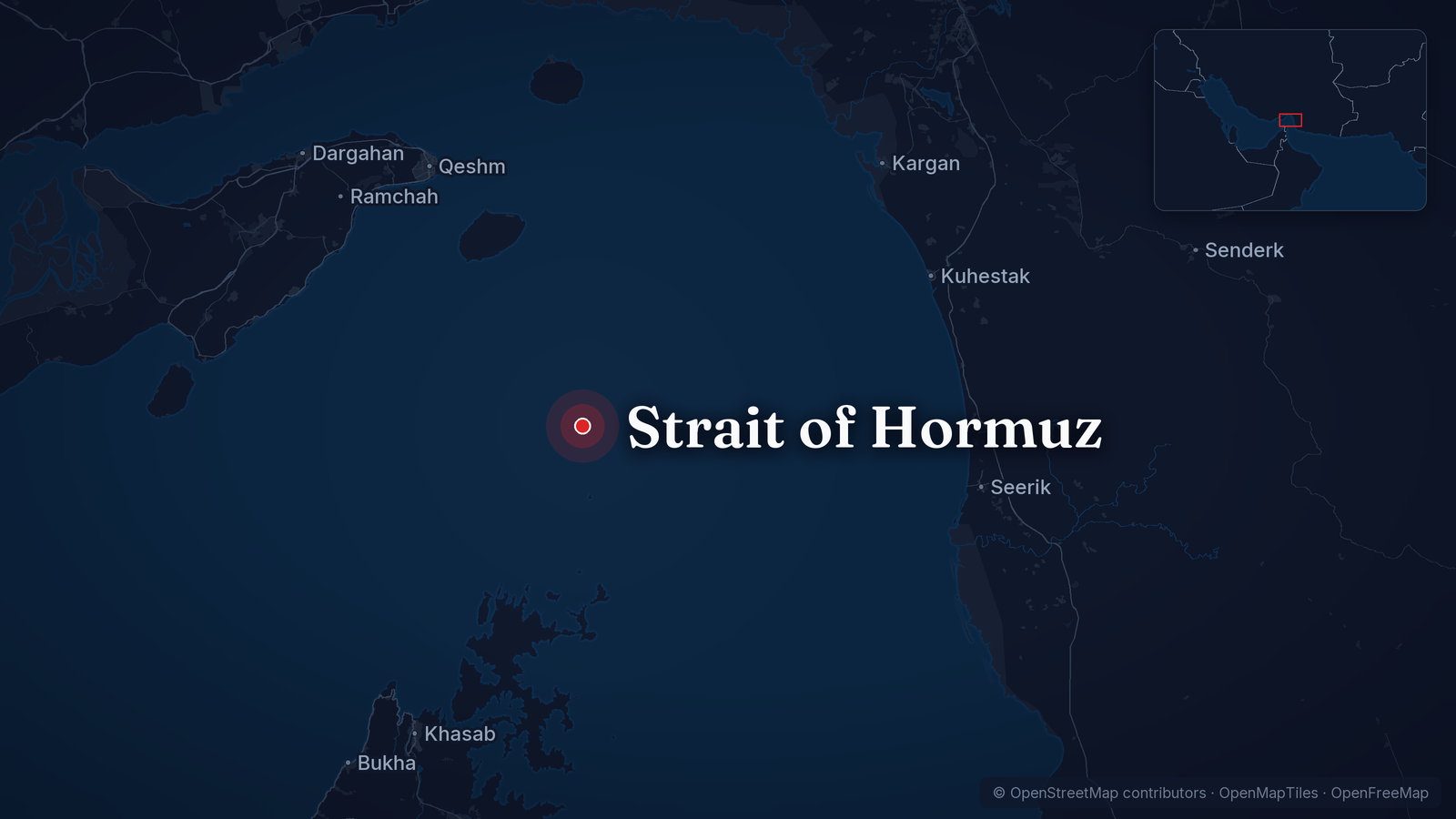
10 West Asian5 Other2 Israeli2 Western MainstreamMap: © OpenStreetMap contributors, ODbL · Cropped for layout
This article is an automated aggregation of coverage from news outlets. Our editorials offer in-depth analysis curated by the NewsCord team.
IRGC Navy says two oil tankers halted in southern Strait of Hormuz after incidents Vessels switched off navigation systems and traversed an unauthorized route, IRGC claims
Save coverage image
Tankers Halted in Hormuz
The Islamic Revolutionary Guard Corps Navy said two oil tankers were involved in an incident and came to a halt in the Strait of Hormuz after switching off their navigation and positioning systems and attempting to navigate an unauthorized route. The IRGC Navy said one of the two violating vessels was in the eastern part and the other was in the western part of the Strait of Hormuz, and it said the tankers ignored several radio warnings before entering an unsafe area. The IRGC Navy blamed the fires reported aboard the vessels on “the hostile actions of the terrorist US military and Washington’s disregard for Iranian regulations governing navigation through the Strait of Hormuz.”
Iran’s Revolutionary Guards Navy said the two tankers stopped in waters south of the Strait of Hormuz after ignoring radio warnings and attempting to use what it described as an unauthorized route. The IRGC claimed responsibility for a separate attack in the eastern Strait of Hormuz, saying an “enemy vessel operating within the operational zone east of the Strait of Hormuz was struck and destroyed.”
Mines, Drones, and Denials
Al-Jazeera Net described a clash of narratives in the Strait of Hormuz, saying the Islamic Revolutionary Guard Corps and the United States Central Command (CENTCOM) offered conflicting accounts about sea mines and attacks on oil tankers. Al-Jazeera Net said Iranian armed forces announced that at least four oil tankers suffered explosions and fires in the past 24 hours after colliding with sea mines during their passage through routes Iran described as “unauthorized” south of the Strait of Hormuz. Husein Mahbabi, the spokesman for the Iranian Revolutionary Guards, challenged the American position on X by saying, “Prove your claim about mine clearance in Hormuz by providing independent evidence, not through data!”
Washington stated that the main shipping routes in the Strait of Hormuz are “free” of such explosives and can be crossed without problems. CENTCOM chief Brad Cooper announced having flown over the area this week and having seen “dozens of merchant ships” but no presence of the Iranian fleet, which he said is “all at the bottom of the sea.”
Diplomacy, Deadlines, Markets
DW reported that Iran warned of a “devastating impact” if hostilities resume, while Iran said it is holding talks with mediators on the end of the conflict and the reopening of the strategic Strait of Hormuz. Iran conditioned the reopening of the strait on a seven-day ceasefire, the unblocking of its assets held abroad, the lifting of sanctions affecting its oil sector, and the end of the U.S. naval blockade against its ports. DW also quoted Iranian Foreign Minister Abás Araqchi writing on X that “The devastating impact on international markets of any military action instigated by Israel in the Persian Gulf region remains a major concern for both gas suppliers and consumers.”
Oil prices plunged more than 2.2% as Iran showed willingness to reopen the Strait of Hormuz within days, and Brent futures traded near $114 per barrel for December and near $110 for January. Abbas Araghchi expressed confidence that Tehran’s seven-day plan could be put into effect “in less than a week,” while the United States had not given its green light to the initiative.