Iran18 November, 20263 min read
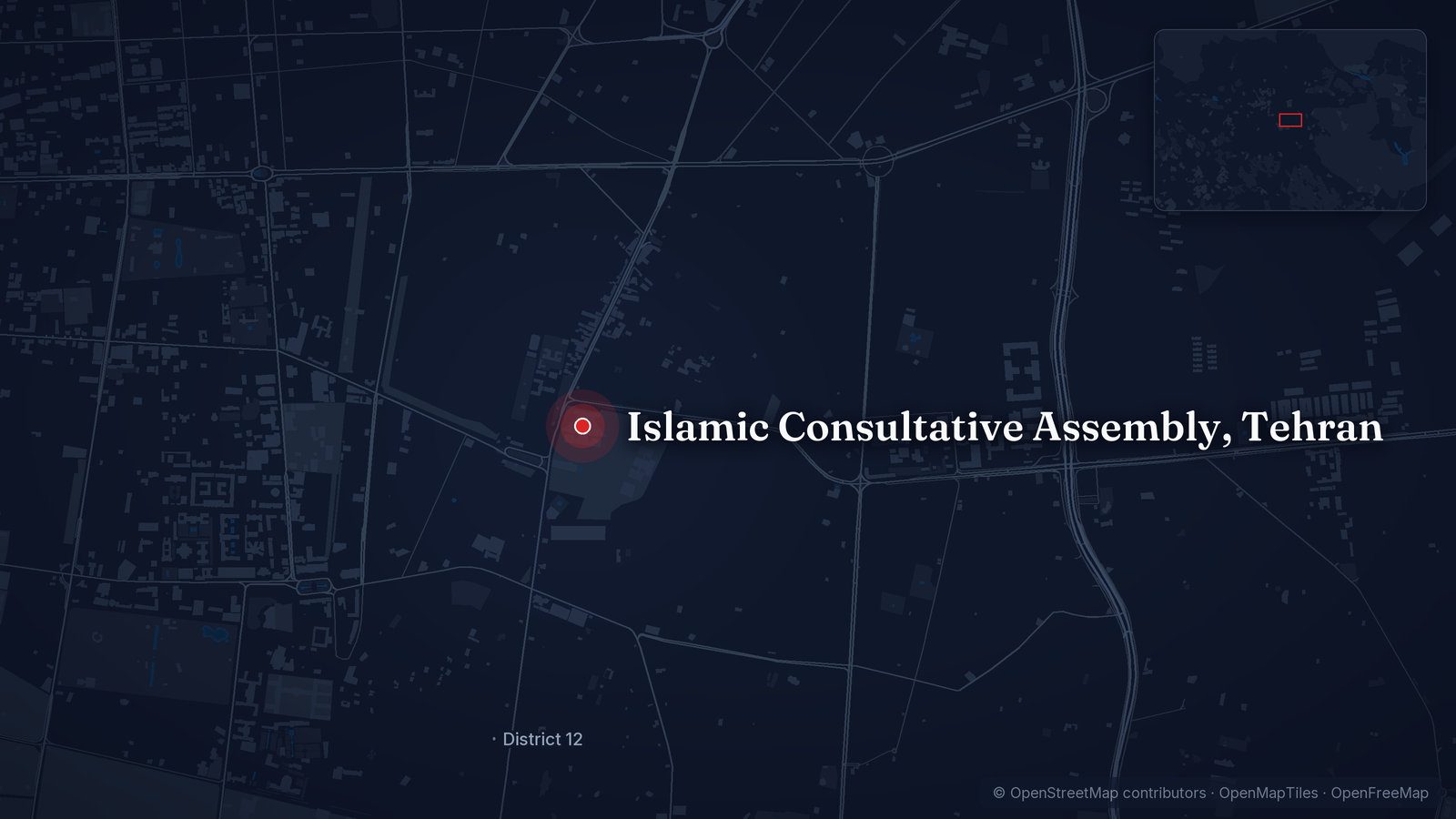
MapIranian MPs Approve Bill Changing Minister of Information Appointment Conditions
3 OtherMap: © OpenStreetMap contributors, ODbL · Cropped for layout
This article is an automated aggregation of coverage from news outlets. Our editorials offer in-depth analysis curated by the NewsCord team.
Iranian MPs plan to remove ijtihad requirement for Information Minister appointment. Lawmakers propose changes to the Ministry of Intelligence and its leadership structure.
Save coverage image
3 outlets in this story. Read their headlines below.
Information ministry reshaped
Iranian MPs approved a two-article bill titled “Amendment to the Law Establishing the Ministry of Information and the Conditions for Appointing the Minister of Information” in an open session on Sunday, 24 Aban, with 192 votes in favor, 49 against, and 4 abstentions out of 267 present. The bill reviewed in the open session sought changes to the conditions for appointing the minister of information, including removing the requirement of ijtihad (jurisprudence) and clerical status for the minister of information. The president can appoint an acting minister for ministries without a minister for only three months under Article 135 of the Constitution, and that deadline was postponed with Pezeshkian’s permission from the Leader of the Revolution.
“MPs drafted and submitted a two-article bill named ‘Amendment to the Law Establishing the Ministry of Information and the Conditions for Appointing the Minister of Information.’”
The information ministry has been run by an acting minister for more than six months, and MPs demanded that the president quickly nominate a minister. The name of the acting minister had not been disclosed by the government for security reasons, and it described a limited set of proposed candidates for the post.
Candidates and security
Fars News Agency reported the possibility of selecting Mohammad-Sadegh Motamedian as the minister-designate of Information, while Seyed Abbas Mousavi, the acting head of the presidential political office, confirmed the presence of Mostafa Pour-Mohammadi among potential candidates. Mohammad-Sadegh Motamedian was chosen as the Tehran governor in the 14th administration, serving as governor of South Khorasan from 2018 to 2020, and governor of Razavi Khorasan from 2020 to 2021. Mostafa Pour-Mohammadi was a former justice minister under Rouhani and interior minister under Ahmadinejad, and some reports indicate he has stepped out of the race, though not officially confirmed.
The report also mentioned Alireza Rashidian, head of the Hajj and Pilgrimage Organization, as another potential candidate for the Ministry of Information, and it said Tabnak mentioned Majid Ansari and Hojjatol-Islam Pour-Fallah as proposed candidates. The Ministry of Information has a direct role in security both inside and outside the country, and the importance of the ministry is amplified as “the shadow of war looms again over the country.”
Regional security talks
Oman’s foreign ministry said Oman and Iran foreign ministers discussed shipping and maritime corridor security, linking the two countries’ diplomacy to protection of sea routes. The report appeared alongside a thread log that included a note about a “Report Code of Conduct Violation: Thread is in Wrong Forum Thread Has Misleading Title,” and it also included a warning that the report would be sent to website coordinators within 24 hours. In Shenzhen, Vietnam, China stepped up security and law enforcement cooperation when Minister of Public Security General Luong Tam Quang met Chinese Minister of Public Security Wang Xiaohong on November 17.
The Vietnamese officer called on the public security ministries of Vietnam and China to further deepen cooperation, improve the effectiveness of existing cooperation mechanisms, and maintain regular exchanges on strategic issues of shared concern. The two ministers stressed that security and law enforcement cooperation plays a pivotal, pioneering role in safeguarding national security, combating crime, and strengthening political trust, while also supporting a peaceful and stable environment for development in the region and the world.