Iran · updated 1h ago · 3 min read
IRGC Adviser Ali Fadavi Says No US Vessels Are Present in Persian Gulf
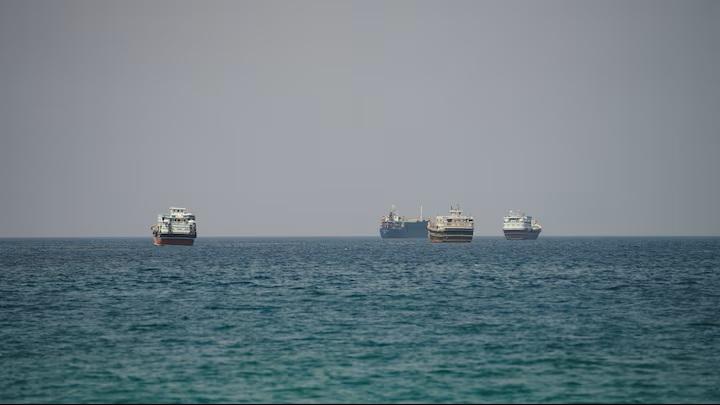
Ali Fadavi says no US vessels in Persian Gulf and adjacent waters. Iran warns it will strike US bases and vessels if invasion occurs.
Who is weakening whom in the Hormuz standoff.
5 of 6 outlets skipped it: israel prepares for possible military action against Iran with or without US help.
Anadolu Ajansı was read line by line by the Watchdog: 1.5. See the score →
15outlets compared
Same story, two versions
tap a side to read it in full
PressTV
“the United States no longer has the military capacity to carry out operations on the scale it did previously.”Read the original ↗
Middle East Online
“If the Americans launch a ground attack, then we will target every location related to the Americans, American bases and every vessel related to the Americans,”Read the original ↗
PressTV and Al-Manar frame Iran as controlling Hormuz and US as weakened, while Middle East Online emphasises US base and vessel targeting threats.
IRGC Claims US Flees
Brigadier General Ali Fadavi, head of the advisory group to the IRGC commander-in-chief, said that for the first time in more than 170 years no American vessel is present in the Persian Gulf, the Strait of Hormuz, the Sea of Oman, or even the northern Indian Ocean. Fadavi told viewers that “The Americans have been present in the Persian Gulf since 1853, but now for the first time, no American vessel is present,” and he added that the change happened because of “the authority of the Islamic Republic of Iran and the IRGC Navy.” Fadavi argued that the Strait of Hormuz has remained “firmly under Iran’s control throughout recent months,” and he said America’s military power is fundamentally sea-based.
Fadavi said the Americans claim they can move a maximum of three to four million barrels of oil through the southern route of the Strait of Hormuz, and he described that figure as insignificant compared with the volume of oil that transits the strait. Fadavi said “more than 20 million barrels of oil officially passed through the Strait of Hormuz each day,” and he added that “Forty-six percent of the world’s oil exports passed through the strait.”
Threats and Preparations
Ali Fadavi warned that Iran would target “every location related to the Americans, American bases and every vessel related to the Americans” if Washington launches a ground attack. The Pentagon spokesperson said “all US bombers that were deployed to RAF Fairford have re-deployed to their home stations in the United States,” after about a dozen B-1 bombers had been based there and used in US strikes against Iran. Israeli media reports said Israel Hayom described Israeli army preparations for a potential attack against Iran while maintaining close intelligence and operational cooperation with the US military.
Walla reported that around 3,000 US military personnel were deployed across Israel, including troops operating air defense systems and pilots, support crews and logistics personnel. Abbas Araghchi said Tehran was ready to continue pursuing diplomacy to reach what he called a “fair solution,” even as the reports described heightened tensions with Tehran.

Diplomacy Over Hormuz
Tehran’s spokesperson Fatemeh Mohajerani said Tehran formally received the U.S. response to its seven-day plan to end hostilities and reopen the strategic Strait of Hormuz. Mohajerani indicated that Foreign Minister Seyed Abbas Araghchi announced the receipt of the American proposal during the Cabinet meeting held in Tehran, and a person familiar with the talks said Araghchi and his team met Tuesday night in Doha with Qatari mediators. The negotiating document, as described by teleSUR, said “the main disagreement between the United States and Iran lies in the order of the steps, not in the elements of the seven-day plan.”
“I hope this will be achieved tomorrow (Tuesday).”
Iran’s Foreign Minister Seyed Abbas Araghchi said the Qatari mediator would present the matter again to the US side, and he said, “I hope this will be achieved tomorrow (Tuesday).” Negocios reported that Tehran linked normalization of Hormuz to the lifting of certain oil sanctions and the unfreezing of Iranian assets, while Washington aimed to include verifiable commitments related to the Iranian nuclear program.