West Bankupdated 55m ago3 min read
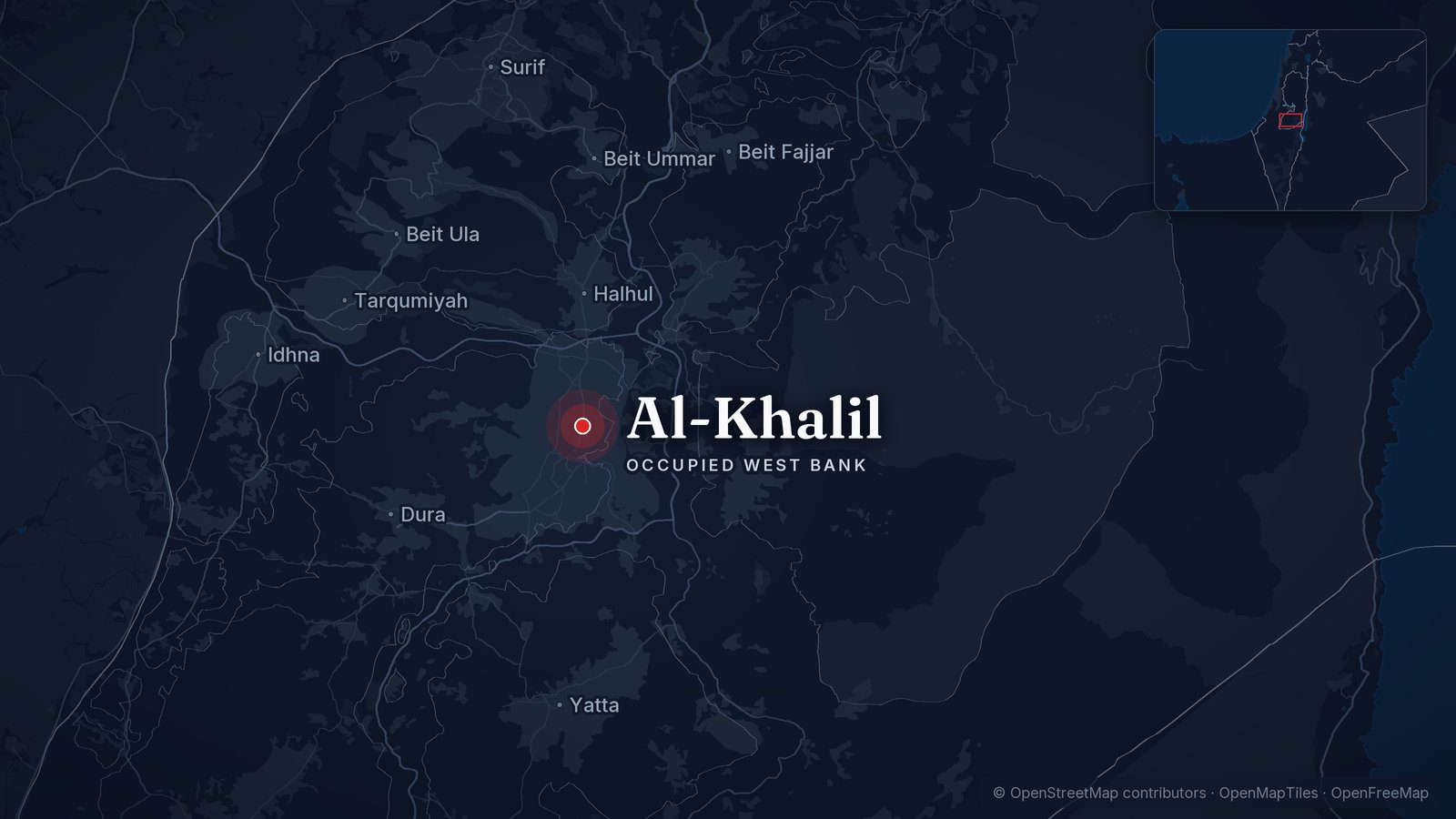
MapIsraeli Occupation Forces Withdraw From Al-Khalil After 10-Day Assault, Families Return
“Palestinian security forces had taken full control of the area.”
“after which residents began returning to their homes to assess the damage caused by the assault.”
Map: © OpenStreetMap contributors, ODbL · Cropped for layout
This article is an automated aggregation of coverage from news outlets. Our editorials offer in-depth analysis curated by the NewsCord team.
Israeli forces withdrew from all Hebron neighborhoods after a ten-day operation. Hundreds displaced; residents return home after withdrawal ends siege.
Save coverage image
Hebron Withdrawal Ends Siege
Israeli occupation forces withdrew early Monday from neighborhoods they had raided and besieged in Al-Khalil, the southern occupied West Bank, after a 10-day military assault that forcibly displaced hundreds of families. Al-Khalil Mayor Yousef Al-Jaabari said Israeli forces withdrew from all neighborhoods of the city at 6 a.m., and residents began returning to assess damage caused by the assault. Al-Khalil Mayor Yousef Al-Jaabari said Israeli occupation forces had converted approximately 540 homes and residential units into military barracks during the incursion, while the assault also bulldozed roads, destroyed vehicles, and damaged residents’ homes.
Al-Khalil authorities said the Israeli assault displaced or affected more than 3,300 people, demolished 15 homes and other structures, and forced the closure of 327 shops, with direct daily losses approaching 12 million shekels. The operation also prevented around 80,000 schoolchildren from attending classes, after Israel imposed its siege and military occupation of parts of Al-Khalil on October 23 following a shooting attack carried out by two Palestinians that killed two Israeli soldiers and wounded three others.
Return, Control, and Education
Al-Khalil Governor Khalid Dudin said in a statement that after the withdrawal of the occupation forces, Palestinian security forces had taken full control of the area, while relevant authorities and Palestinian security forces monitored developments to ensure conditions for residents to safely return. Al-Khalil Mayor Yusuf al-Jabari said the municipality was officially informed of the withdrawal decision at 6:00 am, and he said that for the first time in 10 days, primary school students were able to return to their schools. Al-Jabari said five universities had been closed during the siege, and he added that university students also resumed their journeys to universities after the occupation forces withdrew.
Residents returning to their homes reported that occupation forces had damaged interiors of houses used as military posts, while other residents reported that money and personal belongings had been stolen. The siege had displaced more than 537 families and led to the closure of at least 317 shops, while restrictions at checkpoints affected the wider Al-Khalil Governorate, which has a population of around 800,000.
Escalation and Economic Fallout
The Wall and Settlement Resistance Commission, a Palestinian government body, said in its monthly report published on Monday that Israeli forces and settlers carried out 3,133 attacks against Palestinians, their land and their property during October. The commission said 1,764 of the 3,133 recorded attacks were carried out by Israeli forces and 1,369 by settlers, and it described the figures as reflecting a “dangerous escalation” and an expansion of settler violence. The commission said the total represented a 52.8% increase from September, when 2,051 attacks were recorded, and it said settler attacks alone rose from 647 to 1,369, an increase of 111.6%.
Hebron Governor Khaled Dudin said the Israeli operation lasted 10 days and that the Israeli occupation forces withdrew from the entire city of Hebron, while Palestinian security apparatuses now control the area in its entirety. Hebron Governor Khaled Dudin’s statement and Hebron Municipality figures described economic losses from the closure of 327 shops, with direct economic losses totaling about 12 million shekels per day and about 80,000 students deprived of going to their schools throughout the military operation.