Protests23 April, 20267 min read
Japanese Police Arrest South Korean Park for Obstructing Yasukuni Shrine Spring Rites
This article is an automated aggregation of coverage from news outlets. Our editorials offer in-depth analysis curated by the NewsCord team.
Park, a 64-year-old South Korean, arrested in Tokyo for hanging a banner during Spring Rites. Banner displayed political messages during the shrine's spring rites.

Arrest at Yasukuni
Japanese police arrested a South Korean national on Wednesday after he tried to stage a protest at Tokyo’s Yasukuni Shrine during the annual Spring Rites, according to multiple reports. The Korea Herald said the 64-year-old man, surnamed Park, was detained Wednesday morning for allegedly obstructing an annual spring festival at the shrine that honors war dead, including “14 Class A criminals convicted by the Allies in international tribunals for their activities in World War II.” Kyodo News Agency and NHK reported Park attempted to hang a banner rejecting Japan’s territorial claim to the South Korean-administered islets of Dokdo and calling on “war criminals” to stop praying at the shrine.
The Global Times reported that at around “11 am on Wednesday, near the shrine's gate,” the man displayed a banner reading “Stop paying visits to Yasukuni Shrine, which enshrines war criminals.” The Global Times also said he stood at the main shrine gate and in front of vehicles carrying messengers from the Japanese emperor, with the messengers scheduled to deliver offerings from the emperor.

The Korea JoongAng Daily similarly described Park being stopped by shrine officials after trying to put up banners reading “Dokdo is our territory” and “Stop visits to Yasukuni Shrine, which enshrines war criminals,” at around 11 a.m. at the shrine in Tokyo. In remarks after his arrest, Park told police that he “did what he wanted to do,” as reported by Global Times and echoed by other outlets describing his statement.
What the protest targeted
The protest centered on Yasukuni Shrine’s role in honoring convicted war criminals and on a territorial dispute involving Dokdo, with the banner messages described in overlapping but not identical ways across outlets. The Korea Herald said Park was stopped while trying to display a banner rejecting Japan’s territorial claim to the South Korean-administered islets of Dokdo and calling on “war criminals” to stop praying at the shrine. The chinadailyhk report said the banner included messages such as “Stop paying visits to Yasukuni Shrine, which enshrines war criminals,” and described shrine staff holding him back before police arrived.
Japan Today described the 64-year-old suspect holding a banner carrying messages including one urging “war criminals” to stop praying at the shrine and another making territorial claims on an island disputed between Japan and South Korea. Seoul Economic Daily described Park attempting to display banners reading “Dokdo is our land” and “Stop visits to Yasukuni Shrine, which houses war criminals” at the shrine in Chiyoda Ward, Tokyo, at around 11 a.m.
The DW report said the 64-year-old held up a banner carrying messages including one urging “war criminals” to stop praying at the shrine and another making territorial claims on an island disputed between Japan and South Korea. Korea JoongAng Daily described the banners as “Dokdo is our territory” and “Stop visits to Yasukuni Shrine, which enshrines war criminals,” and said Park intended to hang the banners in front of a vehicle carrying an imperial envoy.
Context of the shrine rites
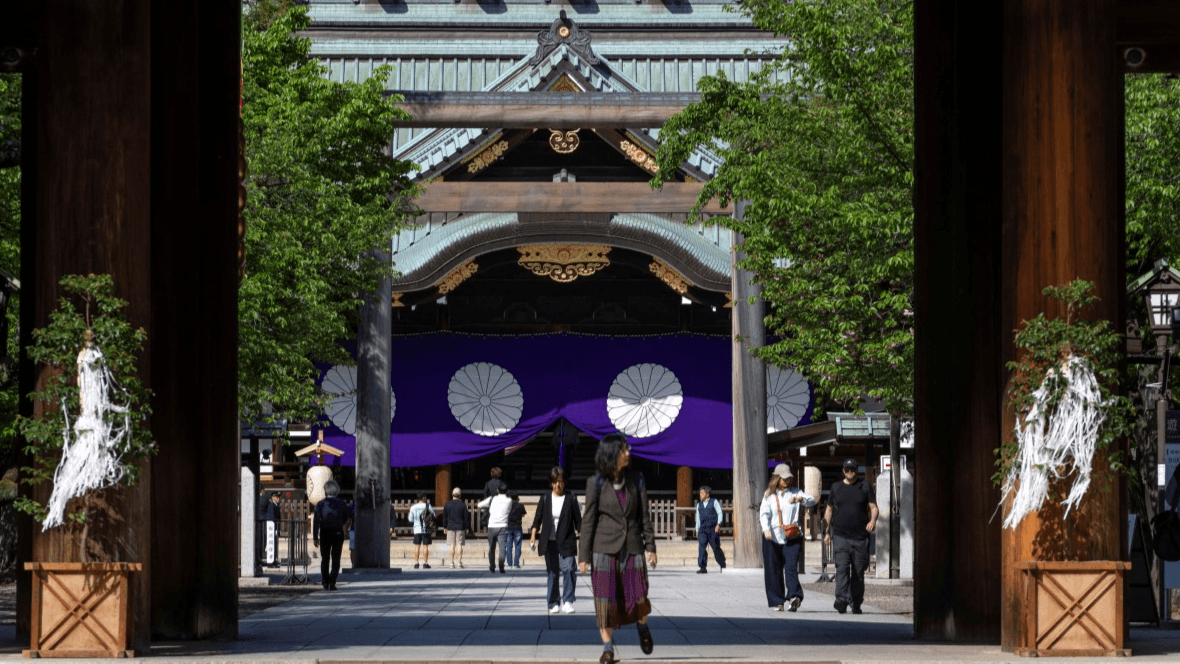
The arrest unfolded during the shrine’s annual Spring Rites, which multiple outlets described as a three-day event that began on Tuesday. Global Times said the “notorious Yasukuni Shrine kicked off its three-day annual Spring Rites on Tuesday,” and it described the protest occurring while messengers from the Japanese emperor were scheduled to deliver offerings. The Korea Herald likewise said the spring festival was held at the shrine that honors war dead, and it tied the protest to the shrine’s main gate and vehicles carrying imperial messengers.
chinadailyhk described the shrine as located in central Tokyo’s Chiyoda Ward and said it honors “14 convicted Class-A Japanese war criminals from World War II alongside the war dead.” Japan Today said the shrine honors Japan’s “2.5 million war dead, including convicted war criminals,” and it connected the political sensitivity to how victims of Japanese aggression and imperialism see visits as a lack of remorse.
DW described the shrine as honoring Japan’s “2.5 million war dead, including convicted criminals,” and it said the emperor’s messengers were delivering offerings from the emperor, who “did not attend the politically sensitive event in person.” Several reports also linked the broader diplomatic friction to Japanese political gestures at the shrine, including Prime Minister Sanae Takaichi’s decision to send offerings rather than visit.
Reactions from governments and officials
The protest and the surrounding shrine offerings drew explicit reactions from China and South Korea, with outlets quoting foreign ministry positions and describing how officials characterized the shrine. Global Times said “Both Chinese and South Korean foreign ministries have voiced opposition over Takaichi's move,” and it reported that a South Korea foreign ministry spokesperson called on Japan to take action through “humble" reflection of the past that would support future-oriented ties. DW quoted a Chinese Foreign Ministry spokesman describing the shrine as a “spiritual instrument and symbol of the wars of aggression launched by Japanese militarism.”
DW also quoted a South Korean Foreign Ministry spokesperson, saying “Our government urges Japan's responsible leaders to face history squarely and to demonstrate, through action, a humble reflection on and a sincere remorse for its past,” spokesman Park Il told reporters. The Korea Herald reported that on Tuesday the South Korean government expressed “deep regret” after Japanese Prime Minister Sanae Takaichi made a ritual offering at the shrine.
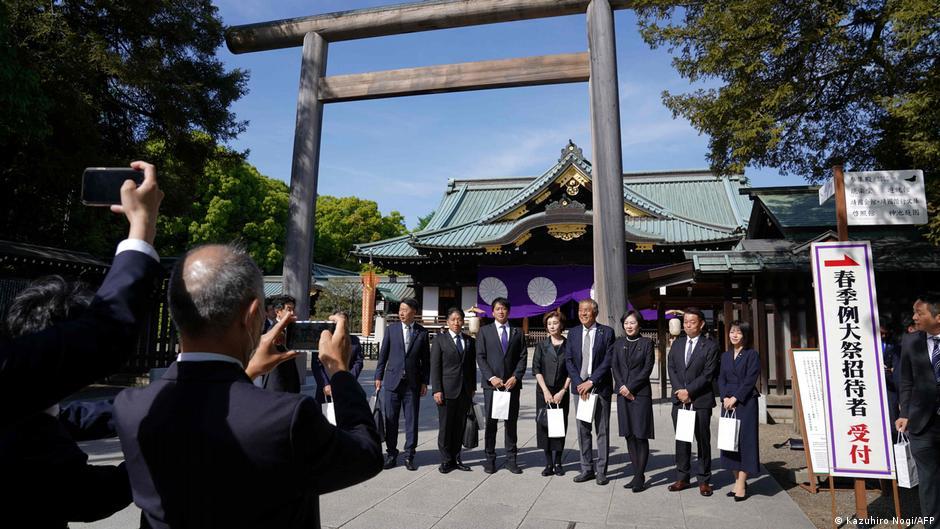
Japan Today described the criticism from China and South Korea triggered by Takaichi’s decision to send a religious ornament instead of visiting in person, and it said the move “triggering criticism from China and South Korea.” In addition to government reactions, DW described the participation of lawmakers at the shrine, including a “delegation of more than 120 lawmakers from the ruling Liberal Democratic Party (LDP)” that visited on Wednesday.
How outlets framed the same incident
While the core facts of a South Korean protester being arrested at Yasukuni Shrine around 11 a.m. on Wednesday are consistent, the outlets frame the incident differently in emphasis and wording. Global Times described the protest as being staged during the annual Spring Rites at the “notorious Yasukuni Shrine,” and it said the 64-year-old man displayed a banner reading “Stop paying visits to Yasukuni Shrine, which enshrines war criminals,” while standing at the main shrine gate and in front of vehicles carrying messengers from the Japanese emperor. The Korea Herald focused on the banner’s Dokdo message and said Park was detained for allegedly obstructing a spring festival held at the shrine that honors war dead, including “14 Class A criminals convicted by the Allies in international tribunals for their activities in World War II.”
chinadailyhk described the same arrest as disrupting shrine rituals and said shrine staff held him back before police arrived, while also stressing that the shrine is a long-running source of diplomatic friction. Japan Today framed the protest as part of a broader pattern in which victims of Japanese aggression and imperialism see shrine visits as “a lack of remorse about Japan's wartime past,” and it described the suspect’s banner messages as urging “war criminals” to stop praying and making territorial claims on a disputed island.
DW presented the incident with a focus on Japanese political gestures and official rhetoric, quoting Chinese and South Korean foreign ministry statements and describing lawmakers’ attendance, including Minoru Kiuchi’s “sincere gratitude, with deep reverence” and Ichiro Aisawa’s “peaceful and prosperous Japan.” Even the entry date differs: Global Times said the man entered Japan on “April 20,” while Korea JoongAng Daily said he reportedly entered Japan on “Monday,” and Seoul Economic Daily said he entered Japan on “Thursday.”
What comes next
The reports do not describe a specific court outcome, but they do outline what authorities were investigating and what the incident signals for future political friction around Yasukuni Shrine. Global Times said the 64-year-old man was “on suspicion of forcible obstruction of business,” and it said he “has admitted to the allegations of the obstruction and made the remarks,” according to Japanese media outlets Jiji Press. The Korea Herald similarly said Park was arrested on Wednesday for allegedly obstructing an annual spring festival held at the shrine that honors war dead, and it described him as telling police he had acted intentionally.
chinadailyhk said the man was arrested on suspicion of disrupting shrine rituals after staging a protest during the annual Spring Rites, and it said shrine staff held him back before police arrived and placed him under arrest. DW added that lawmakers continued to attend the three-day spring festival, with a “delegation of more than 120 lawmakers from the ruling Liberal Democratic Party (LDP)” visiting on Wednesday, and it described Cabinet member Minoru Kiuchi’s attendance and remarks.
DW also said Prime Minister Takaichi “steers clear in her new role,” and it described her sending a religious ornament and offering instead of visiting in person, which still prompted criticism from China and South Korea. Global Times said both Chinese and South Korean foreign ministries voiced opposition over Takaichi's move, and it reported South Korea’s foreign ministry spokesperson called on Japan to take action through “humble" reflection of the past.