Technology and Science05 May, 20267 min read
Lithosquare Raises €21.3 Million To Accelerate Geology AI Discovery Of Transition-Critical Minerals
This article is an automated aggregation of coverage from news outlets. Our editorials offer in-depth analysis curated by the NewsCord team.
Paris-based Lithosquare raised €21.3 million for geology AI-powered mineral discovery. Funding round was co-led by World Fund and Kindred Capital.
Funding for Geology AI
Lithosquare, a Paris-based startup deploying “Geology AI and geologist-led intelligence,” has raised €21.3 million ($25 million) in fresh funding to accelerate the discovery of “transition-critical minerals.” The round was co-led by World Fund and Kindred Capital, with participation from Daphni, Omnes Capital and Ovni Capital. Lithosquare says it plans to use the funding to “accelerate the discovery and development of critical metals deposits” at a time when “existing supply chains cannot meet global demand.”
In a statement, co-founder and CEO Aymeric Préveral-Etcheverry described the bottleneck as “too much time processing data, not enough time on actual geology and fieldwork,” and said Lithosquare “turbocharges geologists and exploration teams” by bringing together “deep geological science and AI.” The company was founded in 2024 by mining engineer Aymeric Préveral-Etcheverry, with Simon Leclair joining as founding COO shortly after.
Lithosquare claims its platform “radically” accelerates mineral exploration by combining “foundational AI, geological expertise, and real-world data,” and it says it “accelerates the discovery of critical minerals for the energy transition.” The startup also asserts that by 2040 “the supply gap for critical metals like copper, lithium, and nickel could hit €299.4 billion ($350 billion),” while “Lithium demand…is anticipated to increase by over 400%” and “copper demand is expected to grow by about 50%.”
How the AI is framed
Lithosquare’s pitch centers on changing how exploration workflows move from data processing to fieldwork, with the company saying mineral exploration is “still slow, highly manual, and has low success rates.” The startup says it usually takes “7 to 15 years to go from initial exploration to discovering a deposit,” and that “geologists dedicating up to 80% of their time to data processing and analysis.” Lithosquare argues that its platform “automates and accelerates exploration workflows by combining foundational AI with science-based geological models of the subsurface.”
The company contrasts its approach with “existing AI tools that apply pattern-recognition models to geological data,” saying its platform instead “leverages a deep understanding of metal deposit formation.” Lithosquare claims this enables “more accurate targeting and deposit development decision-making,” and it says it can “reduce analysis timelines from months to days.” The company also says its platform is “designed to work alongside geologists, augmenting their work so teams can focus on geological interpretation and discovery.”

In addition to speed, Lithosquare links the claimed efficiency to drilling and emissions, stating that it “improves targeting precision, reduces unnecessary drilling and associated emissions, and enables faster development of new mineral supply.” The company’s funding plan includes growth of its expert team, continued platform development, and global expansion, while also saying the founders are already working with mining companies across “the US, Europe, Africa and Latin America.”
Energy transition deals in Italy
While Lithosquare’s funding targets mineral discovery, another technology-and-energy story in the sources focuses on smart-grid infrastructure and capital raising in Italy. NT+ Diritto reports that Oliverio & Partners advised Intelgrid, a “UK-based startup specializing in the design of smart grids,” in negotiating a binding term sheet related to a “future €7.5 million capital increase” in an Italian newco to be formed as “Intelgrid Italian Branch.” The article says the term sheet was signed with “a pool of captive industrial investors active in the Energy & Infrastructure sectors,” with the aim of supporting “the launch and scaling in Italy of solutions for the digitization and optimization of electrical grids.”
Oliverio & Partners’ role is described as handling “all M&A and corporate aspects of the negotiation,” including “deal structure, governance of the NewCo, investor rights, investment milestones, and key contractual protections.” Vincenzo Oliverio, identified as “Head of M&A at Oliverio & Partners,” said the operation “consolidates Intelgrid's entry into the Italian market with patient, industrial capital, accelerating the deployment of enabling technologies for the energy transition and network resilience.” The transaction is described as overseen by the Oliverio & Partners team led by Vincenzo Oliverio.
The same source also reiterates that Intelgrid is focused on “designing smart grids and digital solutions for the intelligent management of energy systems.” The article includes a dated reference to “September 22, 2025” alongside the Intelgrid item, and it also shows “May 5, 2026” in the surrounding site content, though the Intelgrid transaction itself is tied to the €7.5 million capital increase described in the text.
France-Japan energy systems meeting
The sources also place technology and science in a broader policy and industrial cooperation setting, describing a Franco-Japanese meeting focused on “new energy systems” in Grenoble Alpes. The economie.gouv.fr report says the event was organized within “Grenoble Alpes,” described as “a forward-looking metropolis in this sector,” and it was the “eighth edition” of a working group for industrial cooperation in the new energy systems. The report says the number of participants reached a “record” of “90 people spread over the two days,” representing “more than 35 French and Japanese companies as well as several public entities.”
It states that the working group is “co-chaired by the ministries in charge of industry of the two countries,” and it was created in “2014,” initially focused on “smart grids” before broadening in “2018” to “renewable energy, hydrogen, and energy efficiency.” The meeting took place on “February 11-12, 2020,” and the report says it was “greatly facilitated” by Grenoble Alpes Métropole’s services and Invest in Grenoble, with support from the Economic Service of the French Embassy in Japan. The report describes the exchanges as confirming shared interest in “hydrogen, renewable energies (solar, biomass), and smart grids,” and it says “new topics not covered in previous editions emerged” including “renewable heat, recycling of solar panels, and the maintenance of electrical grids.”

It also explains that on the Japanese side METI was accompanied by public agencies “NEDO (R&D funding) and JETRO (export support),” as well as the “Embassy of Japan in Paris.” The report details a two-day program with visits to CEA’s hydrogen laboratories, Air Liquide’s Advanced Tech Center, Grenoble’s renewable district heating system, and Schneider Electric’s Technocentre dedicated to medium-voltage electrical network equipment, and it notes that the plan to deploy “600 hydrogen taxis in Paris before the end of 2020” was highlighted as an established collaboration led by Air Liquide, Idex, and Toyota.
Rare earth alternatives and supply risk
Climate Home News frames the energy-transition rare earth challenge through the lens of startups trying to eliminate reliance on rare earths in motors and magnets.
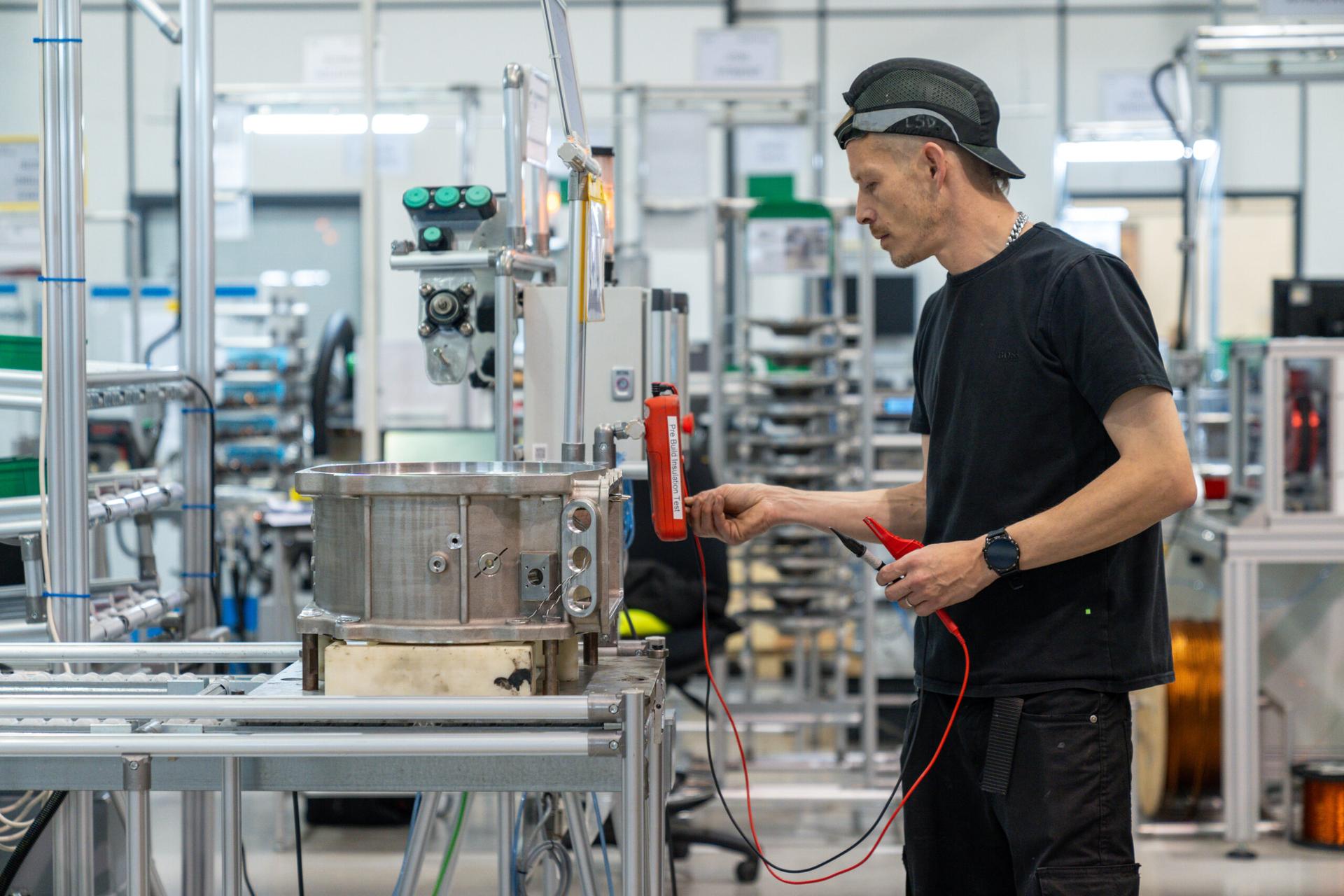
The article says the Advanced Electric Machines (AEM) plant outside Newcastle is “at the forefront of building a new generation of motors made without rare earths,” and it identifies CEO James Widmer as “a former aerospace engineer who founded the company in 2017.”
Widmer compares rare earth dependence to a past gasoline change, telling Climate Home News in a video call: “Putting rare earths in motors is the same thing,” and “You don’t need it, but somebody did it because it was easy.”
The article says China controls “more than 90% of global rare earth separation and refining capacity” and “makes nearly all of the world’s permanent magnets,” while also stating that Beijing announced “new export restrictions on supplies of rare earths and technological know-how” in response to “US tariffs on imports of Chinese goods.”
It reports that “Automakers were left facing shortages,” and that while “some of Beijing’s retaliatory curbs were suspended within months,” China’s “willingness to use its industrial clout over technological chokepoints” has “injected momentum” into efforts to find alternatives.
Widmer’s prescription is direct: “The best way to avoid the problems with these materials…isn’t to drill, baby, drill. The best way is just not to use them in the first place,” and the article says cutting dependency would help “shrink the environmental footprint of EV motors.”
The piece describes AEM’s motor design as relying on “electrical steel laminations – thin stacked sheets of specialised metal,” and it says the company claims its motors are “more energy-efficient” and “in some configurations, more power-dense than traditional rare earth motors.”
It also states that AEM manufactures electric motors for “passenger cars and trucks” as well as “the agricultural and aerospace sectors,” and it says the company expects demand to grow as buyers become aware of “the risks of supply chain disruption and the environmental harm caused by rare earth mining.”