Iranupdated 1h ago3 min read
MapMohsen Rezaei Says U.S. Response Not Convincing as Iran Conditions Strait of Hormuz Reopening
“Iran conflict 'very soft war,' warns US could strike Pickaxe nuclear site 'in one hour'”
“The Middle East is bracing for a possible return to all-out war”
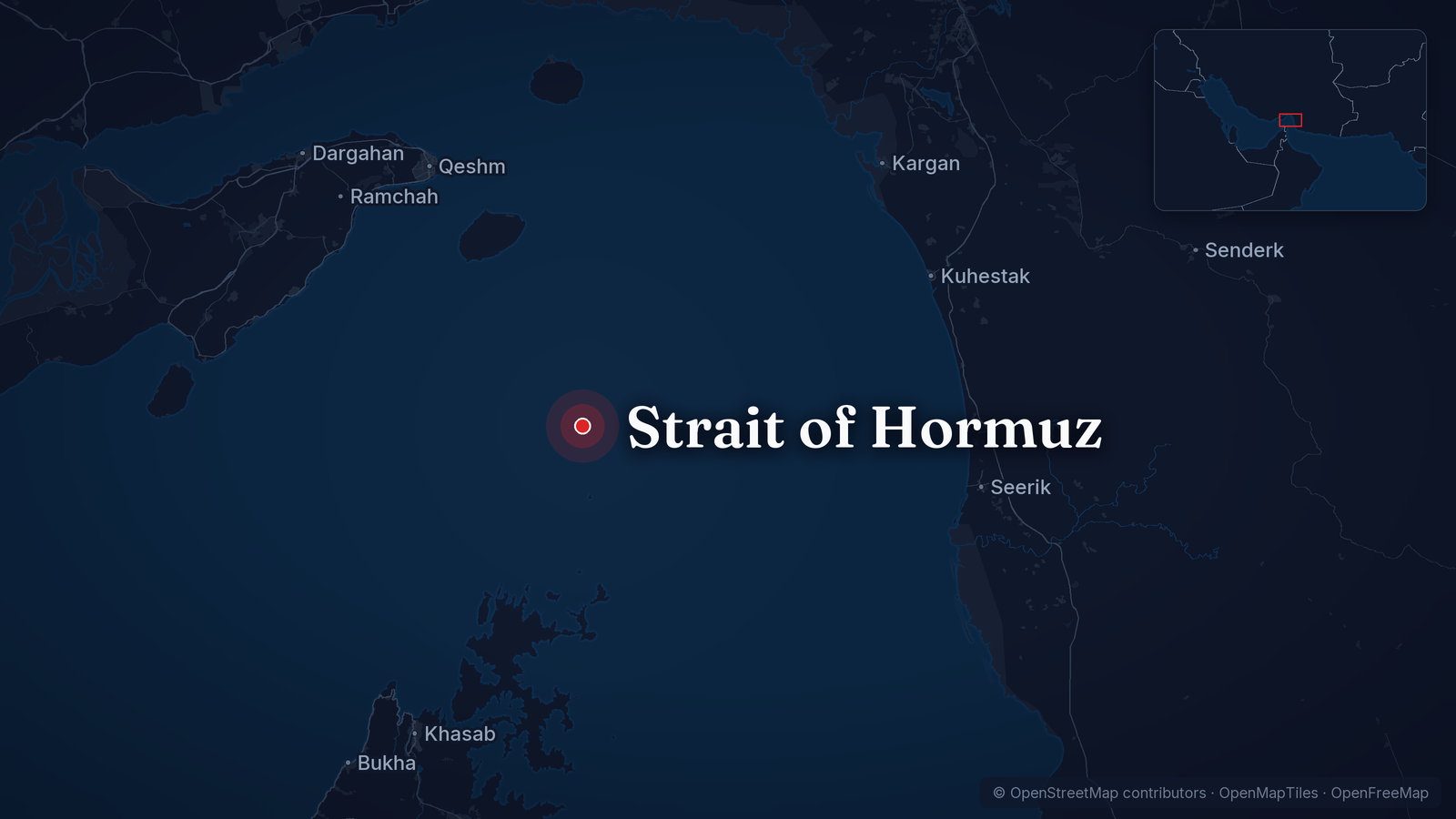
Map: © OpenStreetMap contributors, ODbL · Cropped for layout
This article is an automated aggregation of coverage from news outlets. Our editorials offer in-depth analysis curated by the NewsCord team.
Rezaei says US response to Tehran's demands is not convincing. Iran ties reopening Strait of Hormuz to US agreement on demands.
Save coverage image
France 24 was read line by line by the Watchdog: 3.0. See the score →
Hormuz Reopening, Conditional
Mohsen Rezaei, secretary of the Supreme National Security Council of Iran, said the United States’ response to Tehran’s demands has not been «convincing» and that reopening the Hormuz Strait is conditioned on Washington’s explicit and full response to Iran’s seven شروط and their implementation. Foreign ministry spokesperson Esmaeil Baghaei said Iran was holding “intensive” indirect talks with Washington to avoid a fresh round of US attacks ahead of the US midterm elections, and he said Iran plans to reopen blockaded energy corridor, the Strait of Hormuz, if the US meets its demands. Foreign Minister Abbas Araghchi said “Qatar and Pakistan are playing a very active mediating role in these negotiations,” while he also said “Given the sensitivity and gravity of the current situation, consultations and deliberations are very intensive.”
Iran was prepared to reopen the Strait of Hormuz in two days if the United States agrees to a set of demands. The Egyptian Foreign Ministry announced Foreign Minister Abderrahman el-Araby spoke with Abbas Araghchi, urging flexibility from the sides and seeking a political solution to the regional crisis.
Qatar Mediation, Escalation Risk
Qatari mediators expected to receive responses from both sides within 36 hours to a new proposal to move negotiations forward, and Majid al-Anzari said at a press conference on Tuesday, “We still hope for an opportunity to reach an agreement that would pave the way for future negotiations.” A senior Iranian official told Reuters that his country “will not accept American excessive demands,” and the same report said Iran was “ready to respond forcefully to American strikes, whether inside the region or abroad,” after the United States launched an attack at dawn Tuesday on Qeshm Island in the Strait of Hormuz. Iran and the United States have recently been in contact through Qatari mediators to end the war and reopen the Hormuz Strait, while it also noted that Tehran’s retaliatory attacks have targeted Washington’s allies, including Jordan.
The United States struck Iran’s Qeshm Island in the Strait of Hormuz, and the report quoted an official saying the strike was “defensive” in response to Iran firing first. A regional official briefed on the talks said an Iranian delegation left Qatar on Sunday after negotiations aimed at reaching a deal to end the war, with a draft proposal circulated for feedback and a follow-up meeting under discussion.
Stakes for War, Economy
The U.S.-Israel war with Iran, which began in late February, has brought broad hostilities to the region, and it said Tehran’s retaliatory attacks have targeted Washington’s allies, including Jordan. The IMF on Tuesday announced it reached an initial agreement with Jordanian officials to pave the way for a further $294 million under the country’s four-year financial support program, and it said Jordan began a financial support program with the IMF in 2024 valued at nearly $1.2 billion. Sazar Sora said in a statement that Jordan has met all quantitative performance criteria and most structural reform targets set for the sixth review of the program, and he said the IMF maintained its 2026 growth projection for Jordan at about 2.7 percent.
Iran effectively closed the Strait of Hormuz after U.S. and Israeli forces attacked the country in February, and it said that move roiled energy markets and continues to shake the global economy. Widespread disruption of shipping through the Hormuz Strait especially affected oil-exporting regional countries, while Jordan’s economy faced pressures including reduced tourism revenues, higher trade and transport costs, reduced foreign direct investment, and volatile energy prices.