Technology and Science11 July, 20263 min read
Na'ama Hallakoun’s Team Finds WD0032-317 B, a Brown Dwarf Orbiting a White Dwarf
This article is an automated aggregation of coverage from news outlets. Our editorials offer in-depth analysis curated by the NewsCord team.
WD 1856 b is a Jupiter-sized planet orbiting a white dwarf, surviving its star's death. James Webb Space Telescope observed WD 1856 b, providing new data on the system.
Hot Jupiter-like systems
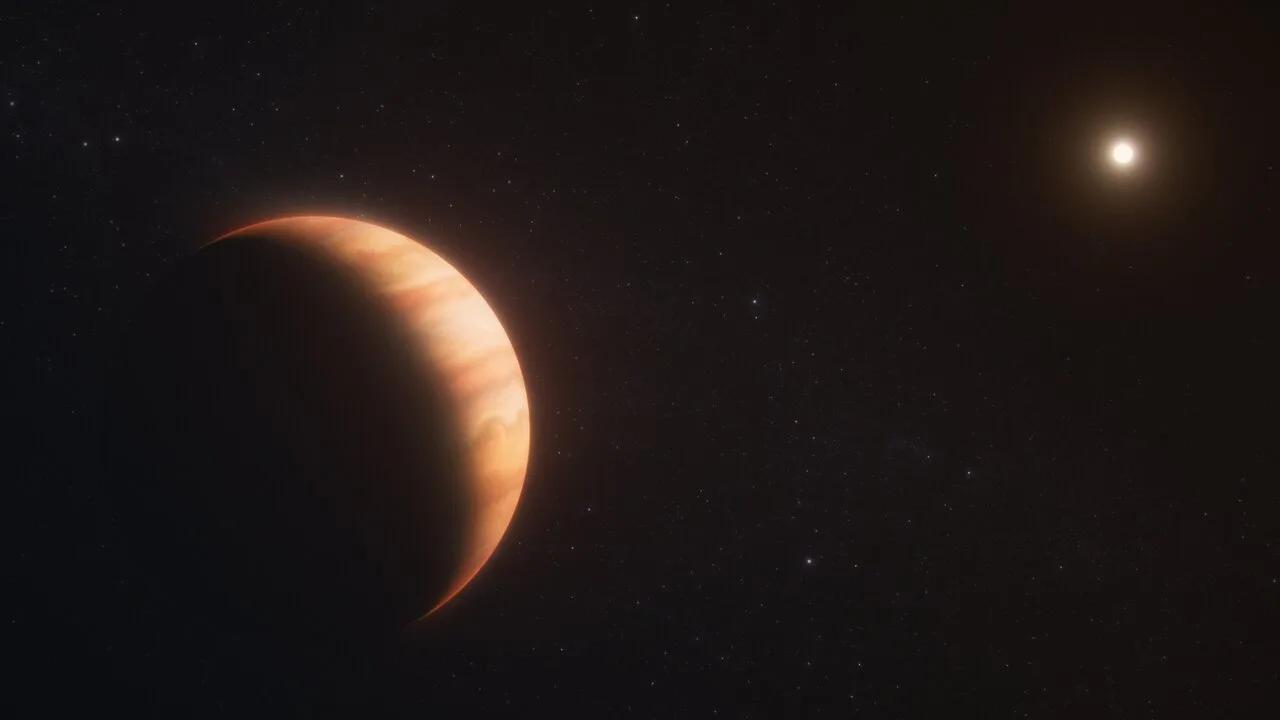
A team led by Na'ama Hallakoun, a postdoctorante associée with the team of Dr Sagi Ben-Ami at the Institut Weizmann des sciences, published in Nature Astronomy the discovery of an exotic system about 1 400 années-lumière from the Sun that resembles hot Jupiters but involves a white dwarf and a brown dwarf. The system centers on a star named WD0032-317, described as a naine blanche with a surface temperature of 13 000 K, and a companion named WD0032-317 B that orbits in about 2,3 heures. Futura reports that WD0032-317 B is much larger than the white dwarf and that measurements indicate it concentrates about 75 à 88 masses de Jupiter in a volume comparable to that of our géante glacée, while its day-side temperature is about 8 000 K.
Futura adds that the day-side temperature is about 2 000 K higher than the surface temperature of the Soleil and that the difference with the night-side is about 6 000 K, making the day-side as hot as the surface of an étoile de type A. The discovery is described as being made possible by the spectrographe Uves (Ultra-Violet-Visual Echelle Spectrograph) of the Very Large Telescope (VLT) at the Observatoire européen austral (ESO).
Planet survives a star’s death
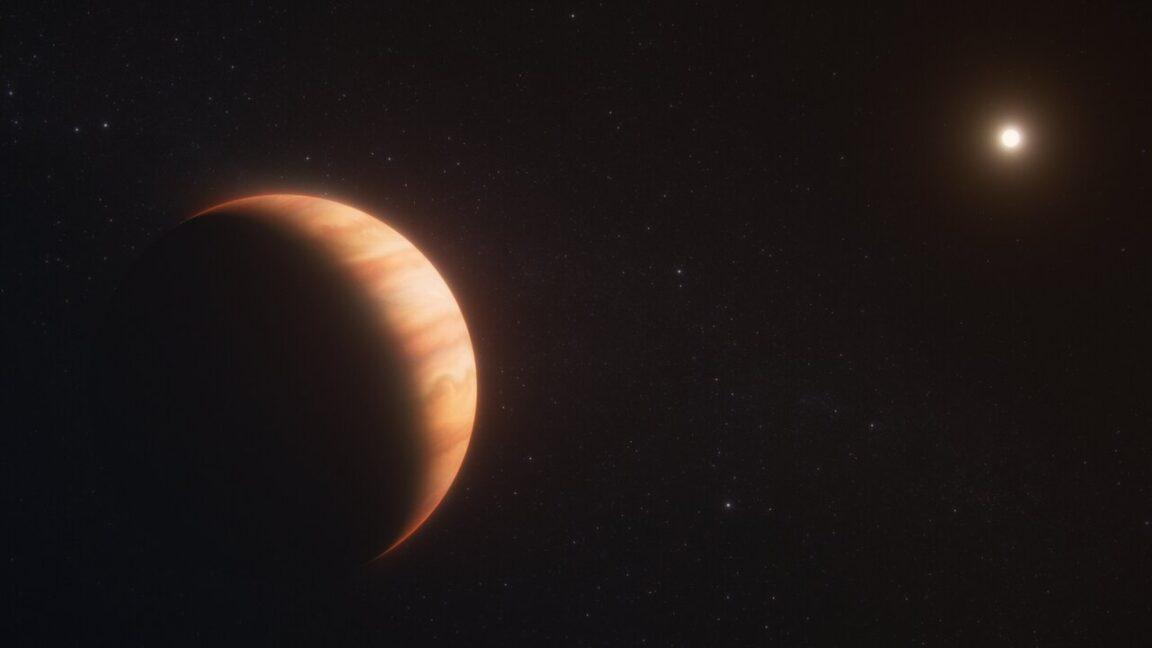
WD 1856 b is presented as the only confirmed case of a planet that survived the death of a star similar to the Sun, with scientists using the James Webb Telescope to study it in detail. Ukrainian National News says the planet was discovered in 2020 when astronomers pointed the TESS observatory at a sample of about 2,000 white dwarfs, and it quotes Christopher O'Connor saying, "As soon as they looked at it, they said, 'Okay, this is weird,'". The same source reports that the white dwarf is about seven times smaller than the gas giant orbiting it, and that the planet orbits at a distance of about 0.02 astronomical units from the white dwarf.
Ars Technica similarly describes the system as a Jupiter-size world orbiting a white dwarf and quotes O’Connor: "When the star expands to become a red giant, it consumes the inner planets,". Ars Technica also states that O’Connor says the star’s shrinking down to a white dwarf means its gravitational pull becomes weaker and that "The outer planets, like gas giants, should migrate outward by about a factor of two," which the observed orbit of WD 1856 b contradicts.
What comes next for astronomy
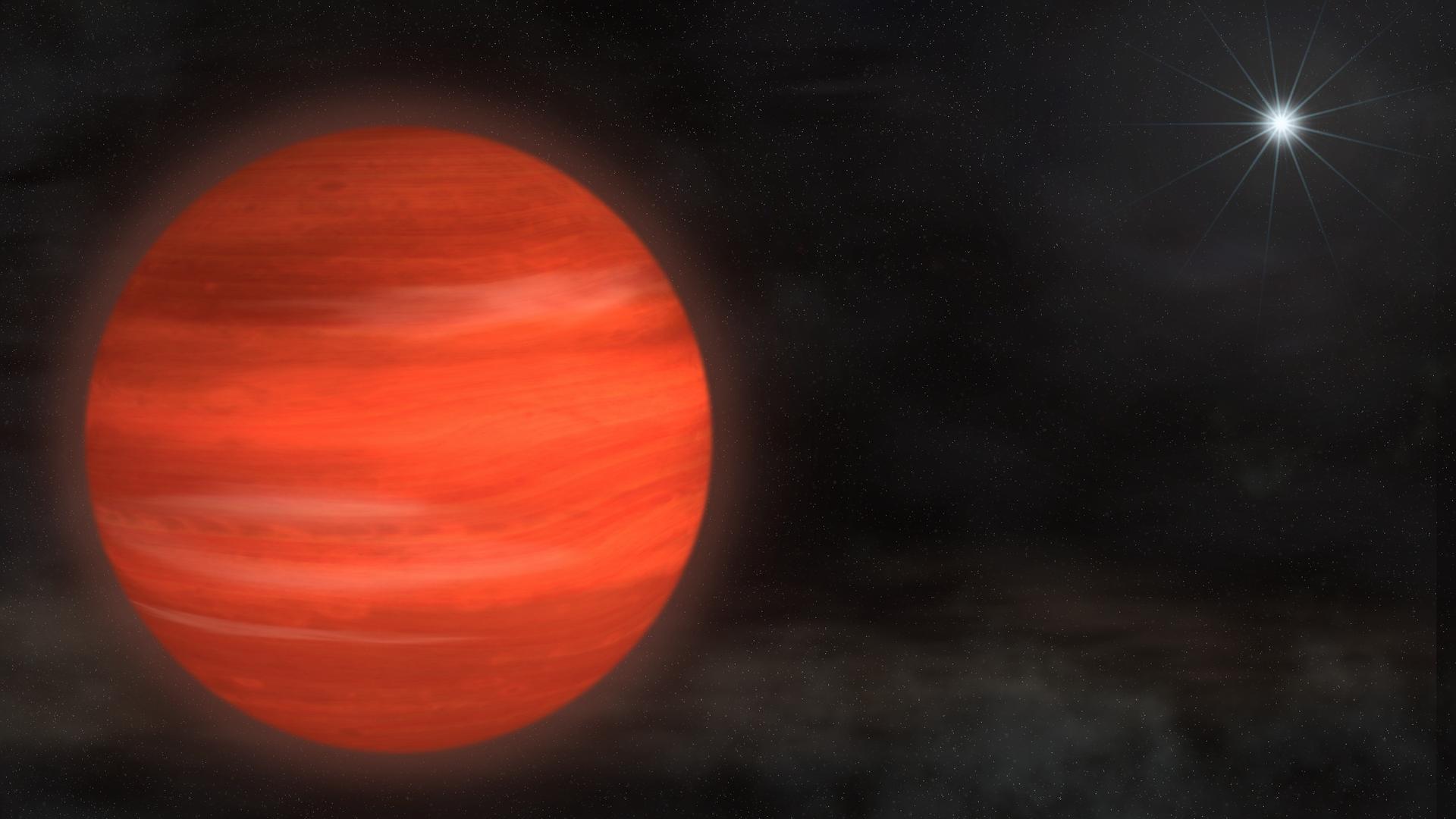
Across these studies, the sources frame WD 1856 b and the WD0032-317 system as ways to probe extreme environments around compact remnants, with Ukrainian National News saying the team wants to study the WD 1856 system in more detail before embarking on a large-scale search for surviving planets. Ukrainian National News quotes O'Connor: "We have already conducted additional observations using the James Webb Telescope," and it adds that "Our team has only just begun the work," after the article was submitted. ZME Science, discussing WD 1856 b, describes the planet as slightly larger than Jupiter and says it circles a dead star only about the size of Earth, while also stating that "Every 1.4 days, it whips around the white dwarfWD 1856+534".
ZME Science further reports that the findings were published in Nature and that the new study used Webb to watch WD 1856 b pass in front of its star, with the transit lasting only eight minutes. In parallel, Futura emphasizes that the WD0032-317 B system is a laboratory for studying the effect of extreme ultraviolet radiation on planetary atmospheres, describing how such radiation can lead to evaporation of gases and rupture of molecules.