Technology and Science10 July, 20262 min read
China Recovers Long March 10B Booster Using Net Landing Hooks After Orbital Test
This article is an automated aggregation of coverage from news outlets. Our editorials offer in-depth analysis curated by the NewsCord team.
Long March 10B launched from Hainan for an orbital test Booster recovered at sea on a recovery platform

Long March 10B milestone
China successfully recovered the first stage of a Long March 10B rocket during an orbital launch test, state media reported Friday, marking a breakthrough in reusable rocket technology. The Long March 10B lifted off from Hainan at 12:15 local time, and about six minutes after separating from its upper stage, the booster returned vertically and was recovered on a floating platform.
“Instead ‘landing hooks’ on the rocket catch a net attached to a floating platform.”
China Aerospace Science and Technology Corporation said the mission “signifies a historic breakthrough in China’s reusable rocket technology and a solid foundation for accelerating the improvement of China’s space access capabilities,” while CCTV-affiliated footage showed the booster smoking as it lowered onto the platform. The BBC reported the Long March 10B does not autonomously land on a ground pad or drone ship, instead using “landing hooks” on the rocket to catch a net attached to a floating platform.
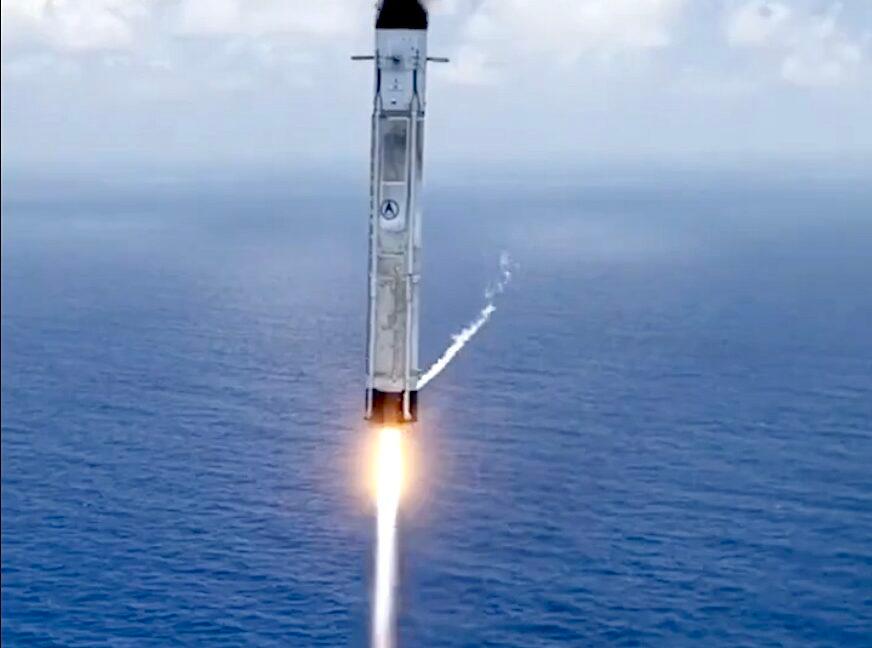
How China’s net capture works
Newsweek described the Long March 10B’s sea-based retrieval system as a test in which the first stage separated after carrying a satellite into low-Earth orbit and then fired its engines to slow its vertical descent toward a floating platform. The China National Space Administration said the net capture system works alongside a cable network on the platform to secure the rocket using four landing hooks, and it claimed the method reduces the risk of structural damage to the booster.
DW reported that around six minutes after booster separation, the rocket descended vertically toward an offshore platform and was captured by a net-based retrieval system, while China Academy of Launch Vehicle Technology expert Chen Muye said the approach “simplifies the rocket's onboard structure, reduces its weight and could increase payload capacity.” The BBC added that the Long March 10B booster was recovered on a floating platform after returning to Earth vertically, and it framed the result as a potential challenge to America’s dominance in reusable rockets after SpaceX and Blue Origin.

Competition, costs, and next steps
Multiple outlets tied the recovery milestone to competition with U.S. commercial space companies, with CNN saying reusable rockets can significantly lower the cost and turn-around time of rocket launches and form the backbone of SpaceX’s dominance. TechCrunch reported that CASC said it would attempt to reuse the booster “by the end of the year,” and it described the demonstration as showing CASC is poised to match the advance that drove SpaceX’s reusable Falcon 9.
“CASC said it would attempt to reuse the booster, which can carry about as much payload as SpaceX’s workhorse Falcon 9, by the end of the year.”
The BBC reported that shares in Chinese space firms jumped following the news, with China Spacesat and China Satellite Communications each rising by 10%, the daily limit allowed by the country’s financial market regulations. Ars Technica said Chinese officials hailed the flight as a “complete success,” and it noted that the landing on Friday made CASC and its subsidiary CALT the third enterprise to accomplish controlled rocket recovery after SpaceX and Blue Origin.