Technology and Science05 September, 20263 min read
Nepali Army Rescues Chinese National Lu Haitao From Upper Trishuli-1 Tunnel 10 Days After Floods
This article is an automated aggregation of coverage from news outlets. Our editorials offer in-depth analysis curated by the NewsCord team.
Chinese national Lu Haitao rescued alive from a 225-meter Upper Trishuli-1 tunnel after 10 days. Nepali Army, with South Korean disaster experts, led a joint rescue at Trishuli-1.
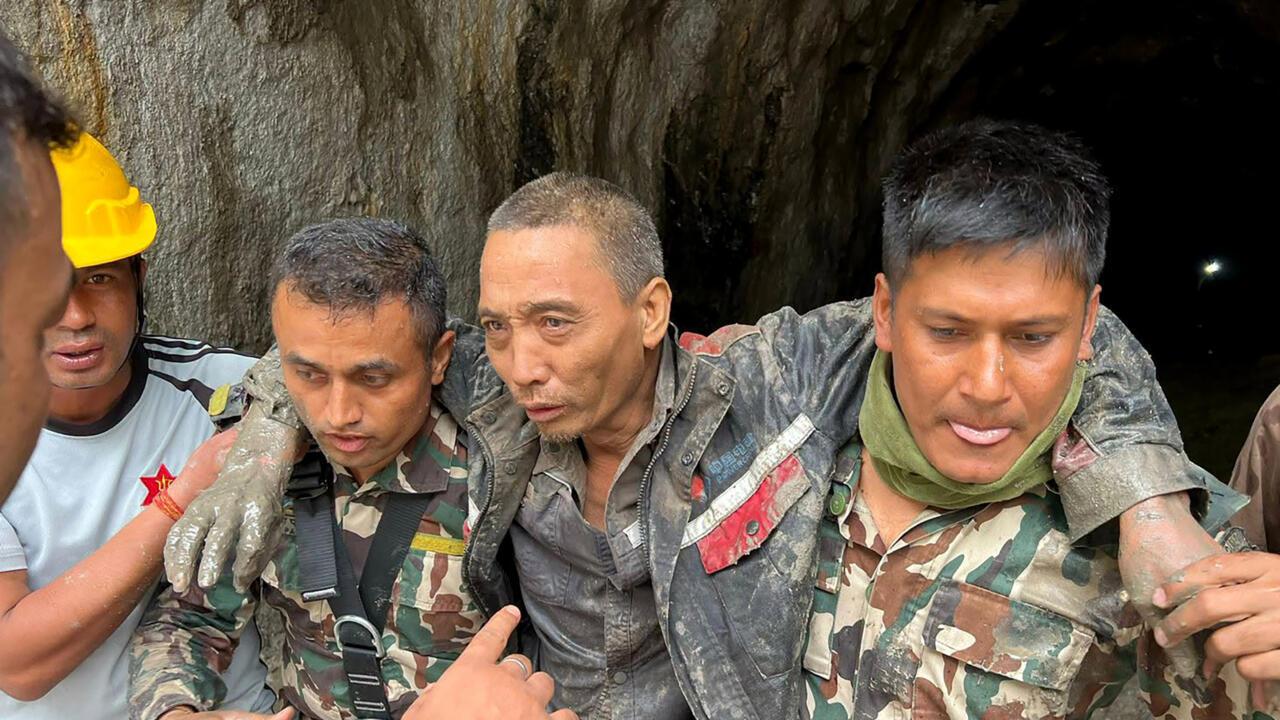
Tunnel rescue after floods
A Chinese national was pulled alive from a tunnel in Nepal on Saturday, 10 days after the Nepali Army said its entrance was buried in catastrophic floods that tore through one of the country’s northern river systems. The Nepali Army said the rescue came from inside a 740-foot tunnel in the Upper Trishuli-1 hydropower project, and it said the man’s health was being assessed while further search and rescue operations continued. Reuters reported the survivor was Lu Haitao, rescued from inside a 225-meter tunnel at the Upper Trishuli-1 Hydropower Project, and said he had no visible injuries and his vitals were stable but showed signs of mild hypothermia.
Reuters also said the rescue was the third person so far pulled out alive from various tunnels where authorities believe 900 people might be stuck after the August 26 collapse of a glacier on the upper reaches of the river. The New York Times said the disaster killed at least 1,200 people and left 5,000 missing, as rescue efforts focused on hundreds of men working underground at hydropower projects when the floods hit.

Voices, images, and focus
The rescue was accompanied by helicopter evacuation and medical checks, with Reuters describing footage of Lu Haitao being given emergency medical attention inside a helicopter and a uniformed medic checking him with a stethoscope. Click2Houston said the man was rescued from a hydropower tunnel according to a social media post by the country’s prime minister’s office, bringing the total to three workers pulled alive from the Trishuli hydropower project. In audio shared by authorities, Click2Houston quoted the man saying, "When they rescued me today, when they shone (the light) before my eyes, I couldn’t believe it," as he described repeatedly shouting whenever he saw rescue crews’ lights.
The New York Times reported that on Friday, two Nepali workers were found alive in a tunnel below the Upper Trishuli 3A project, and it quoted Sanjay Sah estimating there had been "40 or 50 others at his work site when the disaster struck." The Guardian said rescue efforts had focused on a dozen hydropower projects across Nepal, where about 900 workers were missing and 500 were thought to be trapped in huge tunnels, while international teams from India, China, South Korea and the US searched debris and damaged structures.

What’s at stake next
As rescuers continued searching for thousands missing, Reuters said about 4,887 people were still missing, including 583 foreign nationals, and it reported that China’s state media Xinhua put Tibet’s death toll at 31 with 531 missing.
The Guardian reported that emergency responders had been working to find survivors 10 days after massive floods triggered by a glacial and rock collapse on 26 August, and it said the work was complicated by massive infrastructural damage including "more than 40 bridges" having collapsed.
NBC News said the operation has involved 75 army personnel and 18 police officers, and it described rescue teams using controlled blasts, excavators and earth-moving equipment to reach trapped workers amid concerns about air quality and access to drinking water.
NBC News also reported that Nepal’s army said Friday that a separate rescue effort recovered two bodies from a tunnel at the Langtang Hydropower Project, while it said at least 1,294 people were killed and more than 5,000 remain missing after the Aug. 26 disaster.
In a sign of ongoing national response, NBC News said Nepalese authorities said a national day of mourning will be observed on Sept. 7 and that the national flag will be flown at half-staff at government offices and Nepali embassies and missions abroad.