Protests08 September, 20263 min read
Nepalis Mark One Year Since Gen Z Protests Over Corruption And Social Media Ban In Kathmandu
This article is an automated aggregation of coverage from news outlets. Our editorials offer in-depth analysis curated by the NewsCord team.
Gen Z protests toppled the government and installed an interim administration. Victims of the crackdown are commemorated at the old Parliament building; dozens attended.

One Year, Old Parliament
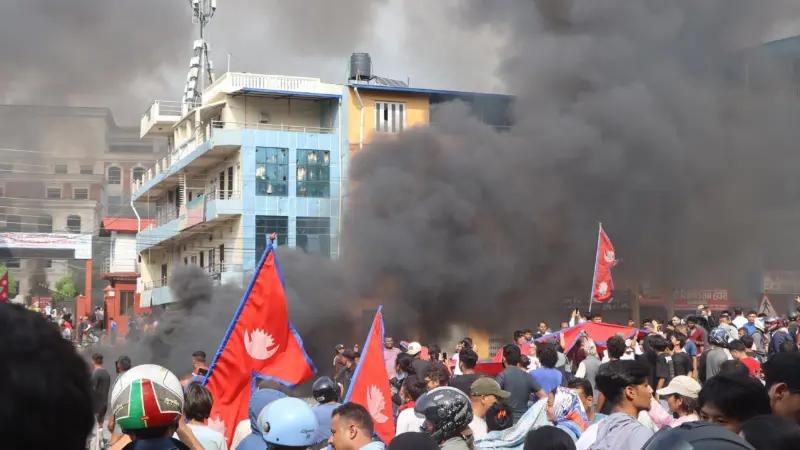
Nepalis marked the first anniversary of the Gen Z-led protests against corruption and a social media ban at the old Parliament building in Kathmandu, Nepal, on Tuesday, Sept. 8, 2026, with supporters and family members observing a minute of silence.
The rallies on September 8-9, 2025, were sparked by anger over a brief government ban on social media but were driven by deeper frustration over economic hardship, corruption and entrenched political practices, and they caused the deaths of 76 people and the torching of the parliament building in Kathmandu.

AFP reported that former protester Aastha Shrestha, 23, said on the grounds of the ruined building, "The loss of life was of course terrible. But the impact on politics was worth it, we have seen changes."
In the same commemoration, Sushila Karki, who led Nepal as interim prime minister after Oli's government was overthrown, paid tribute to "all the brave individuals who lost their lives" and urged that duties be performed "honestly, responsibly, and vigilantly."
Demands, Detentions, Answers
A year on, the Nepal Gen Z Front released a document questioning the government and political leadership over what happened to the movement’s core demands, including good governance, accountability, transparency, institutional reform and digital rights. Onlinekhabar English said the Front particularly questioned the continued detention and prosecution of Gen Z protesters despite the government’s commitment to withdraw cases and release those arrested in connection with the movement, and it framed the issue under the headline "Gen Z in jail, leaders on the power train?"
Al Jazeera reported that the protests began on September 8, 2025, in Kathmandu and other cities, with demonstrators protesting corruption scandals and anger over the "Nepo kids" trend, and it said the protests were followed by curfews, arrests and the police firing live rounds at protesters, killing about 76 people. Al Jazeera also quoted Yog Raj Lamichhane, an assistant professor at Nepal’s Pokhara University, saying, "Despite the loss of life and property during the movement, the interim government successfully conducted peaceful elections, leading to the emergence of a new political force in government."
Aftermath and What’s at Risk
RFI reported that an inquiry commission set up to investigate the violence submitted its report in April and recommended further probes against several officials including Oli, while it said the majority of the victims — 51 people — were shot dead, many in the head or chest, according to the report.
“‘Why did we sacrifice our lives, what did we get? There is no hope that change will come.”
RFI also said there has been little genuine accountability, quoting Anish Acharya, 19, who asked, "Why did we sacrifice our lives, what did we get? There is no hope that change will come."
Al Jazeera said that in March, Nepal police arrested Oli and former Home Affairs Minister Ramesh Lekhak for their alleged involvement in the deadly crackdown, and it added that both men were released in April after a Supreme Court order asked the police not to indefinitely extend the detention.
Al Jazeera further reported that the protests culminated in the current government being formed in March when 35-year-old rapper-turned-politician Balendra Shah was sworn in as the country’s youngest-ever prime minister, and it said Shah leads the Rastriya Swatantra Party (RSP), which won more than two‑thirds of the 165 directly elected seats in parliament in March.