Technology and Science24 October, 20252 min read
New Research Confirms Dinosaurs Thrived in North America Before Asteroid Mass Extinction
This article is an automated aggregation of coverage from news outlets. Our editorials offer in-depth analysis curated by the NewsCord team.
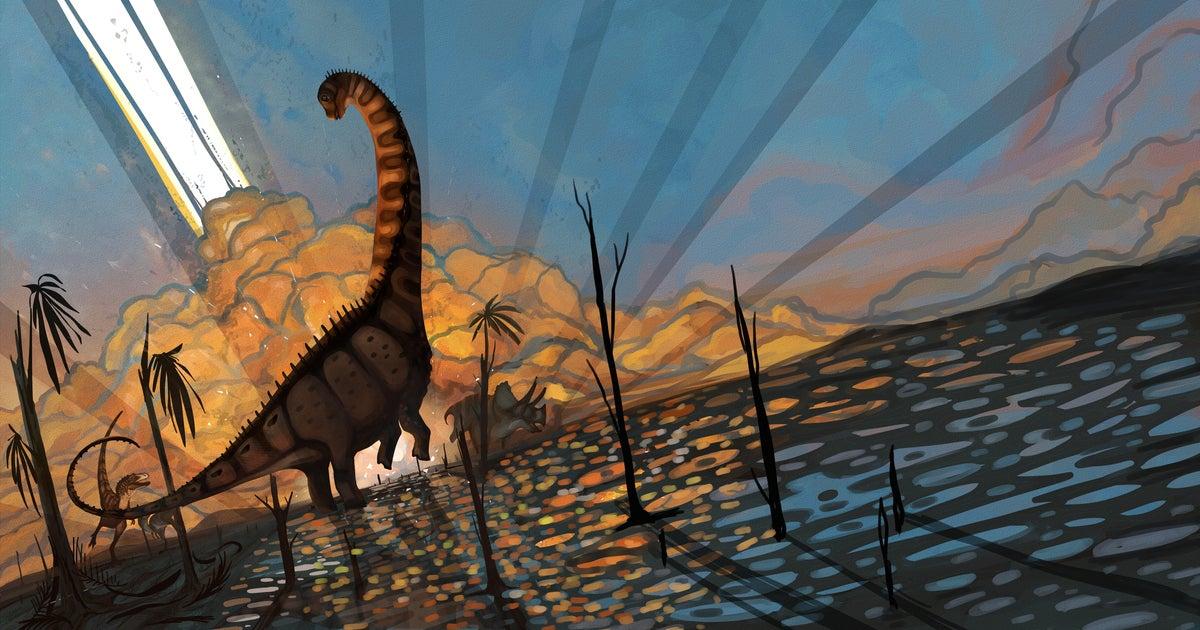
Dinosaur populations in North America were thriving immediately before the asteroid impact. The asteroid impact 66 million years ago caused the mass extinction of dinosaurs.
5 outlets told this the same way.
Dinosaur Diversity Before Extinction
A new study of fossils from the Kirtland Formation in northern New Mexico, published in Science, concludes that North American dinosaurs were thriving until roughly 400,000 years before the asteroid impact 66 million years ago that caused their mass extinction. The reporting consistently notes diverse or distinct dinosaur communities shortly before the end-Cretaceous event, countering a narrative of gradual decline before the strike. One outlet explicitly frames the finding as overturning earlier assumptions about pre-impact decline, while others emphasize the robust diversity observed in the fossil record and the study’s timing within the final stretch of the Cretaceous.
“New research analyzing dinosaur fossils and surrounding rocks from the Kirtland Formation in northern New Mexico suggests that dinosaur populations in North America were still thriving about 400,000 years before the asteroid impact 66 million years ago that caused mass extinction.”
Late Cretaceous Dinosaur Ecosystems
Across coverage, outlets describe a rich, late-Cretaceous ecosystem rather than a fading one. Reported examples vary by source: local reporting highlights Tyrannosaurus rex alongside horned herbivores. Another mainstream account points to massive plant-eaters like Alamosaurus.
A separate mainstream article mentions T. rex with Triceratops-like herbivores. One source also notes differences between dinosaurs in New Mexico and Montana, underscoring that North American communities shortly before the impact were regionally distinct rather than uniformly declining.

Dating Dinosaur Fossils
Local coverage highlights how the team determined the timing with high precision by using volcanic glass particles and magnetic minerals to date fossils within the final 400,000 years before the impact. Mainstream outlets emphasize the implications for late-Cretaceous diversity and regional differences rather than focusing on the dating methods. Together, these reports illustrate well-dated fossil layers that support the existence of a thriving variety of dinosaurs shortly before the asteroid event.
“Researchers used volcanic glass particles and magnetic minerals to precisely date the fossils.”
Dinosaur Extinction Insights
All three sources report caution from independent experts that conclusions from a single site may not represent global trends. They call for broader data before generalizing dinosaur population dynamics. One mainstream source adds context on the severity of post-impact conditions.
It notes prior research that the asteroid triggered catastrophic environmental events leading to prolonged global cooling and extinction. This combination of caution and context frames the new findings as strong regional evidence within a still-evolving global picture of the dinosaurs’ final days.