Kashmir20 April, 20266 min read
Shashi Tharoor Says India Hit Hard And Smart After Pahalgam Terror Attack Under Operation Sindoor
This article is an automated aggregation of coverage from news outlets. Our editorials offer in-depth analysis curated by the NewsCord team.
India's strikes targeted Pakistan-backed terrorist camps in response to Pahalgam attack. Tharoor led an all-party delegation under Operation Sindoor to push India's calibrated response.

Pahalgam Attack and Response
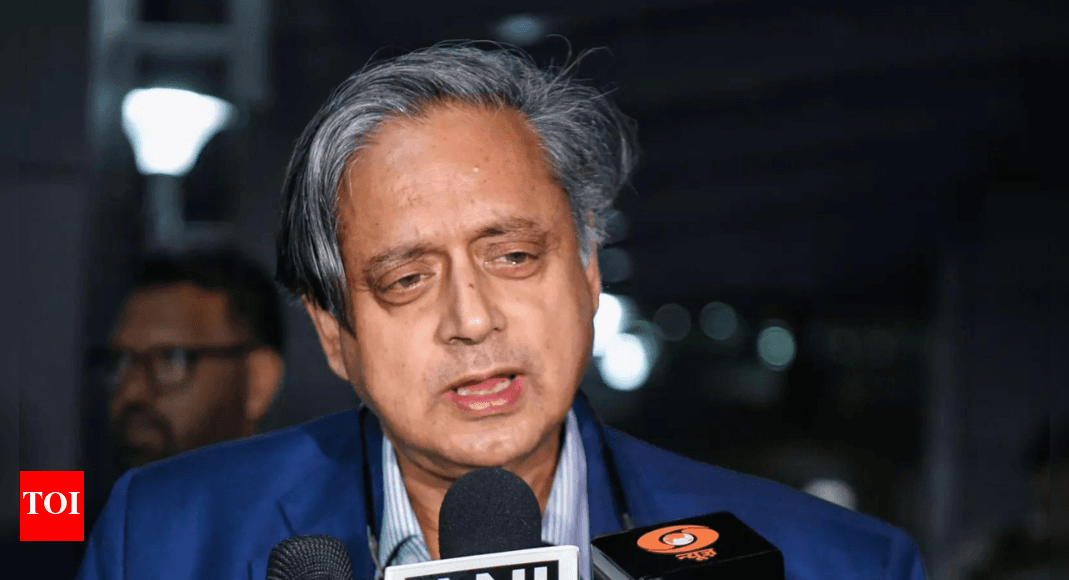
A major terrorist attack from across the border has “once again plunged our nation into a crisis,” Shashi Tharoor wrote in an NDTV opinion piece titled “After Pahalgam: India’s Options,” describing “the cynical murder of 26 tourists in Pahalgam.” Tharoor’s framing ties the April 22 Pahalgam attack to a longer pattern of attacks in India linked to Pakistan-based terror groups, and he explicitly points to “the cynical murder of 26 tourists in Pahalgam” as the immediate trigger for India’s response. In coverage of Tharoor’s remarks in the United States, multiple outlets place him at the Indian Consulate in New York and connect his comments to India’s strikes under Operation Sindoor.
India launched “Operation Sindoor” during the early hours of May 7, as described by The Times of India, and Tharoor said India chose to “hit hard and hit smart,” targeting “only specific terrorist camps in Pakistan.” The Times of India says Tharoor supported the central government’s swift action after the Pahalgam attack, and he described the strikes as “very precise and calibrated strikes” aimed at “nine specific known terrorist bases, headquarters, and launchpads” in Pakistan and PoK, as quoted by India Today. Hindustan Times similarly reports Tharoor’s view that India’s response was measured and that the intent behind the Pahalgam terror attack was to divide people, while it “actually brought people together in India.”
Escalation Timeline and Background
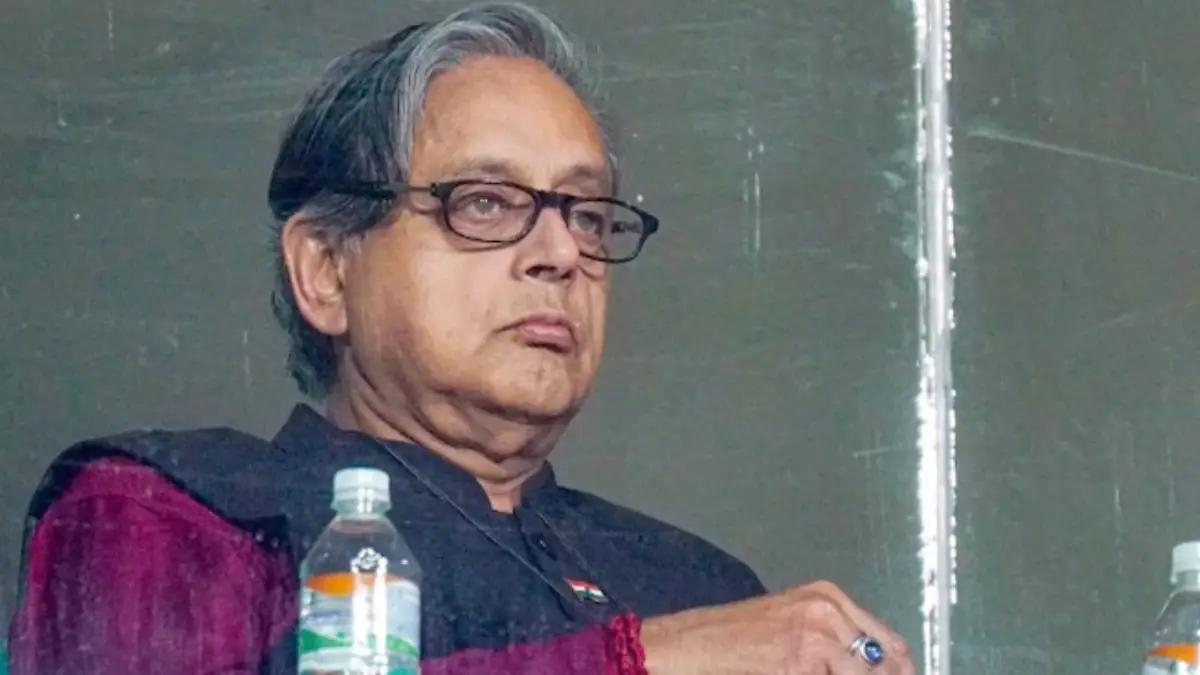
Tharoor’s NDTV column situates the Pahalgam attack within what he calls a familiar script, describing “antecedents going back to the 1980s and 1990s” and a cycle in which “Islamist groups created, armed, trained, and guided from Pakistan, often directed by the ISI, kill innocents in India.” He argues that India’s response has been “carefully calibrated so as not to provoke a larger war,” and he says “after a period of tension, everyone settles back to business-as-usual,” warning that “This pattern cannot be repeated forever.” In the same NDTV piece, Tharoor provides a “partial list” of “the most significant episodes,” including the “Chattisinghpora Massacre, 2000” in Anantnag district, “Indian Parliament Attack, 2001” on December 13, 2001, and “Uri Attack, 2016” near the town of Uri in Jammu and Kashmir.
He also lists “Pulwama Attack, 2019” with a “February 14, 2019” date and describes earlier attacks such as “Mumbai Attacks, 2008” on November 26, 2008, and “Pathankot Airbase Attack, 2016” on January 2-5, 2016. When Tharoor returned to the immediate timeline in U.S. remarks, India Today and The Times of India both connect the Pahalgam attack to India’s May 7 strikes, with India Today quoting him saying India “carried out "very precise and calibrated strikes"” on May 7. News On AIR also describes multiple other Operation Sindoor outreach delegations traveling to countries after the operation, including delegations led by Supriya Sule to Qatar and Kanimozhi to Moscow, reinforcing that the outreach is part of the post-strike diplomatic push.
Tharoor’s Arguments and Rebuttals
In the U.S., Tharoor repeatedly framed his position as opposition-led while still endorsing the operational logic of Operation Sindoor.
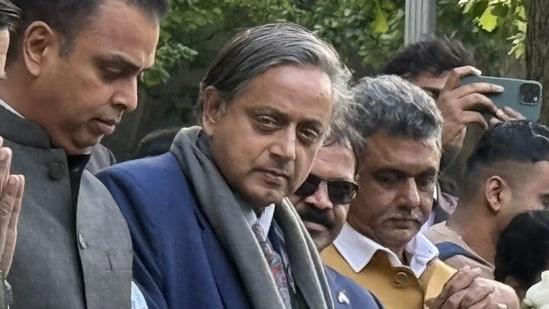
India Today reports that during an interaction at the Indian Consulate in New York, Tharoor said, “I don't work for the government, as you know. I work for an opposition party,” and he added that he “authored an op-ed saying the time has come to hit hard but hit smart.”
He told reporters that India “hit hard and smart,” and he said India “carried out "very precise and calibrated strikes",” targeting “nine specific known terrorist bases, headquarters, and launchpads” in Pakistan and PoK.
The Times of India similarly quotes Tharoor saying, “I don't work for the government, as you know. I work for an opposition party,” and it records his insistence that his op-ed had argued for “hit hard and hit smart.”
Hindustan Times adds that Tharoor said the intent behind the Pahalgam terror attack was to divide people, but it “actually brought people together in India,” and it quotes him describing “an extraordinary amount of togetherness cutting across religious and other divides.”
In Bogota, The New Indian Express reports Tharoor expressed “Little disappointed” over Colombia’s reaction, saying Colombia “apparently expressed heartfelt condolences on the loss of lives in Pakistan after the Indian strikes, rather than sympathising with the victims of terrorism.”
How Outlets Frame the Same Message
While the core claims about Operation Sindoor and the Pahalgam attack appear across outlets, the emphasis and wording differ in ways that shape how the same episode is presented. NDTV’s “After Pahalgam: India’s Options” is an opinion column that begins with a broad historical pattern, asserting that “Islamist groups created, armed, trained, and guided from Pakistan, often directed by the ISI” kill “innocents in India,” and it argues that India’s response has been “carefully calibrated so as not to provoke a larger war.” In contrast, The Times of India and India Today focus on Tharoor’s remarks in New York, with The Times of India describing a “strong and clear message to global community” and quoting Tharoor’s “hit hard and hit smart” line alongside details of targets like “Lashkar-e-Taiba’s base in Muridke and Jaish-e-Mohammad’s headquarters in Bahawalpur.”
India Today similarly quotes Tharoor’s “very precise and calibrated strikes” and adds that he said India would set a “new bottom line” in dealings with Pakistan, including his claim that Pakistan had remained in denial with “no convictions, no serious criminal prosecutions, and no genuine attempt to dismantle” its terror infrastructure. Hindustan Times, meanwhile, foregrounds the domestic social effect, quoting Tharoor saying the attack’s intent was to divide people but it “actually brought people together in India,” and it repeats Tharoor’s “extraordinary amount of togetherness” language. News On AIR frames the same Operation Sindoor outreach as a broader diplomatic campaign, describing delegations meeting “government officials, lawmakers, think tanks, media, and the public across countries,” and it notes that the delegation highlighted “the evolving tactics of transnational terrorist groups.”

Stakes, Diplomacy, and Next Steps
The stakes of the Kashmir-linked crisis, in Tharoor’s presentation, are both diplomatic and strategic, and the reporting shows his outreach efforts as a mechanism to shape international understanding after Operation Sindoor. In New York, The Times of India describes Tharoor’s visit to the “9/11 Memorial” and quotes him saying the moment was “meant to send a strong message,” while he also said the delegation’s purpose was to stand in solidarity and remind the world that “terrorism is a global threat that must be faced together.” News On AIR expands the picture by describing multiple Operation Sindoor delegations beyond Tharoor’s group, including a delegation led by Supriya Sule reaching Qatar where Ambassador of India to Qatar, Vipul, received members at “Hamad International Airport in Doha, Qatar,” and another delegation led by Kanimozhi completing the Moscow leg.
The New Indian Express shows Tharoor using the Bogota leg to press for a specific international stance, telling Colombia there “can be no equivalence between those who dispatch terrorists and those who resist them,” and he said India is “only exercising our right of self-defence.” In the same Bogota reporting, Tharoor emphasized that India has “very concrete proof,” and he reiterated that “The Resistance Front” claimed credit “when this terrorist attack occurred,” describing it as “a unit of the Lashkar-e-Taiba base in Muridke, Pakistan.” NDTV’s opinion piece argues that India must not let the pattern repeat forever, concluding that “This pattern cannot be repeated forever,” and it frames India’s options as a response to a crisis that has “once again plunged our nation into a crisis.”