USA · 14 March, 2026 · 3 min read
Trump Threw a Hand Grenade at the World Economy, Stiglitz Says
Trump's policies risk driving the U.S. economy into a dead end. Stiglitz holds Trump responsible for the risky economic trajectory.
Shared event, contrasting emphasis on economic risk vs global impact.
2outlets compared
Same story, two versions
tap a side to read it in full
Challenges
“I position myself from an economic point of view to show for years that neoliberalism is an economic, social and political failure.”Read the original ↗
Challenges
“Trump has made it one of his main themes, threatening substantial tariff hikes, from Europe to China…”Read the original ↗
Challenges adopts a measured, systemic critique of neoliberalism and highlights Trump’s tariff threats in plain economic terms; DIE WELT uses sensational metaphors (hand grenade) and stark language (self-destructive tariff policy) to frame the same critique. This demonstrates a dramatic difference in tone and rhetorical strategy while describing the same event.
Stiglitz's Economic Warning
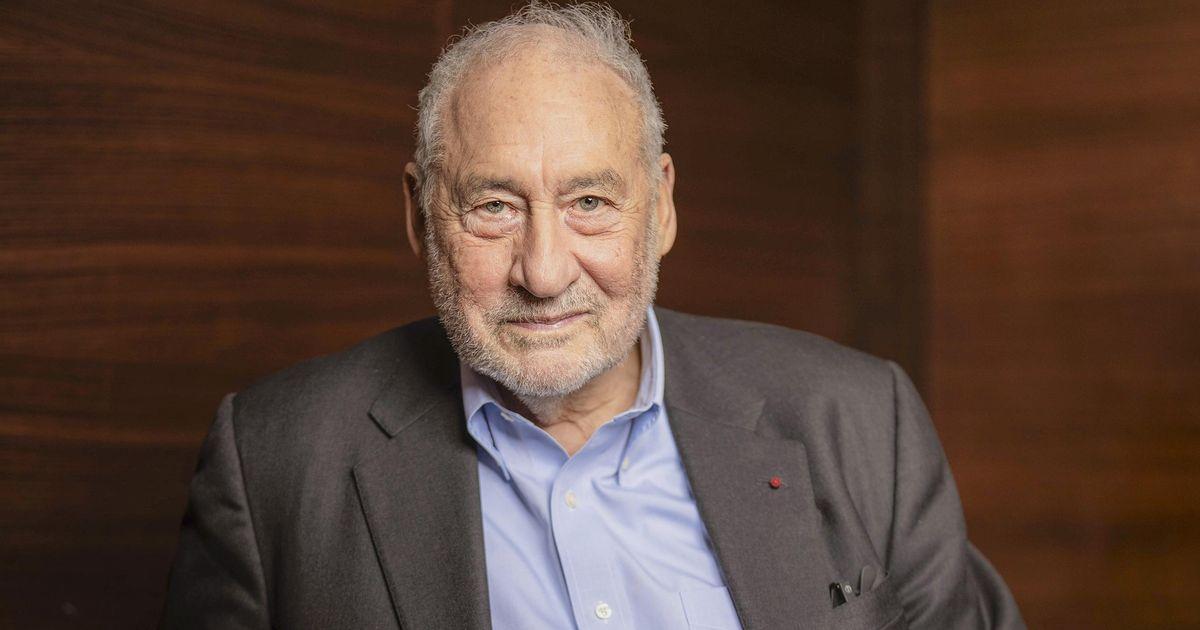
Nobel laureate economist Joseph E. Stiglitz issued a stark warning about U.S. President Donald Trump's economic policies.
“Nobel laureate in economics Joseph E. Stiglitz sees the U.S. economy on a risky course—and holds Donald Trump responsible for it.”
In an advance excerpt to Handelsblatt, Stiglitz sharply criticized Trump's approach, stating that the president has 'thrown a hand grenade at the U.S. economy and the global economy as a whole.'
This metaphor captures the explosive and destructive nature of Trump's economic decisions according to the renowned economist.
Stiglitz's criticism extends beyond mere economic policy, as he accuses Trump of 'destroying international law as well as American law,'
framing the economic chaos as part of a broader assault on legal and institutional frameworks.
The economist's assessment comes amid growing concern about the trajectory of the U.S. economy under Trump's second term,
with Stiglitz warning of a 'new dimension of economic insecurity' that represents both a catastrophe for America and the entire world economy.
Self-Destructive Policies
Stiglitz identified Trump's tariff policy as particularly self-destructive, arguing that it represents a fundamental break from established economic principles. The Nobel Prize-winning economist described the tariff approach as 'self-destructive' and warned that it is creating unprecedented political and economic uncertainty. This uncertainty, according to Stiglitz, is deterring companies from making investments while causing increasing unease among consumers.
The economist's analysis suggests that Trump's trade war approach represents a dangerous departure from sound economic management. Stiglitz had been warning about this since December 2023 when he was finishing his book 'The Roads to Freedom,'
and had wrapped up the American edition with the hope of helping Democrats reclaim the notion of freedom from Republicans. This positions his economic criticism within a broader political context that views Trump's policies as not just economically unsound but ideologically dangerous.
Labor Market Warning Signs
The labor market has emerged as a critical warning sign of economic deterioration under Trump's policies, according to Stiglitz. The Nobel laureate described the labor market as an 'important warning sign' that reveals the true state of the economy. Data from 2025 showed 'almost no job growth' in the United States, and by February, the situation had deteriorated further.
“Stiglitz described the labor market as an important warning sign.”
The February data indicated 'a substantial number of jobs having been lost,' according to Stiglitz's analysis. This pattern of job losses continues a concerning trend of economic stagnation that Stiglitz has been tracking. The economist attributed past strong growth primarily to investments in artificial intelligence,
but warned that this may represent a 'dangerous bubble' from which no one can predict when it might burst. This assessment suggests that any apparent economic strength may be built on fragile, unsustainable foundations.
Global Economic Fallout
Stiglitz warned that Trump's economic policies are creating far-reaching global consequences beyond immediate economic indicators. The economist specifically pointed to rising energy prices and growing geopolitical tensions as direct results of Trump's approach. Stiglitz noted that the war in Iran further heightens these economic and geopolitical risks.
The uncertainty generated by Trump's policies has, in the first nearly 14 months of his second term, 'taken on a completely new dimension,' according to Stiglitz. This heightened uncertainty is not just theoretical but has already produced tangible economic consequences within the United States itself. Stiglitz's comprehensive analysis frames Trump's economic policies as part of a broader assault on global economic stability.
The 'hand grenade' metaphor applies not just to immediate economic damage but to potential long-term structural damage to international economic cooperation. This suggests lasting harm to global governance frameworks and international economic relations.