Cryptoupdated 47m ago3 min read
UK Sanctions Cryptomus, Heleket, TokenSpot And Payment Platforms Over Russia-Linked Financial Networks
UK sanctions Cryptomus, Heleket, TokenSpot and two payment platforms for Russia-linked evasion. Two platforms processed transactions tied to the Kremlin-backed A7 network.
UK sanctions crypto channels
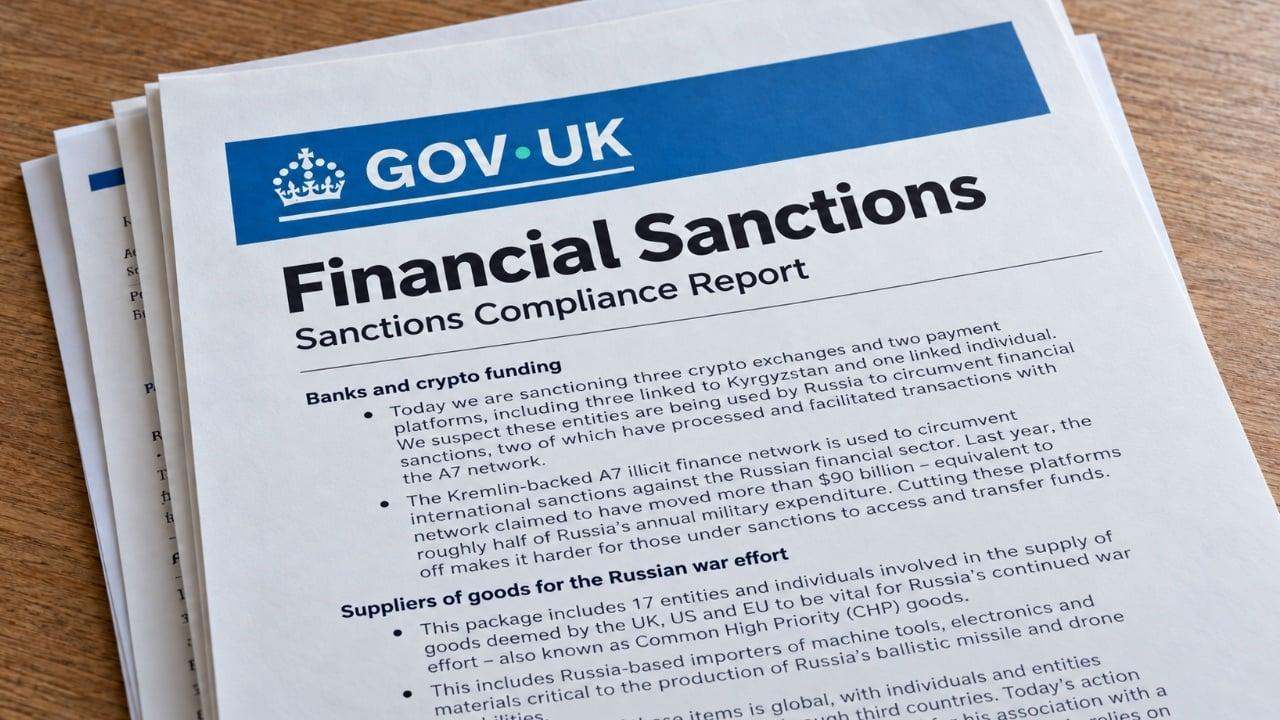
The United Kingdom imposed new sanctions on three cryptocurrency exchanges and two payment platforms as part of 38 new designations targeting networks suspected of helping Russia evade financial restrictions. The Foreign, Commonwealth and Development Office named Xeltox Enterprises, the Canadian-registered company behind crypto exchanges Cryptomus, Heleket and Certa Payments, and Kyrgyzstan-based TokenSpot, and it also sanctioned payment platforms Processing KG, which operates VexPay, and Tsunami Payments, along with Processing KG director Ulan Bukabaev. The Foreign Office said two of the targeted businesses processed or facilitated transactions involving A7, a Kremlin-backed network that operates ruble-pegged stablecoin A7A5 and is used to bypass sanctions on Russia’s financial sector.
“The message is simple: if you help Russia fund or equip this war, you will face the consequences.”
The UK government said the A7 network claimed to have moved more than $90 billion last year, described as roughly half of Russia’s annual military expenditure, and it said cutting off the platforms makes it harder for sanctioned entities to access and transfer funds. The UK framed the measures as part of a wider package tied to Russia’s war in Ukraine, and it said the message was: “if you help Russia fund or equip this war, you will face the consequences.”
A7-linked transfers and disputes
The UK government statement said two of the targeted entities had processed or facilitated transactions with the A7 network, and it described A7A5 as a ruble-pegged stablecoin used to bypass sanctions on Russia’s financial sector. TRM Labs said TokenSpot sent more than $950 million in total to crypto exchanges Grinex and Garantex and to the A7 network, and it assessed with high confidence that TokenSpot operates as a front company for Grinex based on shared wallet infrastructure. Chainalysis found that two sanctioned payment processors, Cryptomus and Heleket, received funds from thousands of illicit counterparties, peaking at 900 entities within a single month in late 2025, and it said TokenSpot, along with Grinex and Meer, received over $308 million from the same HTX deposit address.
HTX pushed back against the earlier designation, arguing that the designation applies only to Huobi Global as a separate legal entity and that its online exchange and user funds remain unaffected. Cointelegraph reported that it approached TokenSpot, Cryptomus and Heleket for comment on the matter, while CertiK said the Russian ruble-backed A7A5 stablecoin processed $110 billion in cumulative onchain transactions leading up to June.

Broader sanctions and targets
The UK’s October 8 package expanded beyond crypto to include sanctions on Russian oil companies Zarubezhneft and INK Capital, and it also targeted 12 additional oil tankers operating as part of Russia’s shadow fleet, bringing the total number sanctioned to over 600. The Foreign, Commonwealth and Development Office said the restrictions were intended to target three sources of support for Moscow: revenue from oil exports, procurement of goods used in weapons production, and financial arrangements designed to circumvent existing sanctions. The package also included 17 designated individuals and entities involved in supplying materials, technology or equipment regarded as important to Russia’s military-industrial sector, including importers of machine tools, electronic components and materials critical to the production of Russia’s ballistic missile and drone capabilities.
“The 38 new designations include Russian oil companies, shadow fleet tankers, and those supplying goods critical to Russia’s military.”
The UK said the movement of these items is global, with individuals and entities cloaking illicit trade with Russia through third countries, and it said the latest action marked an expansion of British sanctions into commercial networks operating beyond Russia’s immediate borders. The UK said the inclusion of cryptocurrency businesses reflected changing methods used to move funds across borders when traditional banking channels are restricted, and it warned that the practical effect of a designation depends on whether assets can be identified, services withdrawn and prohibited transactions prevented.