Protests27 October, 20252 min read
US and China Exploit Kenya’s $62 Billion Rare Earth Deposits in New Mineral Cold War
This article is an automated aggregation of coverage from news outlets. Our editorials offer in-depth analysis curated by the NewsCord team.
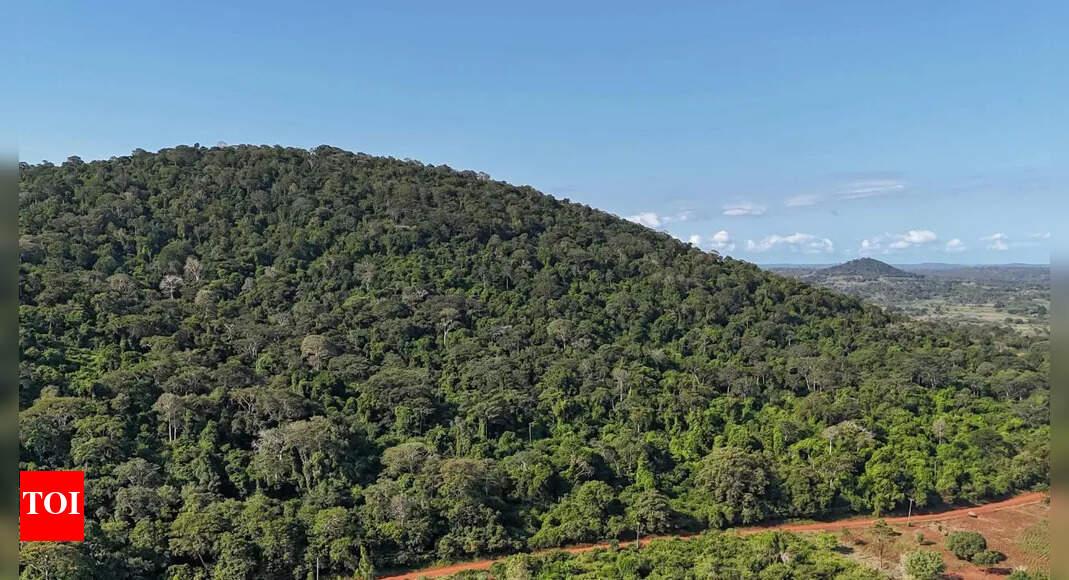
Mrima Hill in Kenya contains rare earth minerals valued at over $62 billion. The US and China are competing for control over Kenya’s rare earth deposits.
5 outlets told this the same way.
Kenya's Mrima Hill Mineral Conflict
Kenya’s Mrima Hill has become a key site in a new mineral Cold War as the US and China compete for access to rare earths and niobium valued at approximately $62–62.4 billion. Business Insider Africa highlights African nations—and Mrima Hill specifically—as crucial in this US–China rivalry, placing the site on Kenya’s southern coast in Kwale County.
“African nations are becoming central to a new mineral Cold War, with Kenya’s Mrima Hill emerging as a key site in the US-China competition for critical minerals.”
South China Morning Post notes that the forested hill has attracted interest from global powers including the US and China, estimating the mineral reserves at about $62.4 billion. The Times of India emphasizes the hill’s sacred significance while describing it as a central point in a $62 billion mineral dispute, pointing to growing international competition over the location.

Importance of Mrima Hill Minerals
Beyond headline valuations, the sources describe why Mrima Hill matters technologically. Business Insider Africa lists rare earth elements and niobium as essential for electric vehicles, renewable energy, advanced electronics, steelmaking, aerospace, and clean technology. South China Morning Post highlights that niobium strengthens steel and says these minerals are crucial for high-tech and low-carbon industries.
The Times of India echoes that the hill is rich in valuable minerals and is drawing international attention and competition. This situation captures the global scramble for inputs that underpin modern economies.

Global Competition Over Minerals
All three outlets focus on the US–China aspect but differ in emphasis. Business Insider Africa explicitly calls it a “new mineral Cold War” and highlights Mrima Hill in the US–China rivalry.
“African nations are becoming central to a new mineral Cold War, with Kenya’s Mrima Hill emerging as a key site in the US-China competition for critical minerals.”
South China Morning Post uses cautious wording, stating the site has “drawn attention from global powers including the US and China.” The Times of India intensifies the narrative by describing it as a “$62 billion mineral conflict” and mentions that Mrima Hill is sacred, adding a cultural layer to the geopolitical struggle.
Media Coverage of Mrima Hill
Coverage breadth also diverges by outlet. The Times of India situates Mrima Hill within a broader global news roundup, also mentioning the rise of Aliko Dangote and a Saudi eFootball milestone. The Times of India still flags the hill as a focal point of US–China competition.
In contrast, a Western mainstream brief from The Economic Times on the same date is entirely off-topic. The Economic Times focuses on consumer trends, corporate news, and a US local incident with no mention of Mrima Hill or Kenya’s rare earths. This contrast illustrates how some Western mainstream digests can omit this resource rivalry even as Asian and African-focused coverage foregrounds it.

Geopolitical and Cultural Significance
Key facts are consistent across sources even as operational details remain sparse. The site is a forested hill near Kenya’s southern coast—precisely a 157‑hectare area in Kwale County—valued at roughly $62–62.4 billion. However, these snippets do not spell out concrete mining projects or deals by Washington or Beijing; they emphasize attention and competition rather than specific actions.
The Times of India adds that the hill is sacred, amplifying the cultural stakes alongside the geopolitical contest. Business Insider Africa and South China Morning Post provide the geographic and valuation anchors.